Facebook advertisement highlights ongoing risks around plant breeders’ rights and uncertified seed use.
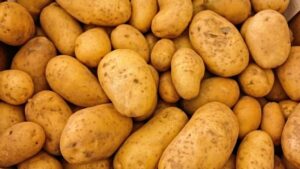
A Danish potato grower has reached a settlement with Breeders Trust after advertising what were described as seed potatoes in a Facebook group, reinforcing how even online listings can constitute an infringement of plant breeders’ rights.
The case, announced by the Brussels-based organisation on 20 April, centred on an offer posted in the Danish group Stivelses kartofler, where the grower advertised “200 tdr Solist lægekartofler”, equivalent to around 20,000 kg of seed potatoes of the protected variety Solist. Breeders Trust was alerted to the listing by shareholder Danespo.
Although the advertisement was removed shortly after the grower was contacted, this did not resolve the issue. According to Breeders Trust, the grower initially struggled to accept that simply offering the material for sale constituted an infringement, even though no potatoes had actually been sold, according to a Breeders Trust press release.
The dispute escalated into legal proceedings, supported by Danish law firm Bech-Bruun, which specialises in intellectual property litigation, including plant variety rights. “Going to court is certainly not a goal in itself, but if a mutually acceptable settlement cannot be reached, it is a logical follow-up,” said general director Corné van Beers.
After a final deadline passed, the grower revised his position, allowing the lawsuit to be withdrawn. The Maritime and Commercial High Court in Copenhagen subsequently determined the damages payable to cover legal costs incurred during the process.
The case highlights the strict regulatory framework governing the production and trade of seed potatoes. Beyond intellectual property considerations, these rules are designed to limit phytosanitary risks by ensuring that only certified seed potatoes are used and that disease spread can be effectively monitored and contained.
Breeders Trust notes that a lack of awareness continues to be a recurring issue, particularly in online environments where potatoes are increasingly offered for sale via platforms such as Facebook. In many cases, ware potatoes are marketed or repurposed as seed potatoes, creating both legal and plant health risks. Processors may refuse such crops if growers cannot demonstrate the lawful origin of their planting material.
During the course of the case, administrators of the Danish Facebook group posted a notice reminding members of the rules. The message emphasised that potato cultivation must be based on certified seed potatoes or material derived from them, and warned of the risks associated with moving uncontrolled potatoes between farms, including the spread of diseases such as potato cyst nematodes and other pathogens.
Breeders Trust welcomed the intervention, noting that platform managers and users are increasingly recognising their responsibility in raising awareness. The organisation continues to stress that compliance with plant breeders’ rights and certification requirements is essential not only from a legal perspective, but also to safeguard plant health and maintain trust across the potato chain.