A DNA-extracting robot is helping SGS Canada slash turnaround times — and take human error out of the equation.
Clubroot and Aphanomyces. Just the mention of these two devastating soilborne diseases is enough to raise alarm bells across Western Canadian agriculture. For seed growers in the West, these soilborne diseases can devastate a rotation and linger for decades.
For canola and pulse producers especially, these pathogens present long-term challenges — once introduced to a field, they can persist for decades, with no chemical cure and limited management options.
At SGS Canada, a team of plant pathology and molecular diagnostics experts is tackling the problem head-on — with speed, precision, and a heavy dose of automation.
“Clubroot is particularly damaging to canola,” explains Annu Albert, one of SGS Canada’s molecular diagnostics specialists. It causes the roots to swell into club-like structures, restricting water and nutrient uptake. Once it’s in the soil, the spores can survive for over 20 years.
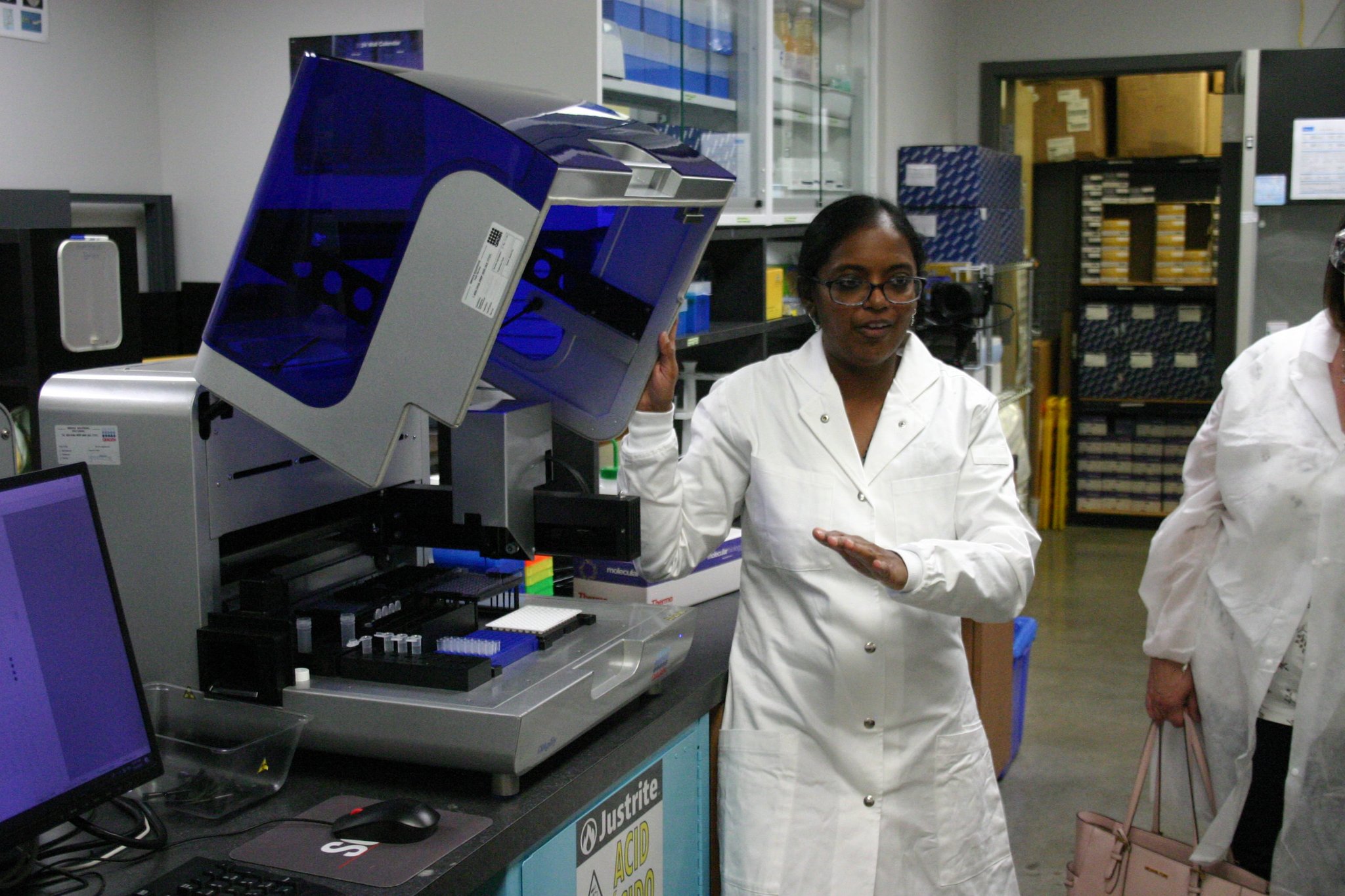
Both clubroot and Aphanomyces require advanced testing methods to detect and quantify the presence of the disease. Historically, this meant painstaking manual DNA extraction — an intensive and time-consuming process. “We used to be able to process maybe 45 samples a day by hand,” Albert notes. “Now, with automation, we can handle up to 88 samples a day with much greater accuracy and far less strain on our team.”
The game-changer? A sleek robotic DNA extraction machine that’s become a staple in SGS Canada’s lab. The robot performs precise pipetting across multiple samples with zero fatigue, eliminating human error and dramatically increasing throughput. “It’s faster, more consistent, and easier on our staff,” Albert says. “Our team can now focus on higher-value tasks instead of repetitive manual work.”
This high-capacity workflow isn’t limited to just one disease. The same DNA extraction process is used for both clubroot and Aphanomyces, with the only difference being the genetic markers used in PCR testing. That means one streamlined system is now serving multiple crop sectors more efficiently than ever.
Beyond boosting efficiency, SGS Canada is also on the cutting edge of evolving molecular diagnostics. What began as a simple yes/no detection for clubroot has matured into full quantification — reporting exact spore loads to help producers gauge field severity. And coming down the pipeline is even more advanced testing: genomic tools to identify specific clubroot pathotypes, a capability that could revolutionize breeding and management strategies.
“We’re watching the academic side closely,” Annu says. “Once the genomic techniques are validated in research, we bring them into our commercial labs and scale them up for real-world application.”
But the benefits of this technology don’t stop with growers. Infrastructure companies — those building roads, pipelines, or power lines across farmland — are also turning to SGS to ensure pathogens aren’t spread from site to site. “It’s becoming common to test for both clubroot and Aphanomyces as part of due diligence,” Annu explains. “And now, with faster turnaround times and easy-to-access data portals, we’re making it simple for large clients to track results and make informed decisions.”
That last point — data — hasn’t gone unnoticed. Through SGS Canada’s online portal, customers can download comprehensive, filterable spreadsheets of their test results on demand, making disease surveillance and reporting more manageable than ever.
From robotic precision to next-gen diagnostics, SGS Canada is reshaping what’s possible in plant pathogen testing — helping the entire ag ecosystem stay one step ahead of two of its most persistent threats.