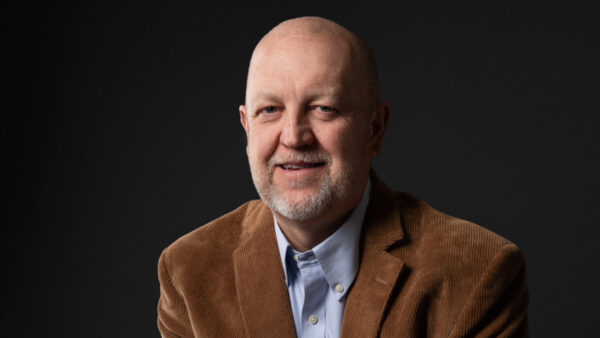
Thirty years after he founded BioVision, Trevor Nysetvold looks back at the evolution of SGS Canada Crop Science — and why he’s more optimistic than ever about what comes next.
It is 30 years since we sat down and signed the papers that created BioVision Seed Labs in Edmonton, Alta. September 9, 1996. People keep reminding me that three decades is a long time, and when I stop long enough to think about it, it really is.

Starting the business wasn’t the result of some master plan. It was part determination, part naïve optimism, and part seeing an opportunity that I just couldn’t ignore. I had partners who saw the opportunity, mentors who believed in me, colleagues who encouraged me, and an industry that, without knowing it, pushed me forward. Without that support system, none of this would exist today.
Farming Has Always Been Home
Growing up on a farm near Paradise Valley, Alta., shaped who I am in ways I didn’t fully appreciate until much later. After studying at the University of Saskatchewan, I worked in Manitoba for a while, but with the family farm still going, I always felt that pull back West.
Managing seed testing for United Grain Growers (UGG) was the first time I saw, clearly, the need for a dedicated third-party analytical lab. And once you see an opportunity like that, it’s hard to un-see it. We partnered with Norwest Labs and UGG, got BioVision off the ground, and later I bought them out as we grew.
Fast forward to 2017: we became part of SGS, and today we’re SGS Crop Science. The name changed, but our purpose didn’t.
The World Before the Internet
When BioVision first opened its doors, we didn’t even have internet in the office. We had phones, fax machines, paper, and people.
And you know what? We got the work done.
I still remember the moment we plugged in that first modem, listened to the dial-up tone, and watched the screen flicker to life. Then we all sort of looked at each other and thought: OK, now what?
Today it’s almost impossible to imagine running a lab without instant communication, real-time data sharing, and all the tools we take for granted. And yet, in a funny way, that “slower” world taught us something that still matters today: rely on people, not just tools. Rely on relationships, not just systems.
Despite everything — despite the enormous technical leaps, the regulatory shifts, the explosion of biologicals, new traits, new chemistries — our customers still want the same two things they always have:
Quality. And service.
That’s it. Tools change. Methods evolve. But quality and service are still the pillars everything else rests on.
The Real Foundation: People and Integrity
Technology doesn’t build great companies — people do.
We’ve always hired with intention. We’ve kept turnover low. We’ve held ourselves to high standards and admitted when we fell short. And in a high-throughput analytical testing lab, mistakes will happen. Anyone who says otherwise is fooling themselves. What matters is how you respond — quickly, honestly, and with a commitment to improve.
Integrity isn’t a slogan for us. It’s non-negotiable. You either have it or you don’t.
Innovation is tricky in a regulated environment. The test methods are set in stone, and you don’t get to reinvent them overnight. But you can innovate in non regulated areas and around the edges: value added testing, before the test, after the test, in how data flows, in how clients receive information, and in the systems that help everything run.
That’s where we’ve spent most of our time, and it’s where a lot of our future will be, too.
People often ask me what things will look like 30 years from now. I wish I had an answer. Even the predictions we feel most confident making will be wrong in some way.
When the internet first arrived, we had no idea what it would eventually let us do. AI will be the same. It’ll take us places we expect, and places we can’t yet imagine. Some of those changes will be exciting. Some will be uncomfortable. All of them will demand adaptation.
But what we do will endure. It always has. It will look different. It will feel different. It will use different tools and operate at different speeds. But the core values — stewardship, resilience, community, the belief that what we do matters — those won’t change.
Our industry feeds people. That’s as profound as it gets. And being a part of that, even in the small way that we contribute through analytical services, is something I’ve always been proud of.
As we begin into our 30th anniversary year, what I want the industry to know is simple:
We are still growing. We are still committed. And we are just getting started.
There will be challenges we see coming and challenges we don’t. But if the first 30 years have taught me anything, it’s that steady values, good people, and a willingness to adapt will carry you a very long way.