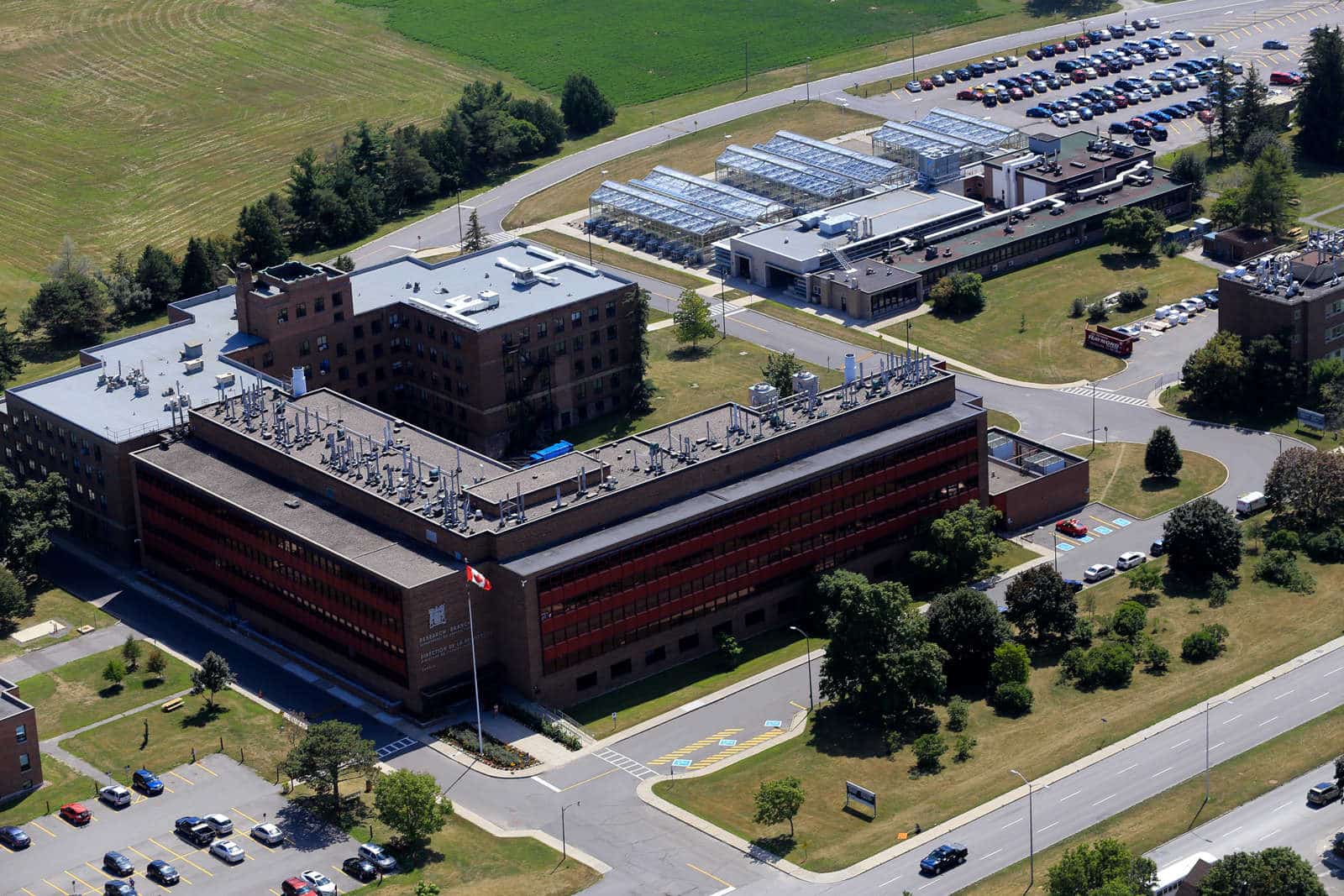
Agriculture and Agri-Food Canada has publicly announced that seven research stations will be shut down as part of a planned workforce reduction expected to impact about 665 positions.
The federal government confirmed the closures will include three Agriculture and Agri-Food Canada research and development centres and four satellite research farms.
The R&D centres in Guelph, Ont.; Quebec City, Que.; and Lacombe, Alta., are slated to close, along with satellite farms in Nappan, Nova Scotia; Scott and Indian Head, Sask.; and Portage la Prairie, Man.
The news has sparked concern through the ag community. The Canadian Wheat Research Coalition (CWRC) is one of the latest organizations to speak out about the cuts.
“These staffing cuts, and related impacts at AAFC research stations, represent a tremendous loss for Canadian agriculture,” said CWRC chair Jocelyn Velestuk in a press release.
“It is a loss of not only expertise and people who have contributed to farmers’ success, but also of agricultural research capacity that is crucial to fuelling innovation and maintaining progress throughout the industry.”
Velestuk noted that AAFC has long served as a trusted research partner for western Canadian farmers, backed by substantial producer investment — including $19.9 million over three years through the CWRC’s current core breeding agreement with AAFC. She added that Canada’s strong global reputation for quality and its ability to compete in international markets rely on a well-supported research network.
While the full long-term effects of the staffing reductions, and how they will be allocated, remain uncertain, the CWRC is continuing to follow developments closely. CWRC leadership remains in contact with AAFC and plans to continue discussions.
Given the cuts at AAFC, Velestuk said the CWRC’s ongoing review of Canada’s wheat breeding innovation system is even more important to ensure the system continues producing elite wheat varieties for farmers nationwide in the years ahead.
History of the research stations reportedly closing
AAFC has confirmed plans to close three major R&D centres (Guelph, Ont.; Quebec City, Que.; and Lacombe, Alta.) along with four satellite research farms (Nappan, Nova Scotia; Scott and Indian Head, Sask.; and Portage la Prairie, Man.). While the sites have long histories and deep regional ties, AAFC has stated that closures are not expected to be immediate and that any transition would involve a staged wind-down process that could take up to about a year.
Guelph Research and Development Centre (Guelph, Ont.)
History: Established in 1997 to strengthen federal food science research in partnership with the University of Guelph and support food safety, quality and value-added innovations in Canada’s largest agri-food research cluster.
Closure timeline/transition: AAFC says there are no imminent site closures and that any wind-down of scientific operations could take up to ~12 months following a careful decision process, with many employees potentially retained, reassigned or relocated.
Quebec Research and Development Centre (Quebec City, Que.)
History: Established in 1967, this long-running federal research centre has focused on agricultural productivity and sustainability in cool, humid climates, including soil science and agroecosystems research.
Closure timeline/transition: AAFC reiterates that formal wind-down would be gradual over up to a year and that detailed workforce impacts are still too early to determine.
Lacombe Research and Development Centre (Lacombe, Alta.)
History: Dating to 1907, one of the oldest federal agricultural research sites in Western Canada, historically known for livestock and meat science, forage and crop systems research, and contributions like the “Lacombe hog.”
Closure timeline/transition: AAFC confirms no immediate shut-down; scientific operations would be wound down slowly (potentially ~12 months), with final details still to be determined.
Satellite Research Farms
Nappan Research Farm (Nappan, Nova Scotia)
History: One of Canada’s original Experimental Farms established in 1887, historically used for forage, livestock systems and applied regional research.
Closure timeline/transition: AAFC’s statement applies the same up-to-12-month wind-down framework with a careful decision process and no immediate closure date.
Scott Research Farm (Scott, Sask.)
History: Operating since about 1910, this field research station has a century of work in crop, soil and agronomy research responsive to Prairie producer needs.
Closure timeline/transition: As with the other sites, AAFC says scientific activities will be wound down carefully over an extended period rather than abruptly.
Indian Head Research Farm (Indian Head, Sask.)
History: One of the original 1887 Experimental Farms, central to Prairie seed/variety development, soil and crop management research, and conservation innovations like shelterbelt planting.
Closure timeline/transition: AAFC notes a potentially extended wind-down (up to 12 months) and that immediate closures are not planned.
Portage la Prairie Satellite Research Farm (Portage la Prairie, Man.)
History: Founded around 1944 as a federal experimental station and later operated as a satellite field research facility tied to broader Prairie research.
Closure timeline/transition: The department’s public remarks place this farm’s phase-out within the larger extended transition process that could take about a year.