Politics — not prices — will decide access to markets in a multipolar world. One analyst’s advice: diversify beyond China, treat food like energy, and build demand at home.
By the time Jacob Shapiro finished warming up the room at today’s CropConnect Conference in Winnipeg, he’d made two promises: he wasn’t there to tell them what to think, and if they agreed with everything he said, he’d failed.
Shapiro, director of research at The Bespoke Group based in New Orleans, does what good provocateurs do. He aims straight at one of the most comforting stories in ag: that today’s pain is just another down-cycle.
“I don’t think that we are going through any kind of cyclical change in agriculture,” Shapiro told the audience. “I think we are going through a fundamental reordering of how global agricultural trade works… the first… in almost 100 years.”
For Canada’s seed and crop ecosystem — breeders, input providers, exporters, crushers, and the canola complex — the message was blunt: the old playbook of grow more, export more, trust the global market to clear the surplus is colliding with a world that increasingly wants to feed itself first.
And in Shapiro’s telling, that collision is about to get political.
From “one marketplace” to a world of blocs
Shapiro’s core frame is that the world is moving into what he calls a multipolar era: less a single, rules-based marketplace and more a patchwork of rival spheres where market access can expand or vanish based on politics.
He asked the industry to stop thinking about trade as “an undifferentiated global marketplace where we all send product out into and sing Kumbaya,” and start thinking about how governments “are privileging and impacting these things in a really meaningful way.”
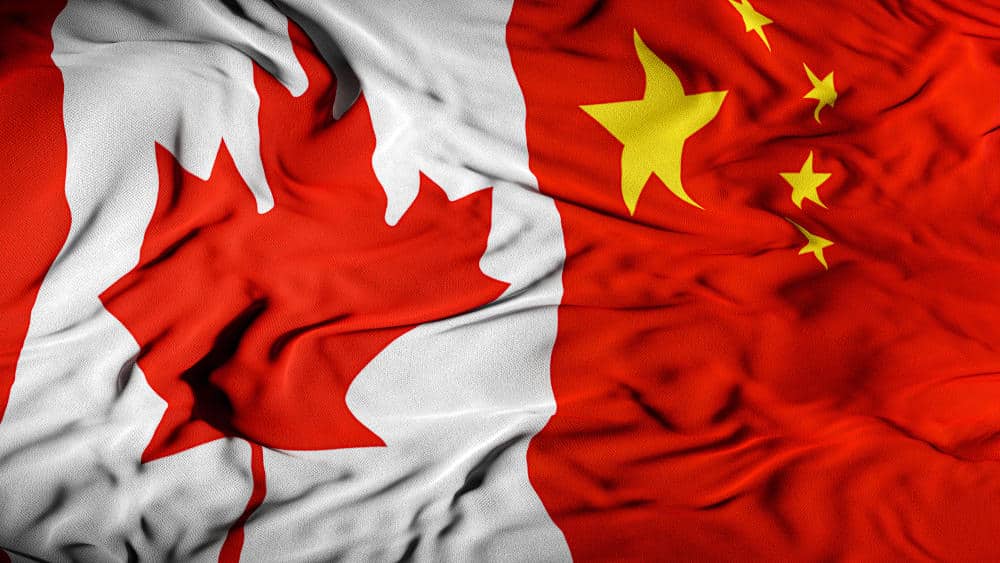
That shift matters disproportionately to Canada because of concentration risk, especially in canola.
Shapiro argued that while Canada’s export values have risen, its market share has slipped; less a story of dominating global demand, more a story of inflation and population growth lifting the dollar value of trade. Meanwhile, he warned, Canada’s agricultural exports are “far and away less diversified” than other exporting powers — leaving producers subject to the whims of whatever happens in the White House.
“In general, the biggest example of this is canola,” he says, describing the sector’s exposure to the United States and China as a strategic vulnerability with few obvious substitutes.
The uncomfortable idea: importers are learning to grow more at home
The part of Shapiro’s talk most likely to stick with seed leaders isn’t a tariff prediction or a partisan jab. It’s the idea that the very purpose of global agricultural trade is changing.
He traced the modern export model back to the post–First World War surge in productivity powered by modern fertilizers and the political decision to move “surplus calories” abroad. That logic still underpins trade today, he noted, pointing out that billions of people depend on imported food and only a fraction of countries can fully feed themselves for specific crops.
But then came the turn: much of that dependence, he said, is a choice, and a choice some governments are reversing.
“These countries are actually trying to grow their own food and reduce their imports,” Shapiro says. He offered examples meant to puncture complacency: Ethiopia boosting wheat output quickly after investing in machinery and seed technology; Brazil pushing into crops and experimenting with tropical wheat; China and India grinding for yield and self-sufficiency.
Whether or not every example becomes a trendline, the implication for seed is clear: if more countries pursue productivity at home, the easiest export growth disappears first. Demand doesn’t vanish, but the “we’ll just ship more surplus” assumption weakens, especially for bulk commodities.
China: “Laugh your way to the bank”… but don’t build a future on it
For Canadian firms that have spent years navigating Chinese demand signals, policy shifts, and market access uncertainty, Shapiro’s advice is equal parts pragmatic and cold.
“If you can make money off of China, by all means, laugh your way to the bank,” he said. “I’m just saying that China, in the long run, is not going to be a partner for us in the Western Hemisphere. They are actively trying to diversify.”
He argues that China will import what it needs, but won’t hesitate to source elsewhere, or domestically, when it can. He points to the gap between promised and delivered purchases in a prior U.S.-China farm trade framework as an example of how commitments can fade once immediate needs are met.
For the seed sector, that’s less a moral lecture than a risk-management memo: treat China as opportunistic revenue, not dependable strategy.
USMCA: melodrama, yes. Catastrophe if it breaks
Shapiro’s view of North American trade was more optimistic, but only because the downside is so severe.
He predicts “all kinds of melodrama” in the coming months around a USMCA renegotiation — and still expects the deal to continue, largely because supply chains and political incentives make a rupture extraordinarily costly.
“If you get the United States and Canada and Mexico giving up on the USMCA, it means terrible things… and it’s worst for (Canada),” he says, citing an economic analysis he described as showing Canada would take the largest hit.
He also points to an often-overlooked reality: Canada is not an abstract “foreign” market to the United States. It’s a top export destination for a wide swath of U.S. states, many with outsized influence in electoral politics. That domestic pressure, he argues, acts as a constraint even on populist impulses.
For Canadian seed leaders, the takeaway is not “relax.” It’s: prepare for volatility without assuming collapse and build contingency plans for logistics, regulatory friction, and episodic market closures.

Two engagement drivers for seed: energy and food
Shapiro doesn’t just diagnose risk. He offers two big “demand stories” he thinks could power new strategies for farmers and the seed sector.
1) Treat food as energy
He argues that rising electricity demand tied to AI, automation, data infrastructure, and industrial change could reignite political focus on energy security, creating new momentum for biofuels and biomass-based diesel.
“We’re going to need every single electron,” he said, predicting a future where the debate becomes “yes, yes, yes… give us all of the energy we possibly need.”
For oilseed stakeholders, this is a familiar pathway with a new catalyst: if energy security returns as a dominant political objective, feedstocks and policy could align again, creating more durable demand for canola, soy, and next-gen biofuel inputs.
2) Treat food as food again
His second idea is a pivot away from viewing agriculture purely as export commodities and toward differentiated products tied to health, local supply chains, and premium demand, especially among younger consumers who “will pay more for food.”
That’s less about seed genetics in year one and more about what seed enables over time: identity-preserved supply, trait stacks tied to nutrition, specialty oils, and the agronomy required to serve “food-as-medicine” narratives.
“I’m not telling you not to export,” he says. “I’m saying diversify your revenue streams. Think about your brand and local markets.”
Where he’d look instead of China: South and Southeast Asia — and Canada
If there’s a single export map Shapiro wants Canadian agriculture to tape to the boardroom wall, it’s the one that points away from East Asia’s giants and toward the fast-growing middle: “Pakistan through Indonesia,” plus India.
“These are countries that are young, that are growing… and as they get wealthier, they’re going to want nicer things,” he says.
But his most counterintuitive recommendation is the simplest, and it lands differently in an industry built on export excellence: Canada itself.
“If you’re looking for the best potential opportunity for where Canadian exports go,” he says, “let it be to Canada… feed yourself, and then you can export the surplus.”
For the seed industry, that translates into a question that drives clicks because it’s uncomfortable: What if the next era rewards domestic resilience as much as export volume? If so, seed innovation becomes not just a yield story, but a supply-security story, helping Canadian production compete against geopolitical friction, climate variability, and changing consumer demand.
“The companies and the producers that do best are the ones that look at the world as it is and say, ‘there’s an inefficiency there, and I think I actually have the resources to fix it.’”