From Seed to Food: there couldn’t have been a more fitting and engaging title for the first FAO Universal Exposition, held in Rome last October.
The FAO (Food and Agriculture Organization of the United Nations), as stated on its website, is an agency that leads international efforts to eradicate hunger. The goal is to achieve food security for all the planet’s inhabitants and ensure that they regularly have sufficient quality food for a healthy life. The “dream” is a world finally free of hunger and poverty, summed up in the slogan: “Better production, better nutrition, a better environment, and a better life, leaving no one behind.”
The FAO is made up of 195 members — 194 countries plus the European Union — and operates in over 130 countries worldwide.
An 80-Year History
In 2025, FAO reached the milestone of 80 years of activity. The first session of the newly formed institution took place in February 1945. After fighting in two terrible world wars, world’s nations wanted to strive for far nobler goals. It began by studying the state of nutrition in 70 countries, thus highlighting the widespread problem of hunger in many parts of the world.
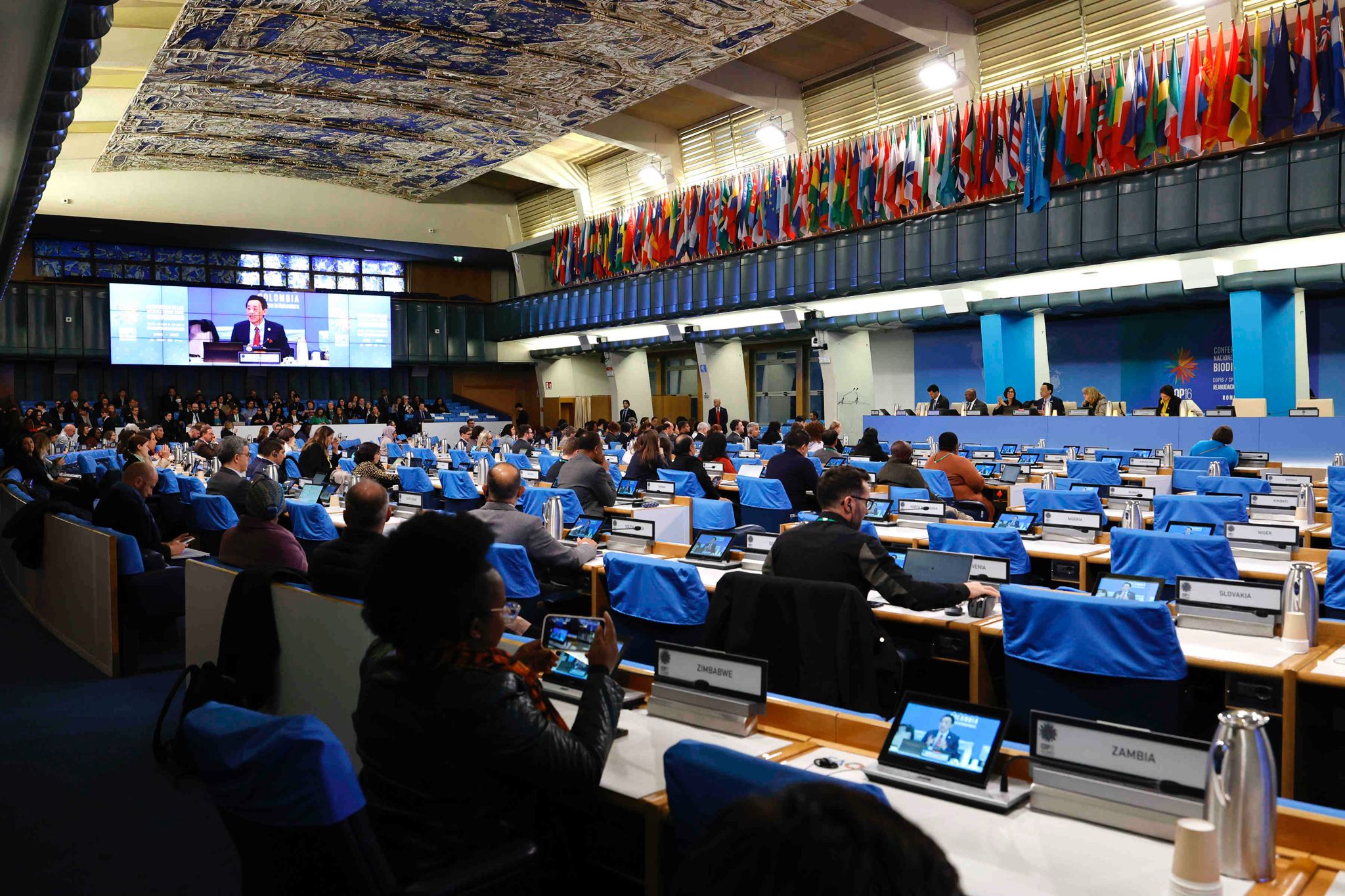
In 1949, the headquarters was moved from Washington, DC, to Rome, where it remains today. And it was here that its 80th anniversary was commemorated with the First Universal Exposition.
In addition to celebrating the organization, the goal was to explore the value chains of agriculture, horticulture, livestock farming, forestry, and fisheries.
Hence the emblematic title of the exhibition, “From Seed to Food”, to acquaint the public with the way that food takes from cultivation to the table, through various stages.
The food supply chain begins with scientific research, continues with the seed, and then with the work of agronomists, farmers, processors, traders, distributors and retailers, all the way to consumers.
Thanks to science and technology, and therefore innovation, but also to the experience and know-how of operators, agri-food systems have evolved in recent decades.
Indeed, the world population has increased significantly, from 2.5 billion after the war to 8 billion today, with a projection of 10 billion by 2050. Consumer demands have therefore changed, both for the quantity and quality of food. Furthermore, environmental awareness has grown, and today there is a demand to produce more with fewer technical inputs. Amid all these challenges, agriculture has significantly increased its production potential and provided food for the planet. In the near future, it will need to further increase its competitiveness. This is a major challenge.
The Fundamental Role of Seeds
The Italian seed association Assosementi, which brings together over 200 Italian seed and nursery companies, and the International Seed Federation could not miss the event. “Food security cannot exist without quality seeds and plant innovation, essential tools for addressing the world’s growing food demand.” This was the message from the seed sector.
Seeds, as the first irreplaceable link in every food supply chain, are essential for ensuring sufficient food supplies. Quality agriculture must necessarily start with quality seeds, as a guarantee of high yields, excellent nutritional values, and guaranteed traceability, as demanded by consumers.
Seeds are not simply a technical means of cultivation, but a value for the society as a whole.
The evolution of the seed sector, thanks primarily to plant research, has enabled an increase in average food raw material production by over 20% since the beginning of this century alone. Not only that, but it has also enabled healthier and more nutritious foods, with a progressively reduced use of chemicals.
Today, however, advanced research is needed that is more suited to new challenges, such as developing crops resilient to increasingly frequent climate adversities. In this regard, the so called New Genetic Techniques (NGTs) can make a fundamental contribution. For their use, after years of discussions and ideological conflicts, a political decision has finally been reached within the European Union. The EU Council has agreed with the European Parliament on the rules establishing a legal framework for the NGTs. The agreement reached in trilogue provides for a simplified procedure for NGT plants equivalent to conventional ones and addresses issues related to intellectual property and access to seeds. The agreement must now be formally adopted by both institutions in a short time before entering into force.
The FAO Expo was therefore an opportunity to reiterate a fundamental concept: the future of food security starts from the seed.
Editors’ Note: Franco Brazzabeni is a marketing consultant in the international agribusiness, member of Assosementi and of ISF Groups and writes a blog on www.agrinotes.it.