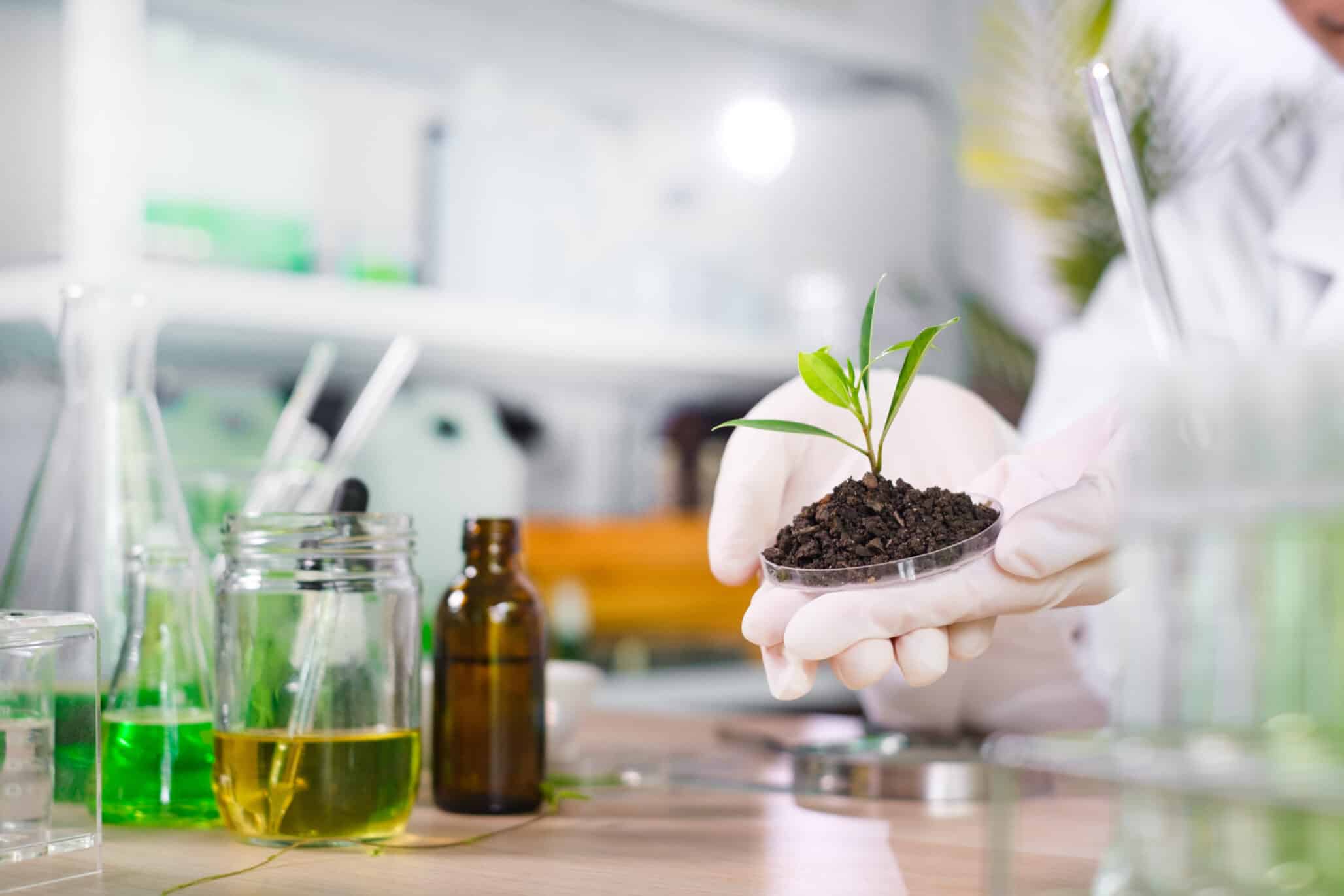
Researchers at the Institute of Science Tokyo have developed an ultra-thin, transparent, and water-resistant electrode that can monitor plant stress without interfering with normal leaf function. Designed to work even on hairy leaves, the new nanofilm electrode allows leaf hairs, or trichomes, to pass through it and maintain stable electrical contact with the leaf surface.
The advance could support real-time monitoring of plant health and help improve crop yields through earlier detection of stress.
Plants generate bioelectric signals when exposed to stress, and capturing those signals could provide an early warning of disease or harmful growing conditions. But existing leaf electrodes have faced major limitations. Some block light and interfere with photosynthesis, while others are not durable enough for long-term field use. Leaves with dense trichomes have posed an additional challenge, since many current electrode designs flatten or damage these structures.
To overcome those obstacles, the research team created transparent nanofilm electrodes made from single-walled carbon nanotubes on a flexible elastomer layer. Measuring just 70 to 320 nanometers thick, the films conform closely to the leaf surface without adhesives, according to a press release.
The researchers found that the thinnest, 70-nanometer version could be pierced by trichomes, allowing the electrode to rest directly on the leaf epidermis without significantly disturbing the hairs. This enabled stable electrical recording while preserving key plant functions, including photosynthesis. The electrodes transmitted more than 80% of incoming light and remained functional for weeks, and in some cases up to 10 months, without visible damage to the leaf.
The team also showed that the electrodes remained attached and operational under simulated rainfall, unlike hydrogel-based sensors that tend to fail when exposed to water.
Published online in Advanced Science on March 23, 2026, the study points to a potential new tool for smart agriculture, particularly for crops such as soybeans, tomatoes, and eggplants that have trichome-rich leaves.
The researchers also showcased how their electrodes could be used to monitor physiological stress in plants. “When the electrode was attached to leaves under herbicide damage, chemical stress was successfully detected through changes in the bioelectric potential waveform associated with light irradiation,” explains Fujie.
Because electrical signals often change before visible symptoms appear, the proposed devices could enable early detection of plant stress in real-world settings. “Our findings make it possible to non-destructively capture physiological changes that occur before stress levels reach the stage that leads to yield reduction,” remarks Fujie. “In the future, we expect this technology to be applied for crop health monitoring in agricultural fields.”