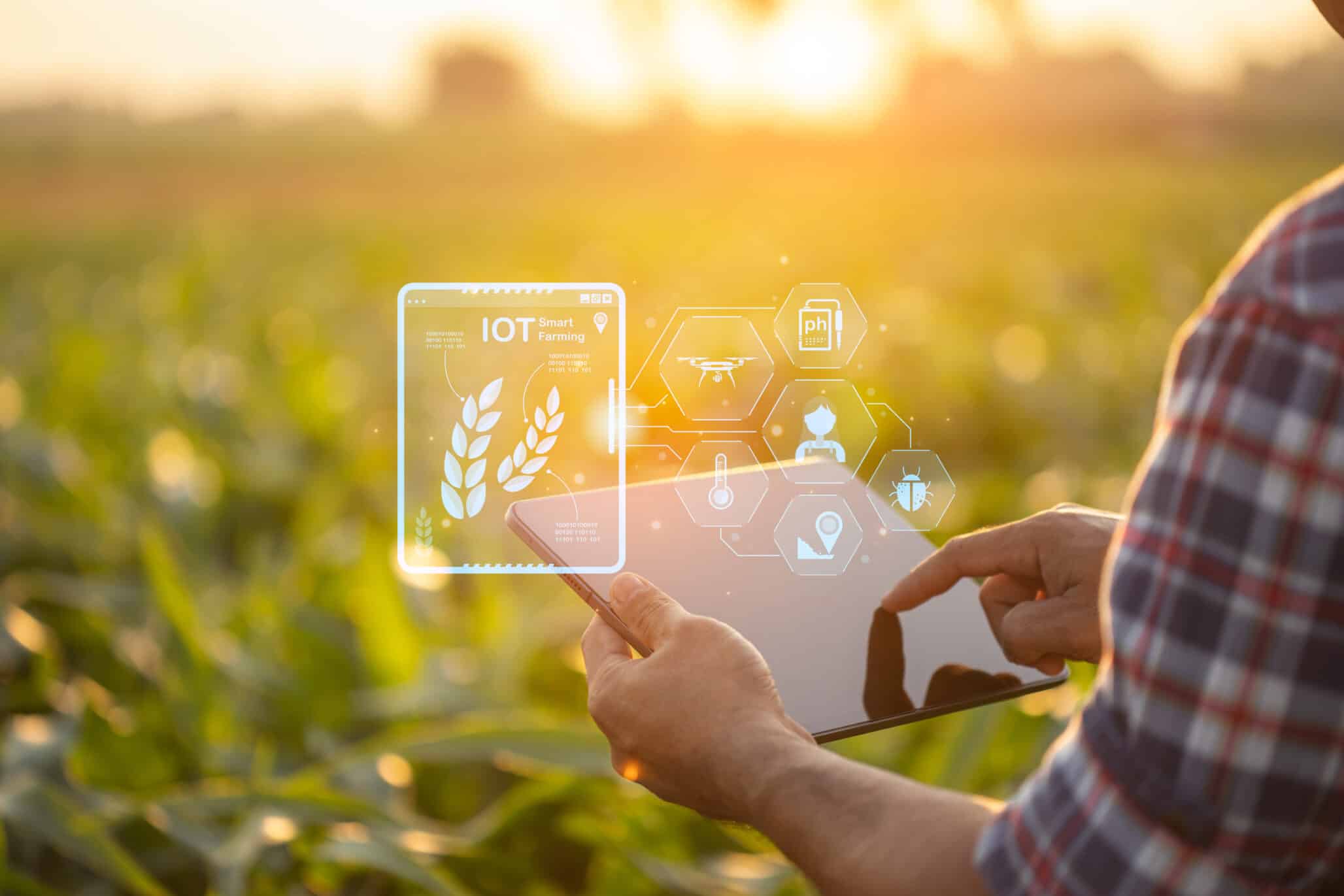
A key challenge for the future of agriculture is not just increasing productivity, but improving quality, reducing input use, and minimizing environmental impact. Sharing progress, accessing knowledge online, and collaborating on new developments are important steps toward advancing the digital transformation of regional economies.
To explore these opportunities and connect with developers and entrepreneurs working on new AgTech solutions, the first Digital Agriculture Day was be held in Argentina on July 24, in collaboration with IICA Argentina. The event will take place at the Francisco Congress and Exhibition Center in San Martín, Mendoza.
INTA Mendoza specialists presented recent developments in the use of applied technologies, data processing, artificial intelligence, and field sensors in fruit and vine production across the Cuyo region, According to a press release.
Gabriela Tallarico — coordinator of the AgTech Program — stressed that “digital tools set a new standard in agro-industrial decision-making. In the production of fruit, nuts or in vineyards, each decision made in advance and based on data has become the first input of the production cycle, because it reduces uncertainty, optimizes resources and improves profitability per hectare.”
Pre-harvest performance mapping, drone-based diagnostics, artificial intelligence for yield estimation, and tools for efficient water use all contribute to more accurate harvest forecasting. These technologies also support input adjustments, streamline logistics, and improve marketing strategies.
According to Tallarico, keeping up with innovations that integrate field data and business insights enables more efficient farm management. He noted that such tools can enhance both technical operations and financial outcomes during each production cycle.
Data-Driven Decisions to Improve Profitability
Even before planting, irrigating, or pruning, producers can make informed decisions by collecting and analyzing precise data. This approach helps reduce uncertainty and control costs. In fruit production — where soil, climate, and genetics all affect outcomes — remote sensing and IoT technologies offer significant benefits.
In Rama Caída, Mendoza, INTA technicians are using drone imagery to provide remote sensing and monitoring services for vineyard management. These tools are being used by small, cooperative farms dedicated to viticulture as a way to support decision-making and improve vineyard performance.
Melanie Vico — a referent of the INTA Rama Caída service — indicated that “the use of drones allows us to detect in time and even anticipate problems present in crops,” and added: “The information we obtain from these technologies is useful to complement the activities that are carried out day by day in each of the crops. In this way we can achieve greater efficiency in the use of resources.”
Specialists, in collaboration with the Viticultural Development Center (CDV-COVIAR), are conducting research on stable isotope identification, irrigation management, and the detection of pest and disease patterns in vineyards using multispectral imaging. These services are aimed at supporting small-scale producers.
“A mapping of the farms is made and a subsequent return of what is observed in each case is offered. Recommendations are made and work plans are developed,” Vico explained, adding that “during the season production on the farms is monitored and we work together with each producer to improve the evaluated situation. Local producers access the analysis of information collected in the different bands.”
Remote Sensing and Plant Health
Spectral indices such as NDVI, NDRE, and PRI — captured using multispectral and thermal sensors mounted on drones — are being used to detect early signs of water stress and disease, monitor the growth of fruit trees, assess damage from extreme weather events like frost or hail, and improve plant counting accuracy.
A case study demonstrating this application involved the analysis of Bonarda grapevine plots, conducted by the AgTech group in collaboration with the Irrigation Group at INTA Junín, Mendoza. Researchers observed clear differences in vegetation index (NDVI) values and green cover percentages between vines receiving full irrigation and those irrigated at 50% of their water requirements.
“The difference in the green index,” explained Facundo Calderón, a specialist in precision fruit growing at INTA Junín, Mendoza, “is between 20% and 60%, depending on the graft holder it refers to, between plants without restrictions and those with half the water received.” These data, validated in relation to the water potential, allow the drip equipment to be adjusted in each irrigation operation. More than six genetic materials are being tested.
On the other hand, protocols are being adjusted for the early detection of quarantine diseases in pit fruit trees, in virosis (for example, Plum pox virus), through the processing of images taken with drones and cell phones to identify changes in the canopy in plants attacked by these diseases, seeking to anticipate the onset of symptoms and mitigate the damage early.
“In a world where technology advances by leaps and bounds, especially in agriculture, adapting is not an option, but a necessity to remain competitive. Each innovation shows us that what was impossible until yesterday, was only the next step,” Calderón said.