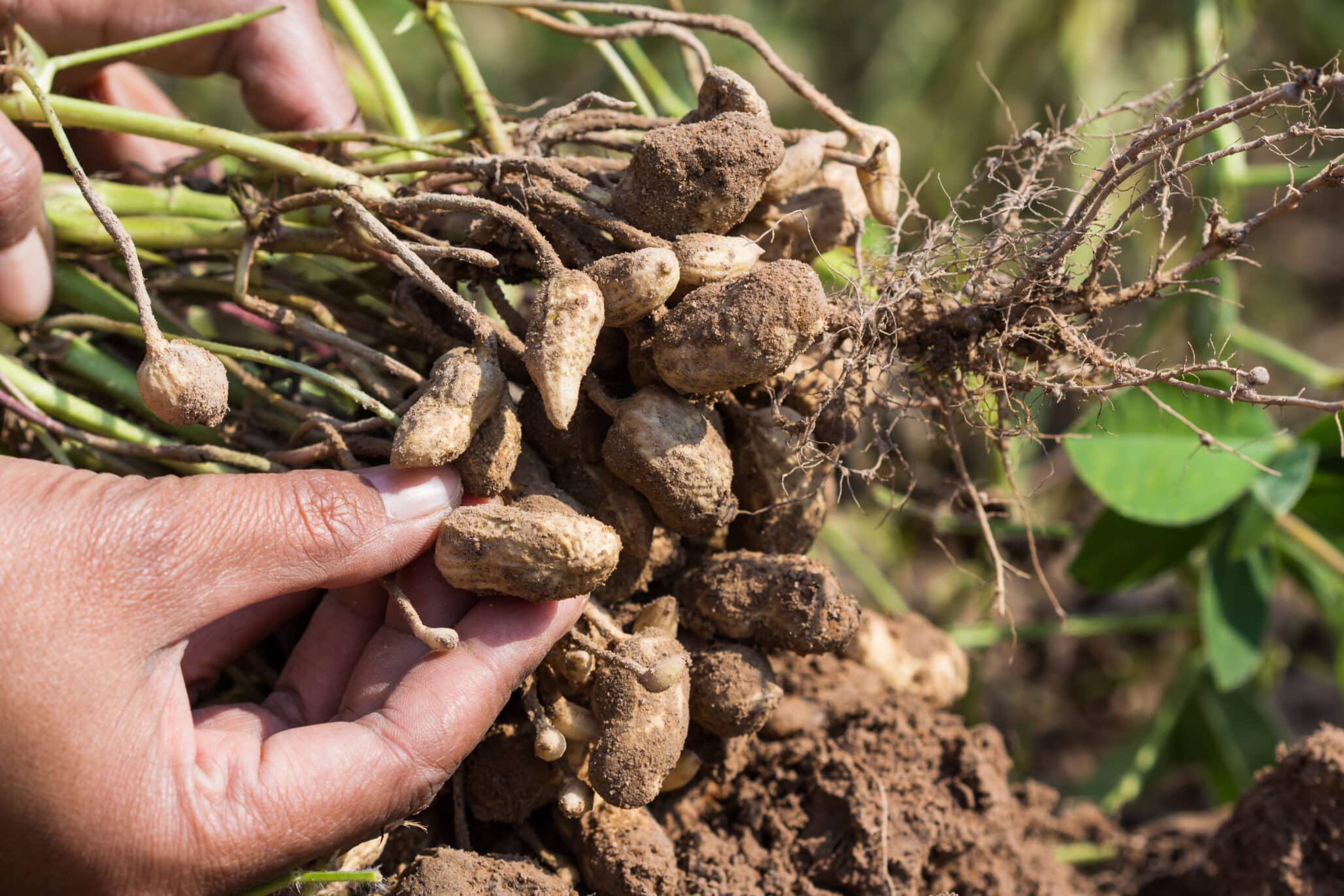
Findings by Embrapa Genetic Resources and Biotechnology (DF), in collaboration with national and international partners, indicate that genes from wild peanut relatives can enhance the resistance of cultivated peanuts to multiple agricultural stresses. This unprecedented approach — rooted in native South American species—broadens the possibilities for genetic improvement by combining ancestral biodiversity with advanced biotechnology.
One example is AdEXLB8, a gene isolated from Arachis duranensis, one of the wild ancestral species of cultivated peanut. Research shows that introducing this gene triggers plant defense responses that may help address key challenges such as drought, nematodes, and fungal diseases.
A central innovation of the study is demonstrating that the gene does not provide resistance directly; instead, it activates a mechanism known as defense priming, which prepares the plant to respond more effectively when stress occurs, according to a press release.
“When the plant produces this protein constantly, it acts as if it were being attacked by a pathogen or if it were under environmental stress. Thus, it begins to live in a permanent state of alert. Making a parallel with human beings, it is as if we were with the adrenaline always ready for a “fight or flight” response, but without spending too much energy,” explains Ana Brasileiro, a researcher at Embrapa Genetic Resources and Biotechnology, who led the studies.
The results were decisive: tobacco, soybean, and peanut plants engineered with this gene showed greater drought tolerance, increased resistance to root-knot nematodes (Meloidogyne spp.), and improved tolerance to fungal diseases such as Sclerotinia sclerotiorum. In roots where AdEXLB8 was overexpressed, nematode infection fell by 60% — with no negative impacts on yield or final product quality.
The research began with the observation that wild Arachis species are naturally more hardy and resilient, with greater tolerance to harsh conditions like drought and salinity. These materials, collected and conserved by Embrapa through a program led by researcher José Valls, also displayed inherent resistance to multiple pathogens, including fungi and nematodes. Such traits were shaped over thousands of years of evolution across ecosystems exposed to recurring biotic stresses (from pests and other organisms) and abiotic stresses (from environmental factors).
As a result, these wild relatives became valuable reservoirs of genes for breeding, research, and agriculture. Building on this foundation, researcher Patricia Messemberg coordinated molecular characterization efforts in the 2000s to unlock their potential for developing peanut cultivars that are more resistant and better adapted to challenging environments.
“Several of these wild peanut species have rusticity characteristics that were lost during the domestication process and are no longer present in the cultivated peanuts. Our job is to explore this biodiversity and transform this potential into solutions for agriculture,” says Messemberg.
According to the researcher, historically, plant breeders showed reluctance to use wild materials. The crossing with cultivated varieties, although it could transfer a desired characteristic (such as resistance to a disease), inevitably brought a set of unwanted wild characteristics. This made it difficult to include wild materials in peanut breeding programs in Brazil.
Advance in biotechnology reinforces genetic improvement
She explains that advances in biotechnology provided a faster path to overcome these challenges and added strategic value to conservation efforts. At the same time, new tools were developed to enable the use of wild species in conventional breeding programs, including genetic maps, molecular markers, and marker-assisted selection, among other techniques.
“Biotechnology contributes to the inclusion of these wild species in breeding programs in Brazil and abroad because it allows a gene to directly transfer from a plant to a commercial species, without affecting characteristics such as production and quality,” he emphasizes.
The Embrapa Genetic Resources and Biotechnology team then turned to the genomes of wild Arachis species to pinpoint the genes underlying this inherited resilience.
Using genomic approaches such as transcriptome analysis—which, as Ana Brasileiro explains, provides a snapshot of the plant’s molecular response when exposed to a specific stimulus — the researchers searched for “candidate genes” potentially responsible for these protective traits.
Pioneering research
Through this process, one gene stood out: AdEXLB8, part of the expansin-like B (EXLB) subfamily. Expansins are structural proteins involved in loosening the cell wall during cell division, making them essential for plant growth and development and also associated with responses to water stress.
As Brasileiro notes, the initial expectation was that a more flexible cell wall might actually ease the entry of pathogens — making the observed resistance to nematodes and fungi all the more intriguing.
“Biologically, we couldn’t explain this. Why did a protein that softens the wall also confer resistance to different types of stress, such as drought, fungus and nematode?”, asks the researcher, recalling the initial perplexity of the team.
To solve this puzzle, researchers overexpressed the AdEXLB8 gene in transgenic tobacco, soybean, and peanut plants. The results were striking: the modified plants showed greater tolerance to two root-knot nematode species (Meloidogyneincognita and M. javanica), improved resistance to the fungus Sclerotinia sclerotiorum, and increased drought tolerance — even when these stresses occurred at the same time.
According to Brasileiro, this broad, multi-stress protection is explained by a molecular mechanism known as defense priming, a “pre-activated” state that prepares the plant to respond more effectively when stress strikes.
“In producing this protein in a persistent way, the plant understands that it is being attacked. This makes her stay in a constant state of alert,” he says. In this state, the plant mobilizes its various lines of defense more quickly and effectively than an unprepared plant. The researcher emphasizes that this approach is innovative and that the understanding of this mechanism of action makes research pioneering.
She clarifies that the AdEXLB8 gene, in its natural context, acts only on cell walls. Only when it is inserted into another organism through transgeny and begins to be expressed continuously does it trigger the process of readiness in the plant. For the researcher, the application of these genes has the potential to reduce the need for nematicides and chemical fungicides, contributing to sustainable agriculture, with healthy food and lower environmental impact.
Messemberg emphasizes that a key contribution of the project was connecting field collection and germplasm characterization directly to gene discovery in wild Arachis species and their application through biotechnology—an integrated model aligned with Embrapa Genetic Resources and Biotechnology’s mission and similar to approaches used internationally in other crops. She also notes her group’s participation in early international efforts involving molecular markers, genetic mapping, and genome sequencing of wild Arachis, which helped turn conserved materials into usable resources for practical innovation.
She argues that advances in genomic tools—from marker-based methods to gene editing—are opening a new research frontier known as redomestication: rapidly adapting wild species for cultivation by editing multiple domestication-related genes at once over just a few generations. This, in her view, significantly strengthens the value and use of biodiversity maintained in germplasm banks.