Counter-season production five years since the COVID-19 pandemic: What changed?
It’s been five years since U.S. seed companies and their partners to the south were forced, due to the pandemic, to get creative in managing counter-season production in Chile and other countries.
Looking back, 2020 presented big barriers relating to the movement of people and seed to complete the yearly schedules. As was the case in other locales, in Chile, the government, global industry partners, members of the Chilean Seed Association (ANPROS) and others harnessed the available technologies to ensure business activities rolled out as closely as possible to normal. And while their swift and effective changes addressed immediate challenges (in March 2020, there were no issues shipping seed out of Chile), those changes are now permanent – and they’ve expanded – because of their profound benefits.
Back to the Beginning
Let’s go back for a moment to the initial response in 2020. The borders of Chile and other countries closed temporarily to air travel. Movement within the country was also restricted. However, Chilean authorities quickly “established clear protocols that supported the ongoing operations of seed companies, enabling them to adapt their working methods,” explains Úlia de Domènech, BASF global head of communications for vegetable seeds.
Among other actions, the government declared agriculture to be of strategic importance, enabling those in seed production and other ag-related activities to move around with proper paperwork. Companies such as Curimapu Export created online platforms for customers to check on each field, with access to imagery at the ground level and from above using drones and satellites. They also created detailed weekly reports for each field and much more.
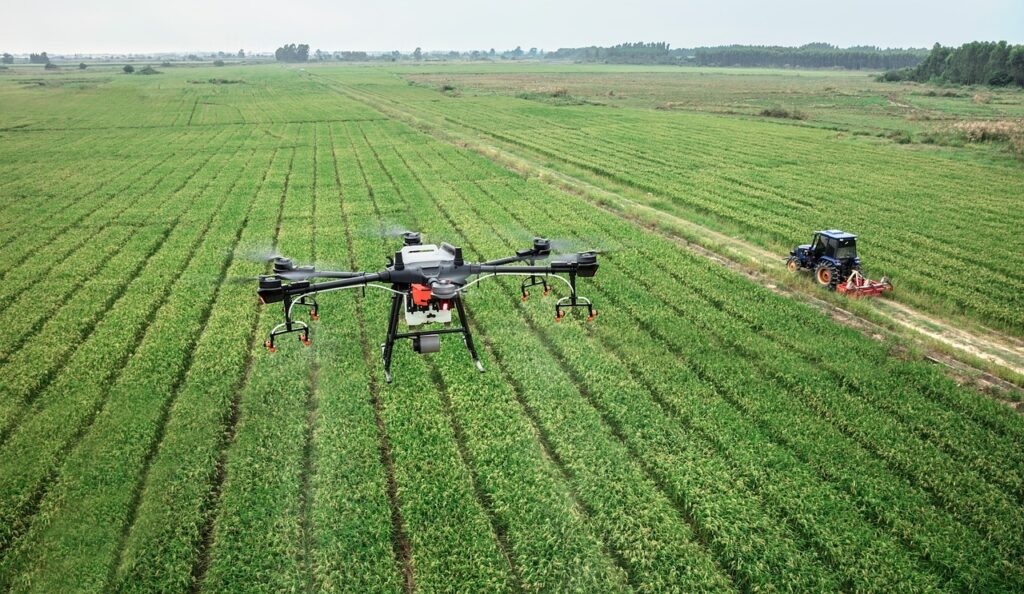
“From the U.S., we were able to do field inspections, grow-out readings, a breeder could talk to another in the field, looking at phenotypes together,” explains Jim Schweigert, president of Wisconsin-based Gro Alliance, who operates a joint venture in Chile with CIS Semillas called CIS Alliance, located just south of Santiago. “And things have continued to improve. The quality of the imagery, along with internet connectivity and coverage reliability, is so excellent, that with the real-time assistance of a field technician, it’s no different than being there.”
This means Schweigert and others travel less to Chile. Before the pandemic, he went in December to check fields and look at needs for the rest of the season. He would again get on a plane in January or February to check crop progress and then return in March for harvest and shipping.
“Of course, visiting is still important, but I visit less now because we have a great team,” Schweigert says.
ANPROS executive director Mario Schindler also says skill building that was accelerated in Chile during and after the pandemic. “Across the industry, our local teams developed quickly, growing their expertise not just with the plants but with use of various types of technology,” he says.
Many of Gro Alliance’s clients still incorporate virtual visits.
“The breeder can be there for the main part of the flowering or silking,” Schweigert explains, “but he or she doesn’t have to stay to see the end of the cycle in person. This really works well for many firms.”
Nicolás Sahli, CEO of CIS Agro, also points out that virtual meetings (with the ability to share a screen) also make day-to-day operations much easier.
“But we still need personal contact with customers,” he says. “I think some people thought during the pandemic that we wouldn’t need that, but time has shown that’s not true. Like other sectors, the seed business is very much based on relationships, so the personal contact will always be important.”
“We added back the in-person industry events right away in 2021,” Schweigert agrees. “You cannot do networking virtually. It has to be face-to-face. Some other firms have reduced their networking activities over the long term, but it’s not a strategy we wanted to try.”
Schindler adds that ANPROS continues a hybrid work environment where staff work from home about two-thirds of the time. He says this provides a better quality of life, and that happier people work better.
More Frequency, Many Benefits
The power of the internet also enables communications to be more frequent, in turn enabling counter-season production to be more agile.
“We used to do Gro Alliance board meetings once a year in person and now we do four or five meetings per year virtually,” Schweigert says. “We all get a closer view of operations, and we can also bring in a technical staff person for part of the meeting to explain something.”
Regarding webinars, Schindler says these are now planned but also added as needed.
“We used to plan about eight webinars over about three months but now we also do them on demand, when some important topic comes up,” he explains. “For instance right now in March, I just spoke to an official in our Ministry of Agriculture (SAG) and we will hold an upcoming webinar on what we talked about.”
Use of social media since the pandemic is also more frequent for ANPROS, allowing more communication with members. “We were doing reports once a week before and now we do these three times a week, sharing them on LinkedIn, for example,” says ANPROS Head of Communications María Paz Gana.
Subhead: Other ‘New Norms’
During the pandemic, because there were delays in logistics all over the world, ANPROS stressed that everything must be done more in advance than usual. This positive change has also been permanent.
“Sending seed as soon as possible and getting all the planning and paperwork arranged in advance, this is the new normal way of doing things,” Schindler says.
“Also, the speed of solving problems increased during the pandemic and that speed has stayed in place,” he adds. “We had to work with the authorities to solve many, many things, and now it’s become normal that problems are addressed in one day. We have the solution or path to a solution in the same day the problem is reported, and that is absolutely a result of the pandemic. This is very positive. The seed production system was resilient before, and it’s now so much more resilient.”
The digitalization of paperwork in the Chilean seed sector is also permanent, along with its many benefits.
“Varietal certification has been greatly facilitated by digitizing the process,” Sahli says. “Also, payments can now be made through the SAG’s online payment portal, where previously we had to go to each office to pay for SAG service provisions. In addition, the SAG’s online SIIS System allows importers to check the status of their procedures, which has simplified and streamlined seed imports. It has given companies a visibility of the process that was not previously available. I would add that as an association, ANPROS has represented the industry well, working with SAG to improve all these areas. They are always very helpful to the industry, and the pandemic made us see the importance of having a good national association team.”
Returning to the seeds in the fields, Schindler notes that all the data that’s being collected at field level since the pandemic (including many aspects of crop production from drone and satellite technology, irrigation sensors and more) is also improving seed yield and quality.
“Now we have all this data that we are not only able to share with our global partners but we are using to help us push boundaries of production,” he says. “Exciting times are ahead.”
Schweigert is also very positive.
“The uncertainty in the beginning of the pandemic was really scary,” he says. “There was so much we didn’t know. But there is so much we’ve learned and we now have so many new benefits.”