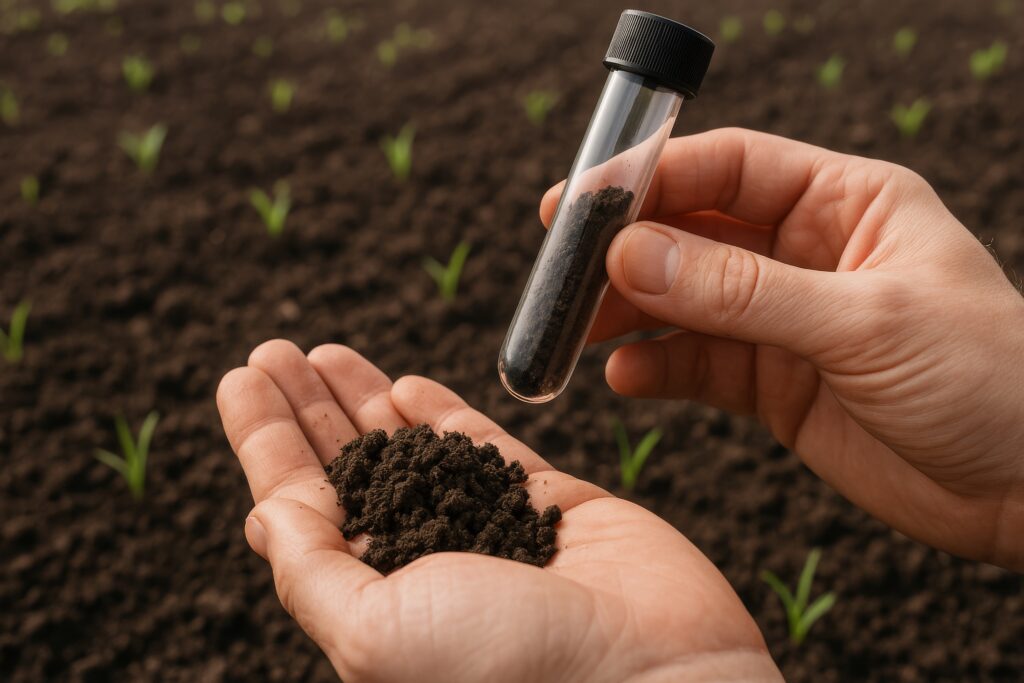

It is a moment forever etched in my memory: standing at the edge of a test plot, watching green shoots break through the soil—tiny witnesses to years of laboratory work, late nights, and scientific dreams. But as I looked across that Minnesota field, I realized a simple truth: innovation in agriculture only matters when it stands up to the complexity of real-world conditions: unpredictable weather, highly variable soil chemistry, and a host of ever-present pests. In agriculture, the true test comes in the field.
The promise of biologicals has generated enormous excitement, and rightfully so. But in agriculture, as in science, proof comes not from potential, but from performance in the field. That’s why field validation is so critical. Without it, we can’t offer growers the rigor and certainty they need. With both row crops and high value specialty crops, whose diversity makes it challenging to build large-scale testing platforms, it is our responsibility as an industry to invest wisely, to prioritize needs, and to deliver performance.
Moving from Discovery into Dirt
My fascination with plant-microbe relationships began decades ago, long before “soil ecology” was a popular phrase. As a young faculty member at the University of Minnesota, I stumbled onto something remarkable: a potato field that had resisted disease after three decades of continuous monoculture, even when researchers tried to introduce pathogens. No grower would ever intentionally plant potatoes year after year in the same field, but this anomaly taught me that resilient microbial communities—cultivated unknowingly over decades—had quietly created disease suppression in ways we never anticipated.
That early lesson remains clear today: biologicals are part of living systems. Biological products must function within the chaos of soils, climates, and farming practices, and the outcomes can seem unpredictable. Laboratory results under controlled conditions, no matter how promising, must meet the challenge of complex field realities. But unpredictability isn’t a given! Confidence in outcomes is borne of two key factors: 1) deep biological understanding of what microbials need to perform effectively and consistently in the field; and 2) rigorous and robust field validation. Field validation isn’t a luxury; it’s what separates potential from proven performance.
Why Field Validation is Non-Negotiable
Field validation is hard, expensive, and often humbling. But it is the only path to real agricultural impact. Yet credible field validation cannot happen in a silo. No one company, university, or grower can do this alone. We need shared commitments across agricultural research, development, and production systems, integrating findings across crops, geographic regions, soil types, and management practices. At Jord BioScience, partnering with commercial companies, land-grant universities, and collaborating directly with growers has been fundamental to achieving in-field performance. These relationships grant us not just access to diverse field platforms, but to the rich insights that facilitate rigorous field testing and reliable results.
Wider collaboration among biological companies, agribusinesses, universities, and forward-thinking farmers opens doors—not just for more trials, but for better solutions with greater impact. Together, we ensure that our efforts bring practical, robust answers to those who need them most. If we hope to replace rhetoric with results and excitement with evidence, we must make field validation a central, shared priority. Because, at the end of the day, agricultural innovation is not about what works in theory, but what works in the field.