A multi-state analysis finds field-evolved Bt resistance reduces the performance of Bt + RNAi corn against corn rootworm, underscoring the need for stronger resistance management.
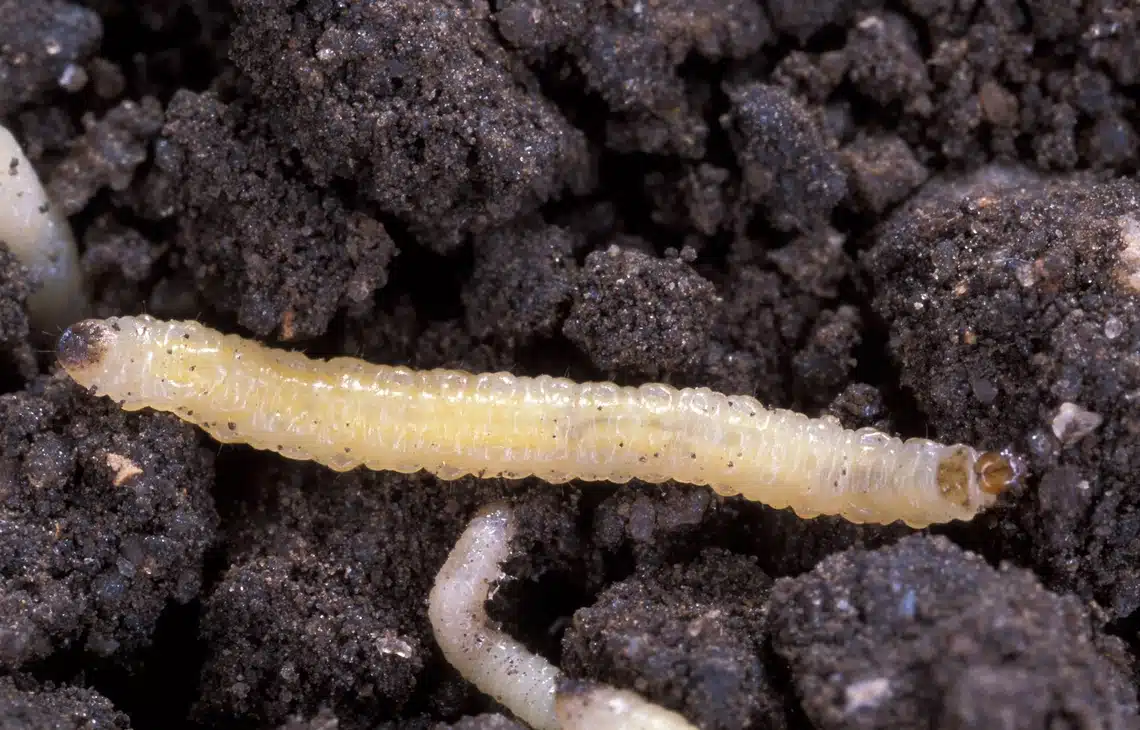
Corn rootworms, long blamed for billions in crop losses each year, are evolving resistance that weakens even the latest biotechnology controls, according to a new study in the Proceedings of the National Academy of Sciences.
Drawing on decades of data from multiple states, University of Arizona entomologists recently revealed that field-evolved resistance to Bacillus thuringiensis, or Bt, is undermining the effectiveness of transgenic corn that targets rootworms with Bt and RNA interference, or RNAi. RNAi turns the pest’s own genetic instructions against it.
“The results consistently show that in fields where resistance to Bt has evolved, the combination of Bt and RNA interference provides less protection from rootworm damage,” Bruce Tabashnik, lead author and head of the University of Arizona Department of Entomology, said in the news release. “This isn’t lab data. This is real-world, on-the-ground field data gathered from university and industry research across multiple states.
The team examined field data collected over the past two decades across 12 published studies, including evaluations of millions of rootworms from the Corn Belt, which stretches from western Ohio to eastern Nebraska and northeastern Kansas.
Bt corn that targets rootworms entered the market in 2003 and delivered strong early performance. “It was highly effective,” says Tabashnik. “But after several years, field-evolved resistance began to emerge.” As growers adopted Bt widely, natural selection favored the small fraction of rootworms with lower susceptibility. Seed companies responded with pyramids that combined two Bt proteins aimed at the same pest, which helped for a time. Rootworms later evolved resistance to both.
RNAi joined the toolbox in 2022. It “silences” specific genes the insect needs to survive and, in commercial hybrids, is paired with Bt. “It was never meant to stand on its own. It was intended to be a one-two punch with Bt,” Tabashnik said. “But by the time the RNAi was actually commercialized, the effectiveness of Bt plus RNAi was already undermined because of the pre-existing resistance to Bt.”
Corn rootworms earn the “billion-dollar bugs” label for a reason. “They’re really nefarious, insidious pests,” Tabashnik said. “For each of the past two years, rootworms have caused about $2 billion in yield losses to corn in the U.S., and there’s another billion dollars invested yearly to control them.”
The researchers urge integrated pest management to extend the lifespan of biotech tools: rotate crops, use refuges with conventional corn to maintain susceptible insects, and avoid continuous use of the same traits on the same fields.
“Farmers have been relying on this new technology with the expectation that it would last for many years. Our study shows the lifespan of this tool could be much shorter unless resistance management is taken seriously,” Tabashnik says. “It’s a reminder there’s no silver bullet. Evolution doesn’t stop. Rootworms adapt, and if we don’t diversify our approaches, we’ll keep chasing our tails.”