In California’s Death Valley, where summer temperatures soar above 120 degrees Fahrenheit, life seems almost impossible. Yet among the cracked earth and blinding sunlight, one native plant not only survives — it thrives.
That plant, Tidestromia oblongifolia, has helped Michigan State University (MSU) scientists uncover how life can flourish in extreme heat, revealing a potential blueprint for engineering crops that can adapt to a warming planet.
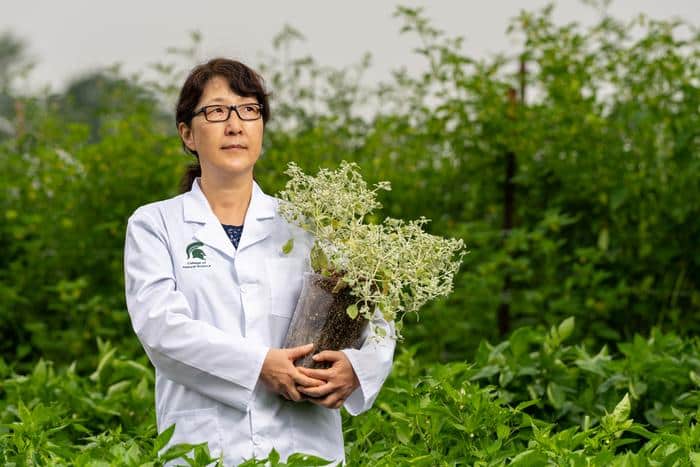
According to a MSU study, researchers Seung Yon “Sue” Rhee, a Research Foundation Professor, and Research Specialist Karine Prado found that T. oblongifolia grows faster under Death Valley’s searing summer conditions by rapidly adjusting its photosynthetic system to withstand the heat. Their findings, published in Current Biology, could help scientists design heat-resilient crops for the future.
A Heat-Defying Growth Spurt
For Prado, the study began with one burning question: how can this plant remain green and vigorous where most others would wither in hours?

“When we first brought these seeds back to the lab, we were fighting just to get them to grow,” Prado said. “But once we managed to mimic Death Valley conditions in our growth chambers, they took off.”
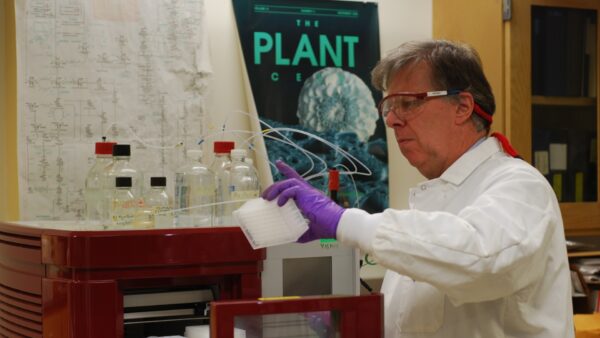
Working with colleagues from the Rhee Lab at MSU’s Plant Resilience Institute, Prado used custom-built plant growth chambers to recreate the intense light and temperature swings of a real Death Valley summer. What happened next stunned the team — T. oblongifolia tripled its biomass in just 10 days. In contrast, closely related species often praised for their heat tolerance stopped growing altogether.
Within two days of exposure to extreme heat, the plant raised its photosynthetic comfort zone, allowing it to keep producing energy. Within two weeks, its optimal photosynthetic temperature reached 45 degrees Celsius (113 degrees Fahrenheit) — higher than any major crop species known.
“This is the most heat-tolerant plant ever documented,” Rhee said. “Understanding how T. oblongifolia acclimates to heat gives us new strategies to help crops adapt to a warming planet.”
Inside a Plant Built for Extremes
By pairing physiological measurements with live imaging and genomic analysis, the researchers discovered that T. oblongifolia’s resilience stems from coordinated changes across multiple biological layers.
Under Death Valley-like heat, the plant’s mitochondria — its energy powerhouses — reposition next to chloroplasts, where photosynthesis occurs. The chloroplasts themselves change shape, forming “cup-like” structures never before seen in higher plants. These may help capture and recycle carbon dioxide more efficiently, stabilizing energy production under stress.
Thousands of genes also switch activity within 24 hours. Many protect proteins, membranes, and photosynthetic machinery from heat damage. The plant boosts production of a key enzyme called Rubisco activase, which helps keep photosynthesis running smoothly at high temperatures.
A Model for Agriculture in a Hotter World
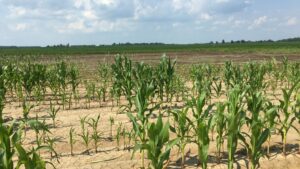
With global temperatures projected to rise by up to 5 degrees Celsius by century’s end, heat waves are already cutting yields for major crops like wheat, maize, and soybeans.
“T. oblongifolia shows us that plants have the capacity to adapt to extreme temperatures,” Rhee said. “If we can learn how to replicate those mechanisms in crops, it could transform agriculture in a hotter world.”
For decades, most plant biology has focused on easy-to-grow model species such as Arabidopsis or staple crops like rice and maize. Rhee said that extreme survivors like T. oblongifolia represent a new frontier for improving resilience.
“Desert plants have spent millions of years solving the challenges we’re only beginning to face,” she said. “We finally have the tools — genomics, high-resolution imaging, systems biology — to learn from them. What we need now is broader support to pursue this kind of research.”
Her lab is already putting those insights to work, studying how the genes and cell structures that give T. oblongifolia its heat resilience could make staple crops more robust.
“This research doesn’t just tell us how one desert plant beats the heat,” Prado said. “It gives us a roadmap for how all plants might adapt to a changing climate.”