The Growing Leadership Challenge
The seed industry faces a pressing leadership challenge. With senior executives averaging an age in the mid-50s and CEO tenures shrinking to roughly seven years on average, a significant wave of leadership transition is imminent. Succession planning can no longer be an afterthought or emergency reaction. Rather, it must become a core strategic priority, vital to preserving institutional knowledge, sustaining innovation and maintaining competitive advantage.
Competing for Next-Generation Talent
The leadership challenge goes beyond demographics. Seed companies must compete for talent with technology, biotech and other sectors inside and outside of ag. Executive candidates who can navigate digital transformation, sustainability and complex global supply chains are limited. Private equity’s growing influence adds pressure for scalable leadership and measurable bench strength before investment decisions are made.1
Common Pitfalls in Succession Planning
Many organizations fall into similar traps that weaken their succession efforts:
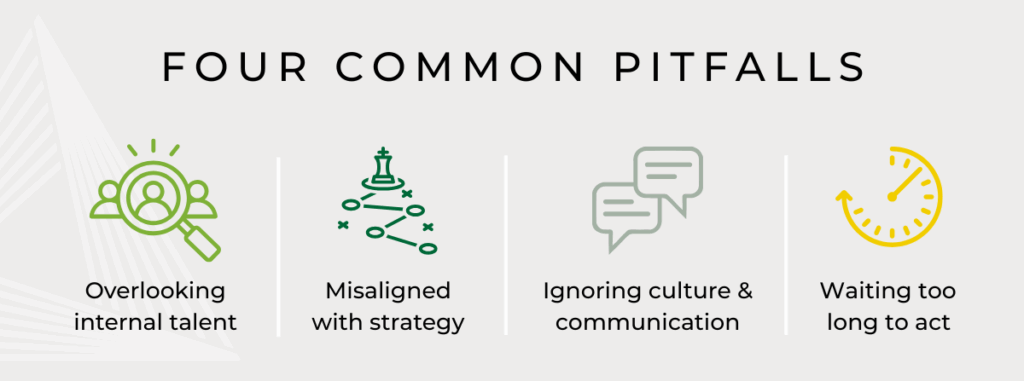
- Neglecting internal talent and narrow candidate pools: Overlooking high-potential internal leaders and relying on a limited pool of successors increases risk and leads to missed development opportunities.
- Disconnecting succession from strategy: Succession plans not aligned with long-term business goals can produce leaders unprepared for future challenges.
- Waiting too long to act: Delaying succession planning until a vacancy occurs leaves insufficient time for leader development and smooth transition.
- Overlooking culture and communication: Focusing solely on skills while ignoring cultural fit leads to poor engagement; similarly, failing to communicate plans transparently across a team can spark uncertainty and erode trust.
Addressing these interrelated challenges thoughtfully strengthens the leadership pipelines that support growth and resilience.2
How Leading Companies Build a Leadership Bench
Progressive seed companies identify emerging leaders early, offering rotational roles across finance, operations, commercial and global markets to broaden experience and readiness.3 Expanding candidate pools beyond traditional agriculture, paired with structured onboarding emphasizing culture and values fit, further strengthens transitions.4
The Role of External Expertise
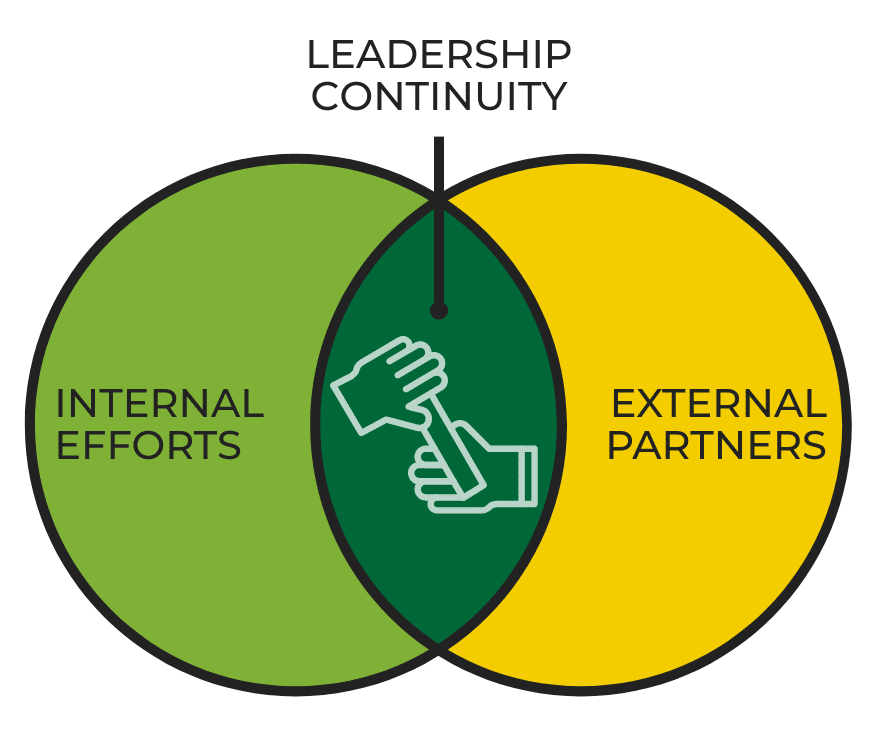
Executive search and leadership advisory partners can complement internal efforts with an external perspective. At Kincannon & Reed, we partner with leadership teams to provide insights into talent trends, readiness, and market benchmarks that help organizations make informed decisions.
A recent trend we’re seeing is the increased use of interim or fractional executives. Leadership development can play a critical role in these situations, helping transform interim leaders into long-term contributors while accelerating their ramp-up. These approaches maintain continuity during transitions and give companies the time to cultivate leaders positioned for sustained success.
Succession as a Strategic Imperative
Succession planning today is not just about leader replacement; it is about building and sustaining innovation, culture and organizational resilience. Companies that embed talent strategies such as succession planning into their operational foundation secure the continuity needed to navigate a dynamic, competitive seed industry and position themselves for long-term success.
For over 40 years, Kincannon & Reed has worked exclusively in food and agriculture, helping organizations identify, recruit and support the leaders who will shape the industry’s future. If you’re thinking about your leadership needs, we welcome the conversation.
Aaron Locker, K&R Managing Director, alocker@krsearch.com | 1-302-354-5709
Jon Leafstedt, K&R Managing Partner, jleafstedt@krsearch.com | 1-515-988-4888
Resources: