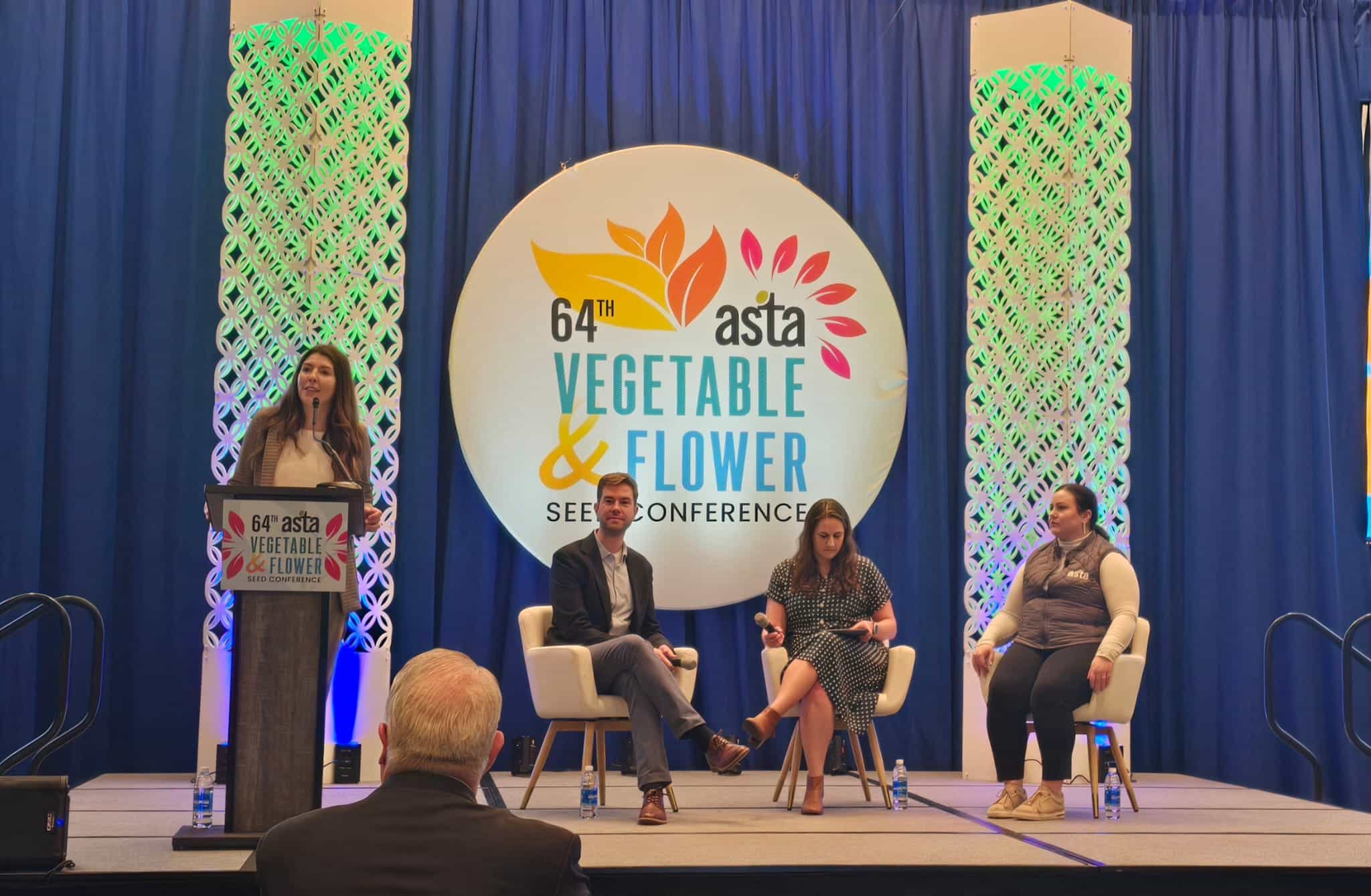
Washington is noisy right now: agency shakeups, USDA restructuring, program reviews and near-constantly shifting priorities. In this short, candid video interview, Janae Brady, Vice President, Government Affairs at the American Seed Trade Association (ASTA), explains how seed-sector advocacy cuts through the noise and stays effective heading into 2026.
As Brady explains, being in Washington right now means constant movement. ASTA’s approach is rooted in fundamentals: reminding policymakers that seed is the foundation of agriculture. With deep relationships and early access to decision-makers, the organization is working to translate policy shifts into clear, actionable insight for its members.
In the video, Brady shares:
- What it’s like to have a front-row seat during federal government restructuring
- How ASTA determines which messages resonate in a crowded policy environment
- Why “back to the roots of agriculture” is more than a talking point
Some of the most important points she covers include:
Advocating for a New Farm Bill
The Farm Bill extensions have been buying time, but not certainty. Brady is direct about where the risks lie. While fallback funding tools matter for farmers, prolonged delays threaten research and innovation. That’s where seed companies could feel real impact if momentum stalls.
ASTA’s Investment in Biotech Advocacy
ASTA’s expanding role in biotech advocacy isn’t a departure; it’s a natural extension of its mission. As the policy conversation widens, so does the need for more voices, more data, and more real-world examples from the seed industry.
Member Engagement Matters
Brady closes with a clear call to action: advocacy works best when companies engage, share challenges and stay involved. If you want a sharper understanding of how seed policy is being shaped right now and where your voice fits in, this is a conversation worth watching.
Watch the full video for Brady’s unfiltered take on Washington, the Farm Bill, and the future of seed sector advocacy.