A University of Nebraska–Lincoln team used a plant-insect-pathogen system to create new soybean germplasm combining two key resistance genes.
University of Nebraska–Lincoln researchers have developed a genetically unique soybean line with enhanced resistance to two major production threats: soybean aphids and soybean mosaic virus.
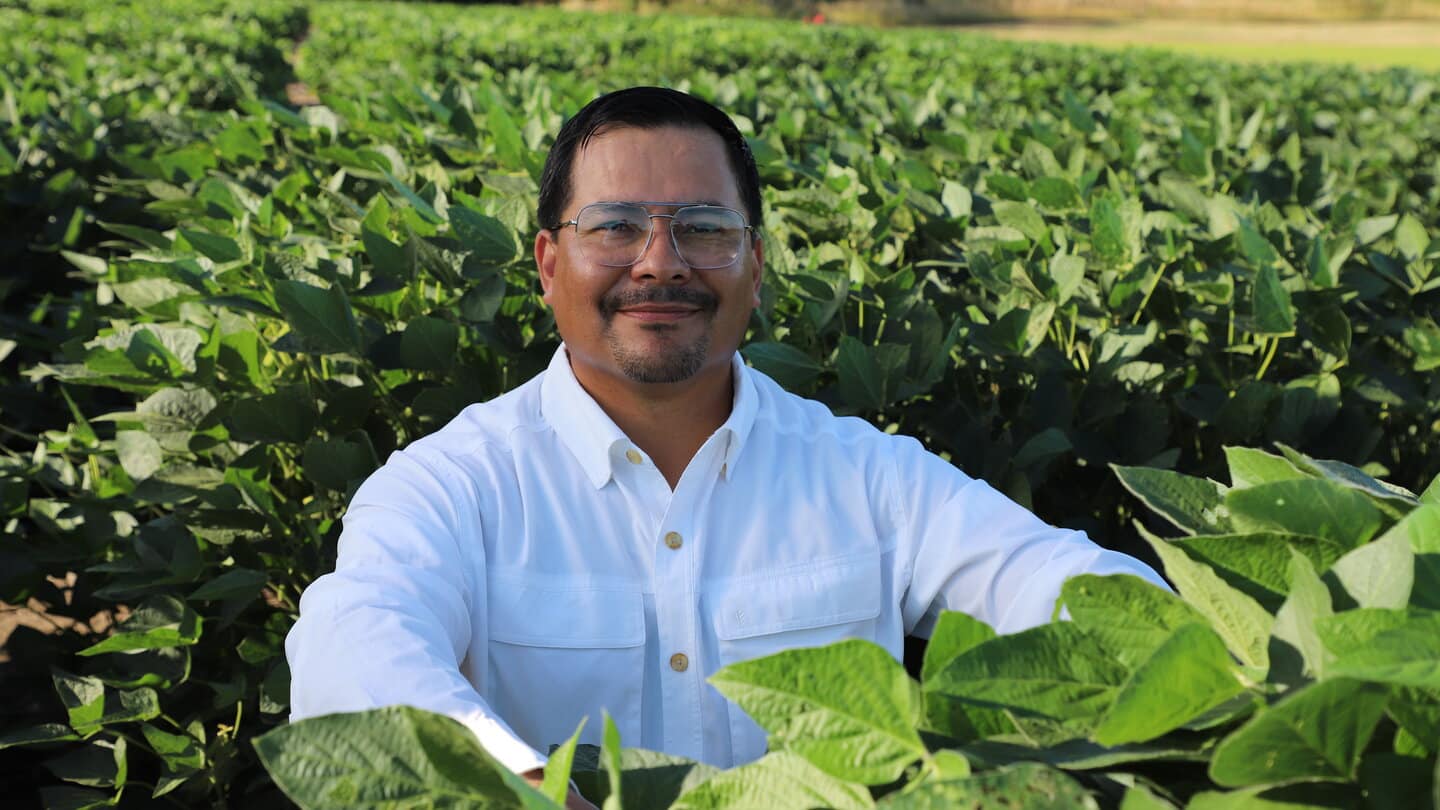
BMC Genomics highlighted work led by Luis Posadas Martinez, research assistant professor in the Department of Agronomy and Horticulture, in a 2025 special issue.
The study explored the relationship between soybeans, soybean aphids and soybean mosaic virus, using what researchers describe as a tritrophic plant-insect-pathogen system to create soybean germplasm with improved dual resistance.
Soybean aphids are common carriers of soybean mosaic virus, and together the pests continue to pose increasing challenges as both insects and viruses evolve alongside their host plants.
Soybeans have developed natural defense mechanisms through resistance genes known as R-genes. Two of the most important are Rag2, which provides resistance to soybean aphids, and Rsv1, which provides resistance to soybean mosaic virus. Both genes are located on chromosome 13.
Martinez and his team recombined these traits to create a soybean genotype that carries a closely linked Rag2-Rsv1-h haplotype. The researchers say their work is the first to use a plant-insect-pathogen system to develop this type of double-resistant soybean genetic material.
The newly developed genotype is expected to support future soybean breeding efforts focused on stronger protection against aphids and soybean mosaic virus. The parent lines and recombined genotypes used in the research may also serve as valuable material for additional studies examining relationships among insect carriers, plant hosts and viruses.