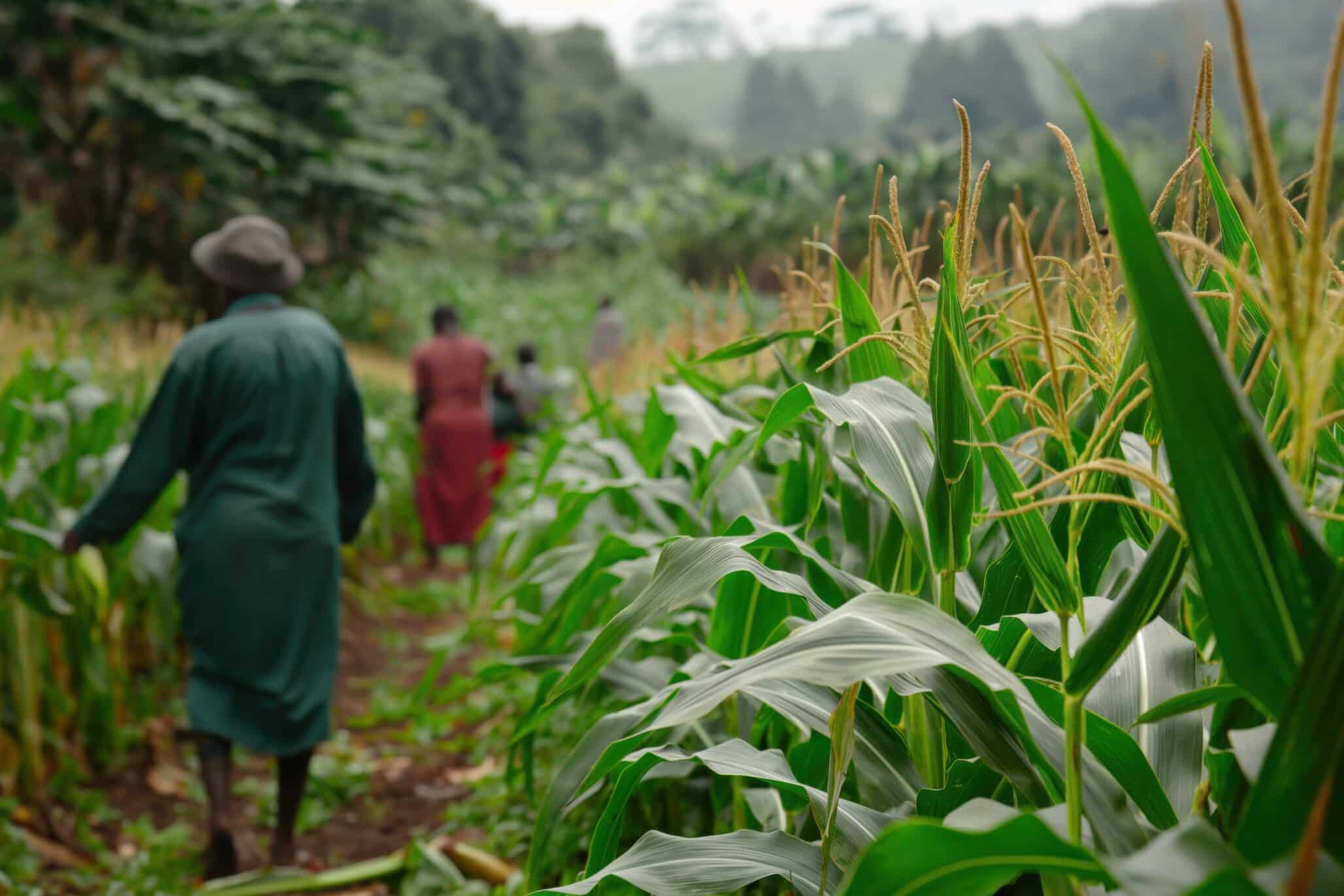
A forgotten maize line from Africa is inspiring new hybrids, new conversations and a deeper understanding of how public breeding links cultures across the world.
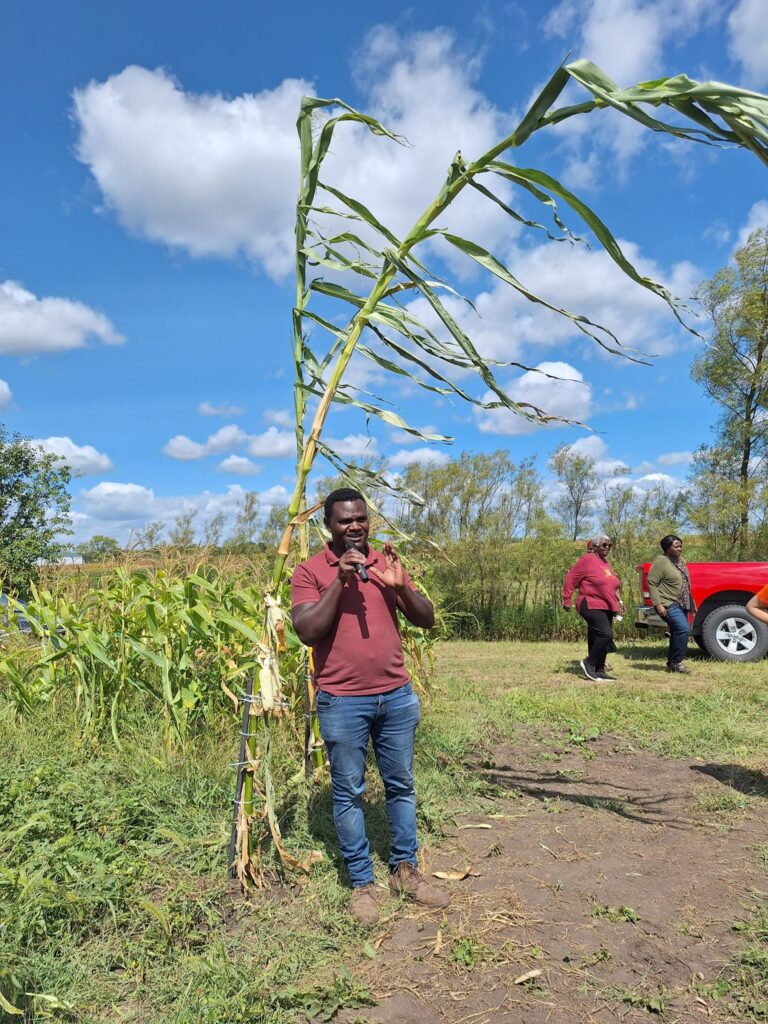
On a bright afternoon in an Illinois corn field, members of the local African diaspora community got a taste of home while organic corn farmers caught a glimpse of future innovation. Hosted by University of Illinois Urbana-Champaign (UIUC) crop sciences graduate student Chris Mujjabi, the “Kasooli Party” celebrated white maize and the cultural and research connections linking Kenya to the Corn Belt.
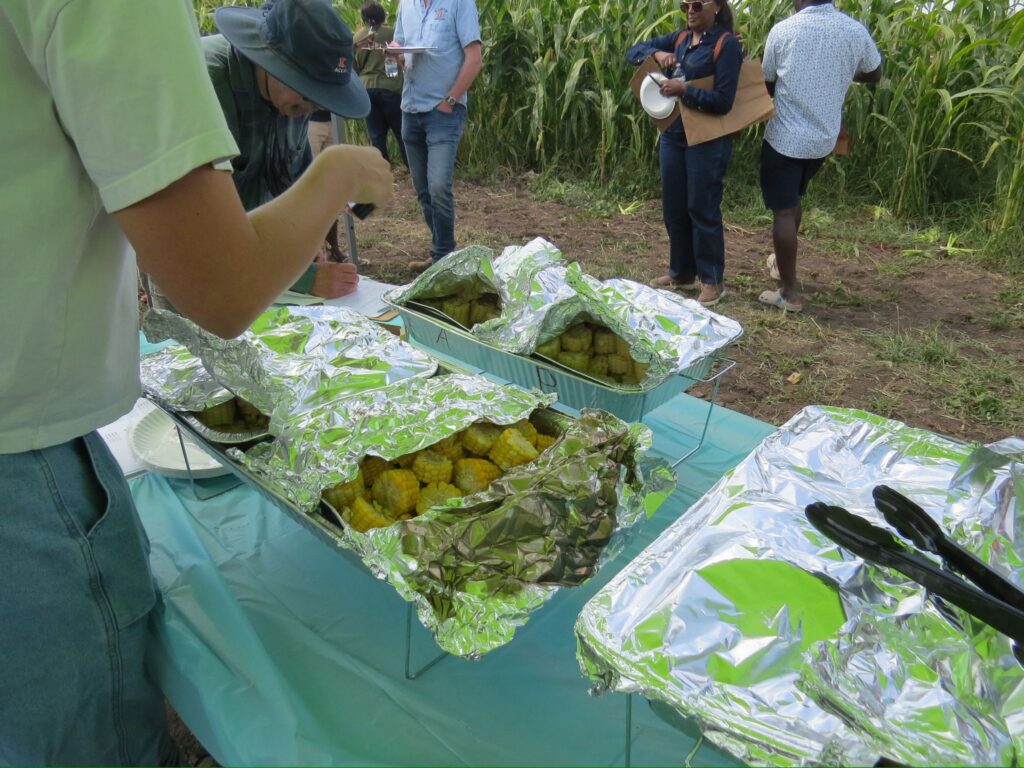
“Chris connected the white corn and new hybrids with the African community here in the Midwest,” UIUC crop sciences professor says. “They came to the field day and were able to eat the corn. That’s a cultural connection that we want to nourish.”
Designing a Corn System That Works for Everyone
That bridge between crop production and consumers is reflected in the model used by the Illinois Organic team, with UIUC assistant professor of natural resources and environmental sciences Carmen Ugarte at the helm.
“We want to create a cropping system that’s very integrated,” she says.
Ugarte collaboratively works with the breeding team to identify traits that can strengthen and support crop production while balancing environmental concerns. This approach highlights the connection between crop genetic diversity and soil health.
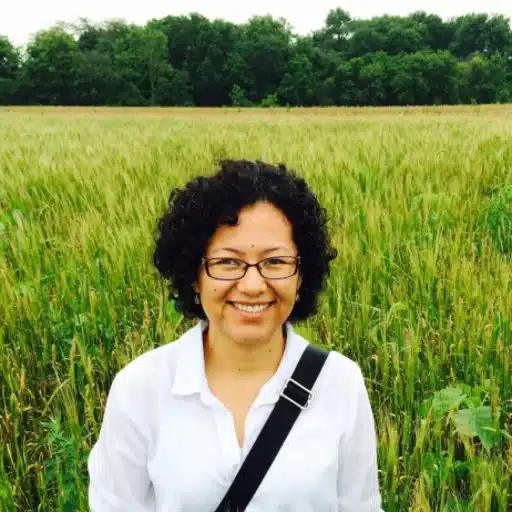
“In my role as a soil ecologist, I investigate how cultural practices influence the diversity functions and services provided by soils,” Ugarte says.
In turn, a healthy and diverse soil agroecosystem can help support important soil functions, including water and nutrient use efficiency, accrual of soil organic matter and biological control.
“Genetic diversity also gives different plants different rooting characteristics and from the perspective of the soil, we hope to achieve a point where the crop might take from the soil only as much as it contributes in return,” Ugarte says.
The Illinois Organic Team group also includes the farmers in the participatory model. Farmers provide feedback to the team, creating a loop that ultimately includes consumers as well.
“All of the work we do is important, but it wouldn’t be important if no one is using the grains produced in this region. From the beginning of our collaborative efforts, we sought to connect the breeding component all the way to the consumers. That is why we continue researching; to understand how a change in the development of a hybrid along with soil management conditions could influence the overall quality of the produced grain,” Ugarte says.
SBanking on Diversity – Literally
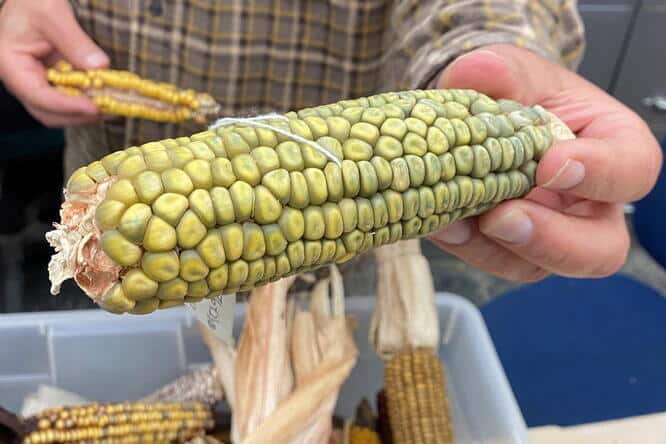
Mujjabi’s Kasooli party success was made possible by a chance discovery in a seed bank. Kitale Synthetic II is just one example of the genetic treasures stored in seed banks worldwide. In 2019, Mujjabi was digging through decades of preserved germplasm with the hopes of finding something special.
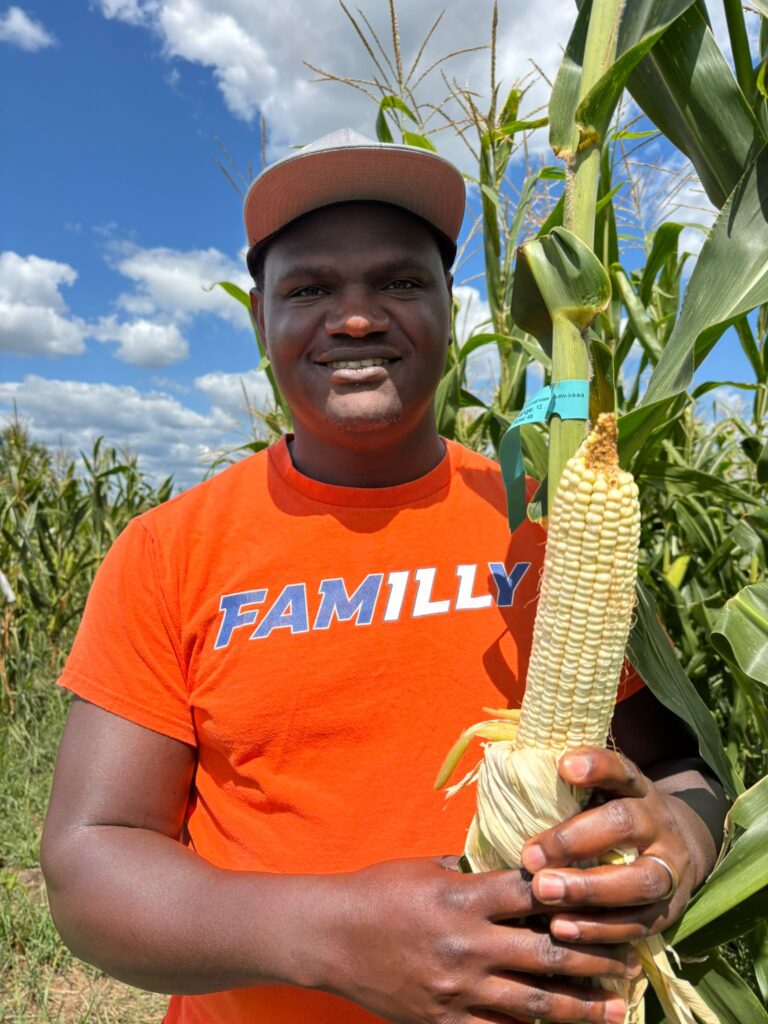
“Our project was really looking to expand the genetic base of organic maize in the Midwest and in general, using lines from different parts of the world. We had planned to include a section of the exotic materials in our nursery as part of a demonstration and observation block for farmers during our annual field day” Mujjabi says.
In addition to Kitale, Mujjabi selected various OP varieties such as Hickory River, Smiley Silage, Misener OPV, Bloody Butcher, Rainbow, Mandan White Flint, Silver King, Mandan Red Flour, White Waxy 4x, Highland Horsetooth, Boone County White, Hopi Blue Corn, Rainbow Flint, Mandan Red, Hickory King and others.
Kitale Synthetic II was a key open-pollinated variety (OPV) developed in Kenya in the 1950s and then later crossed with a different line in Ecuador to create the first high-yielding hybrid in Kenya, providing a near 40% increase compared to the other OPVs they were growing at that time in the area.
“I hadn’t known about Kitale Synthetic II beforehand, only that the name sounded Ugandan or African, which immediately caught my attention,” Mujjabi says. “After doing some research, I realized it had played a significant role in the history of maize breeding and production across Africa. That discovery motivated me to continue working with it, with hopes of introgressing some of the traits that made it so impactful into our current maize improvement efforts.”
He says this is why extensive germplasm collections are so valuable.
“At the end of the day, we did not select Kitale because it had certain characteristics that we already knew about and that we wanted to bring into our germplasm. It was kind of chance to find it in our germplasm bank,” Bohn says.
While the UIUC collection had what Mujjabi was looking for, the International Maize and Wheat Improvement Center (CIMMYT) in Mexico houses more than 28,000 unique maize seed samples and 150,000 more of wheat. The USDA is also an important resource that breeders rely on.
Bohn stresses the importance of a global mindset.
“If CIMMYT didn’t take on the germplasm collection work that it’s doing from Latin America, Africa and Asia, all of our germplasm would essentially be in the hands of a few big companies and not available for public research and that would be a shame,” Bohn says.
Turning Struggle into Strategy
Specifically, Mujjabi and the research team at UIUC hope to breed corn with a faster-closing canopy to quickly shade out weeds — an issue both in African and for organic farmers in the Midwest.
“I’m always puzzled by subsistence farmers in Africa who spend up to 80% of their time on their knees weeding, and I thought, perhaps these varieties might have some contributions to controlling weeds in organic production,” Bohn says.
Selecting for multiple stresses is also becoming more important.
“Doing genetic tests to understand what genes are involved in conferring resistance or resilience characteristics to the plant, is important and you cannot do that if you don’t have access to these repositories, or libraries of genetic information,” Ugarte says.
Many breeders have hung high hopes on this process of digging into the past for future innovation.
“We have to increase the overall tolerance of these varieties to drought, pests, low light, heat, nitrogen availability and other stresses and we hope that Kitale and others, will contribute to that,” Bohn says.
Taste Still Wins – Even in the Lab
Ugarte says that while many researchers, including themselves, work with yellow dent corn, Kitale has allowed them to explore new possibilities and serve other markets.
“Working with Kitale helps us expand the range of varieties that can be developed for production in organic agriculture,” Ugarte says.
And ultimately, it’s about offering farmers and consumers what they actually want, not just what they need.
Mujjabi says that while many biofortification projects are working to improve nutritional value, consumers are still going to have specific preferences.
“They care about taste, color and texture. If you don’t include people in the process, if you don’t improve the crop together with them, then the rate of adoption is limited. People won’t want it,” he says.
“For example, in Uganda, several organizations are promoting orange corn, which is more nutritious. But people love white corn. That’s what they eat, and the whiter the better,” Mujjabi laughs. “So yes, you can introduce something new and nutritious, but if you don’t take into account the cultural connections people have to their food, adoption will be very limited.”
Bohn says this is where public breeding research truly shines, rather than competing with big companies who spend millions of dollars on research.
“We are not developing hybrids for conventional producers in Illinois, Iowa, or Indiana, but for organic farmers in the Midwest, who are typically not served by the larger breeding companies,” Bohn says.
In fact, he recognizes the concern that with the high selection intensity in yellow dent corn, breeders might run out of genetic variation, especially when working under the constraints of today’s trend toward proprietary hybrids.
Jeffrey Block, organic seed division manager at Gro Alliance, LLC, works with seed companies throughout the industry as an expert on corn and soybean seed production. He’s seen a significant shift away from public germplasm-based breeding.
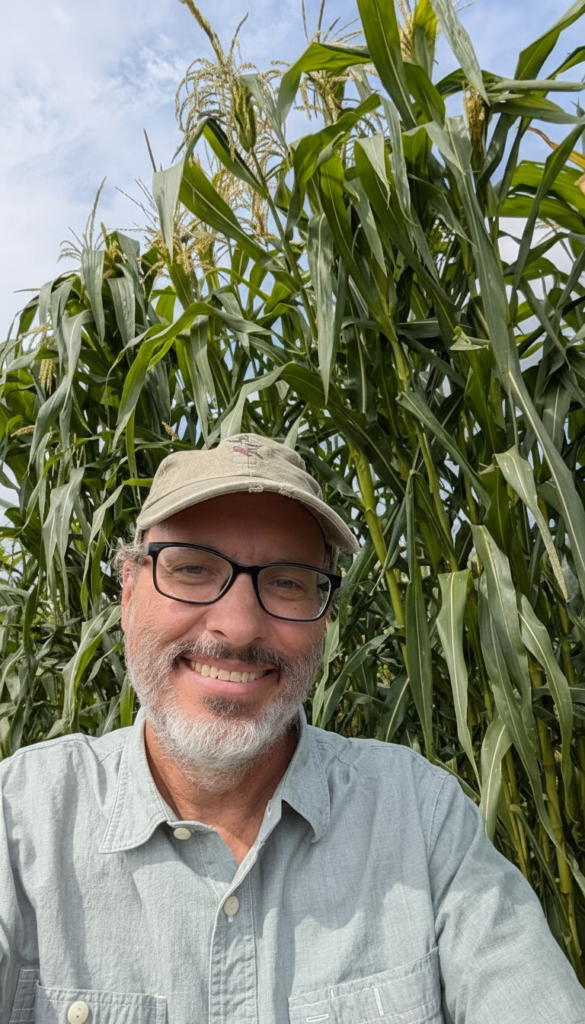
“In the last decade or two, the pendulum has really swung toward intellectual property rights, and we need to swing back some to the open pollinated side of things,” Block says. “We need to invest in public seed breeding and seed banks to make sure those genetic resources are available.”
He believes that too much focus on patents and other proprietary protections is ultimately going to make the industry more vulnerable, especially as farmers face climate change and other challenging growing conditions.
“As agriculture is changing, there has to be new development. Intellectual property rights in relation to germplasm are great for business because they provide a profit mechanism and are a boom for the companies that own the seed, but they stifle innovation because of a limited pool of genetic backgrounds,” Block says.
He points to agricultural crises throughout the years as evidence to why governments and organizations must continue to prioritize seed bank funding.
“The loss of genetic diversity makes all agricultural systems far more vulnerable,” he says, referencing stories of monocrop failures such as the potato famine and the heavily-used Cavendish banana variety.
“Breeders need accessible genetic resources to find novel traits such as new sources of disease resistance,” Block says.
From Specialty Seeds to Global Impact
Preserving and using diverse germplasm also allows for unique success stories.
“There are dozens of OPVs kept alive by hobby breeders, seed saving communities and farmers who improve them over time for smaller projects such as whiskey production or specialty grits and things like that,” Bohn says.
The success of using Kitale Synthetic II in Illinois has also shown that breeders can find success in serving those niche markets.
“These Kitale-based varieties are significant for the African diaspora, but this type of waxy white corn can also be used for other purposes,” Ugarte says. “Many other cultures want access to a variety like this, and it could add to the variety of hybrid offerings that farmers might consider producing.”
Block agrees that crop breeding for niche markets offers interesting and important opportunities.
“Small breeders and independent farmers who are innovating are really helping a whole group of people who otherwise would be left out. A big company wouldn’t have touched this,” Block says.
And that’s part of why the Kasooli Party was so exciting.
It’s rare that a chance find can serve a specialty community and provide solutions that could impact larger-scale production. Kitale-based varieties may bridge the gap from historic improvements in Africa to advances in organic breeding here in the Midwest.
With continuing research, Bohn believes it’s possible that the program could help increase yields and decrease inputs in organic corn production.
“We are so close to developing some other really good varieties for farmer consideration,” Bohn says. “And this white corn? It’s really good.”