For farmers, predicting the season’s challenges, like weather conditions or disease outbreaks, can feel impossible. This uncertainty makes choosing the right inputs difficult.
Fungicide seed treatments alone are often not broad spectrum, and the timing of foliar applications needs to be just right.
New research into S.A.R. (systemic acquired resistance) treatments like Heads Up® offer a proactive solution by enhancing your plants’ natural defenses, providing broad spectrum protection that begins at germination and lasts throughout the season. Biological plant activators like this offer a new way to add a kind of low-cost “insurance” against disease.
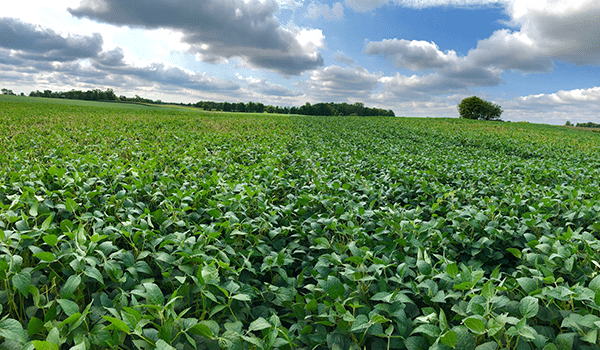
With over two decades of third-party data and trusted use on over 12 million acres of soybeans annually, Heads Up® is a reliable choice for growers looking for an easy-to-use, non-living biological plant activator that can help suppress some of the most challenging soybean diseases.
How Can a Seed Treatment Offer Full-season Protection?
Every plant has natural defense mechanisms. Plants possess an immune system that is activated during infection from fungal, bacterial, or viral invaders. This activation triggers physical and chemical changes within the plant, as it attempts to defend itself against the invading pathogen.
When a fungus is detected, the plant initially produces two hormones in excess, salicylic acid and jasmonic acid at the site of infection. These hormones play a crucial role in alerting the entire plant, as well as neighboring plants of the infection, and activating the expression of genes that strengthen the plant’s defense mechanisms. When these hormones are produced, they play important roles in helping the plant to resist infection by turning on the gene expression (through RNA) to produce specific defense proteins.
Understanding Gene Expression
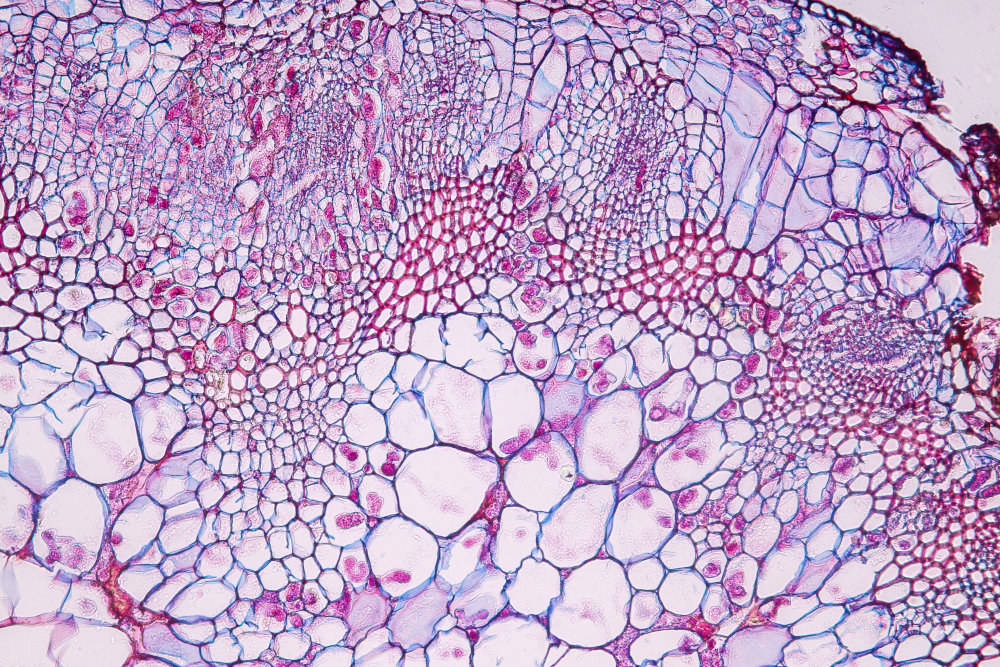
In order to understand the cellular processes within the plant and how they affect the plant’s ability to fight off infection, we need to study the plant at the molecular level. Molecular biology boils down to studying one of three areas: DNA (genomics), RNA (transcriptomics), or protein (proteomics). Both DNA and protein are more static, meaning that DNA levels and sequences do not change through a plant’s life, and protein production is completely reliant on which RNA molecules are being produced at a given time. Therefore, it is the population of different RNA molecules that are constantly fluctuating and being turned on or off, this is what’s called gene expression. It is influenced by environmental conditions, plant development, pathogen infection, and the study of gene expression will provide answers for how we can better protect the plant.
Salicylic acid and jasmonic acid/ethylene each have different genes pathways that they activate for plant defense. For salicylic based signaling, this activation is called systemic acquired resistance (SAR) and for jasmonic based signaling it is called induced systemic resistance (ISR).
Observations by measuring gene expression show that levels are higher in Heads Up® treated plants compared to the untreated control before an infection appears and the difference in levels increases even more after an infection starts.
How It Works
- Heads Up® is applied as a seed treatment. The treated seed exhibits a modest increase in salicylic acid signaling, with a notable two to three-fold increase in the expression of salicylic acid marker genes under non infected conditions – this is known as the primed state.
- While the plant remains uninfected, it grows and develops in a very similar manner as to an untreated plant because the difference in salicylic acid between treated and untreated is not to the level that would affect normal growth.
- When the Heads Up® treated plant detects an infection, the production of salicylic acid, its marker genes and consequently defense related pathways and proteins is put into overdrive, leading to dramatic difference in defense response levels compared to untreated. This leads to the robust protection against disease that we observe following Heads Up® treatment.
When Heads Up® is applied as a seed treatment, plants activate their defense response pathways quicker and stronger when an infection appears because of that baseline increase that we see in uninfected conditions.
In soybeans, regardless of whether the infection occurs early, such as with Rhizoctonia Root Rot or Pythium, or later in growth, with White Mold, a dramatic difference in defense response between untreated and Heads Up® treated seeds is observed.
White Mold
Compared to many other pathogens, White Mold is highly aggressive, and the infection progresses rapidly. As a result, in many cases, the plant’s defense mechanisms may not be activated quickly enough or strongly enough to effectively combat the infection.
Over two decades of research suggest that Heads Up® treated seeds are given a significant head start (or, “Heads Up”) in responding to White Mold. Although Heads Up® is not a curative solution, and high disease pressure may still result in some infection, the Heads Up® treated seeds have a much better opportunity to fight off the disease.
Stacking Plant Defense
Adding Heads Up® to your treatment package builds a more robust, broad-spectrum defense against disease throughout the entire season. Since Heads Up® works through the plant’s own defense mechanisms, it is crucial to select seed varieties tailored to your unique growing conditions. For instance, if you have a history of white mold, choose a seed with a better resistance score against that disease. A well-suited seed enhances the defensive potential when paired with Heads Up®.
An additional benefit of using Heads Up® is that disease pathogens cannot become resistant to the treatment. Heads Up® does not directly fight the disease; instead, it empowers the treated plant to defend itself. Pairing Heads Up® with a fungicide, which actively targets the disease, provides a powerful defense against yield loss.
You can learn more about Heads Up® at HeadsUpST.com.