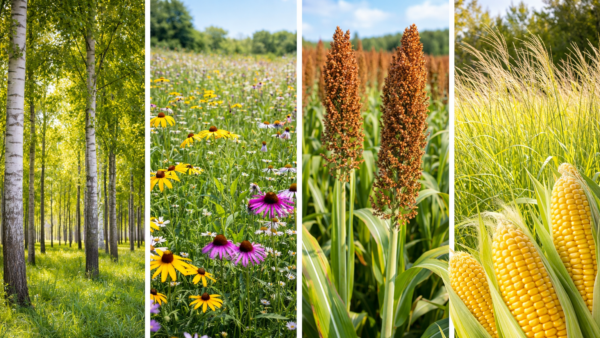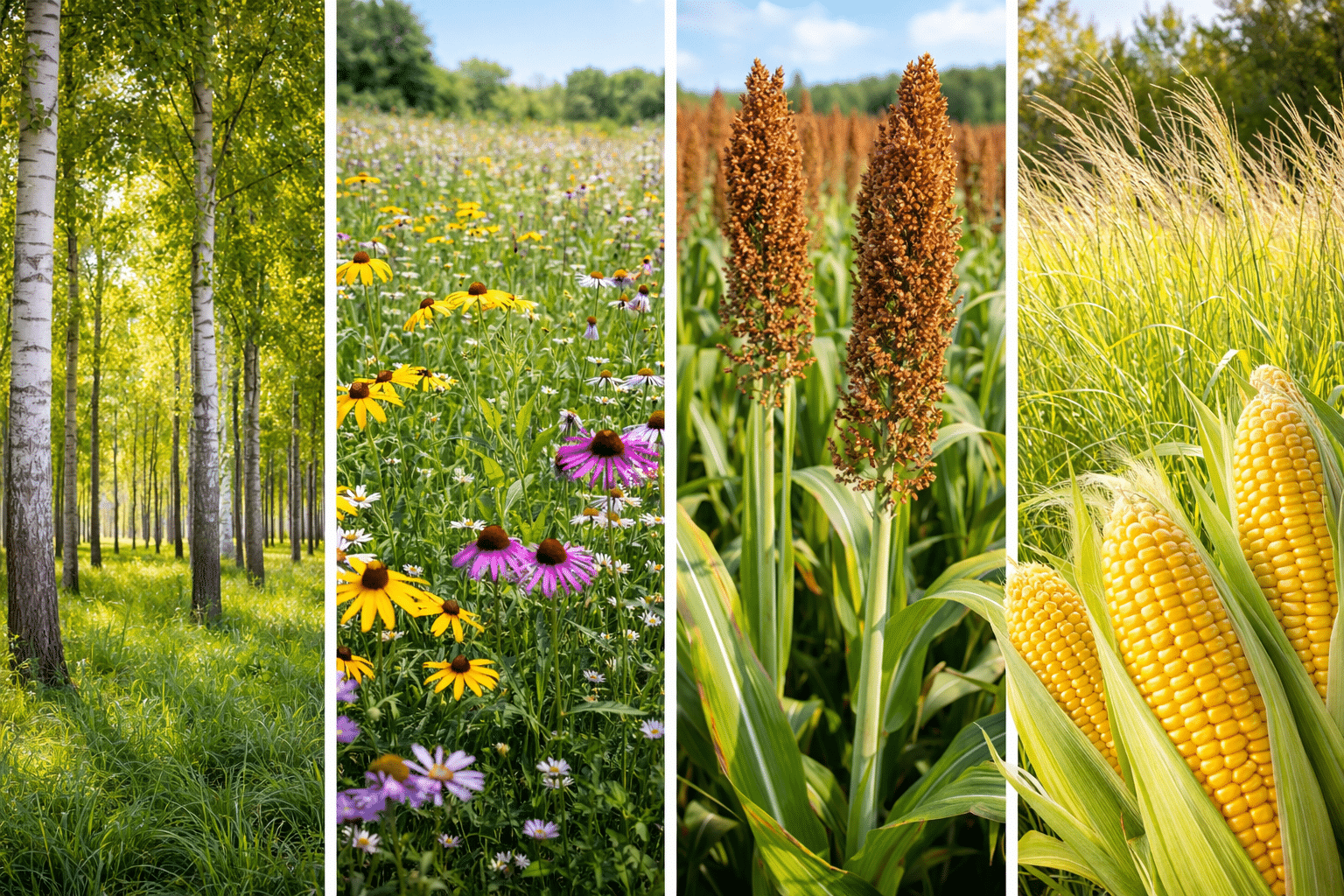
If seed had a Final Four, corn would still be the top seed.
Corn built the biofuel market, scaled the infrastructure and set the baseline for how growers think about energy crops. But the field behind it is no longer thin, and the next phase of bioenergy is shaping up less like a handoff and more like a bracket.
At a recent forum hosted by the Great Lakes Bioenergy Research Center, four crops stepped into that bracket, each backed by a researcher tasked with making the case for why their contender should move forward. Quickly, attendees saw that poplar, sorghum, switchgrass and mixed prairie are not solving the same problem. This was not a search for a single replacement crop. It is an ongoing search for a system that can handle constraints corn was never designed for, from marginal land, input intensity to product diversification.
Semifinal One: Poplar vs. Sorghum
The first matchup sets the tone because it exposes one of the most important tradeoffs in the entire conversation, time. Poplar represents a longer-term system that builds value over years, while sorghum represents a crop that moves at the speed of a single growing season.
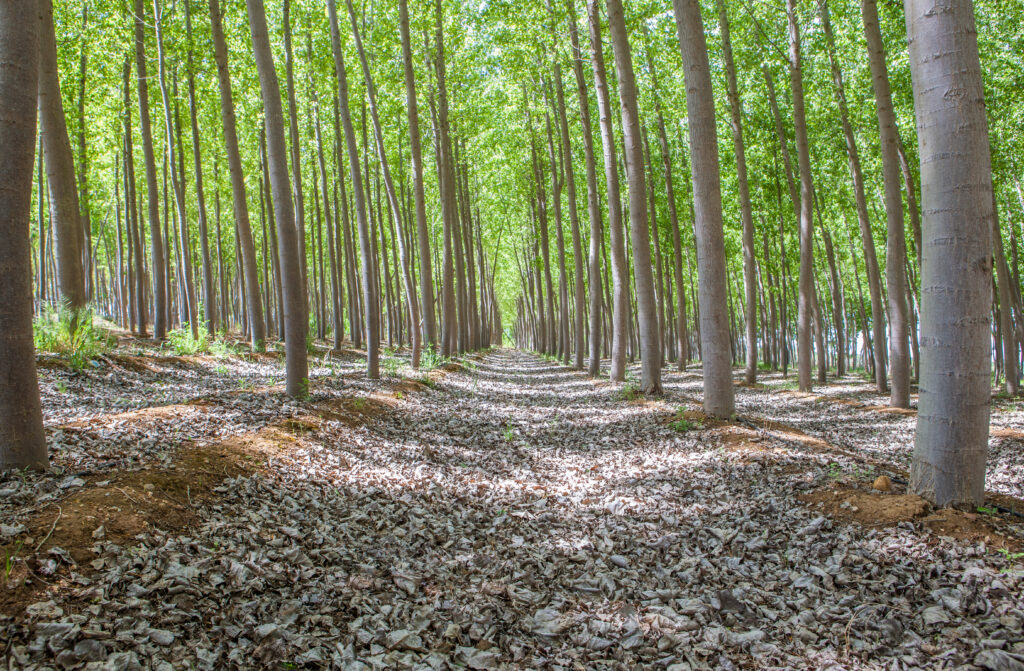
“I would argue that poplar is the premier bioenergy crop,” says Rebecca Smith, University of Wisconsin–Madison assistant professor of translational plant science for dairy sustainability. “It grows really rapidly, produces a ton of biomass, it’s very genetically tractable and also it produces this huge array of bioproducts. Poplar can grow very quickly, and yes we’re talking about a tree, so you have to invest some time at the beginning, but good things come to those who wait.”
Smith says that once established, the system behaves very differently than an annual crop.
“You’re not just planting it once and harvesting it and then having to till the soil and plant it again. Instead, you have trees that, while they’re producing the biomass that you need above ground, are sequestering carbon below ground and forming networks below ground,” she says. “And, when you harvest them, they’re not done. They send up new shoots and you can keep that system going for years.”
Smith says poplar’s advantage extends beyond fuel into chemistry and co-products. She explains about 70% of the harvested material is cellulose and hemicellulose, which are the sugars needed to make biofuels.
Sorghum responds with a completely different logic, one grounded in flexibility and speed.
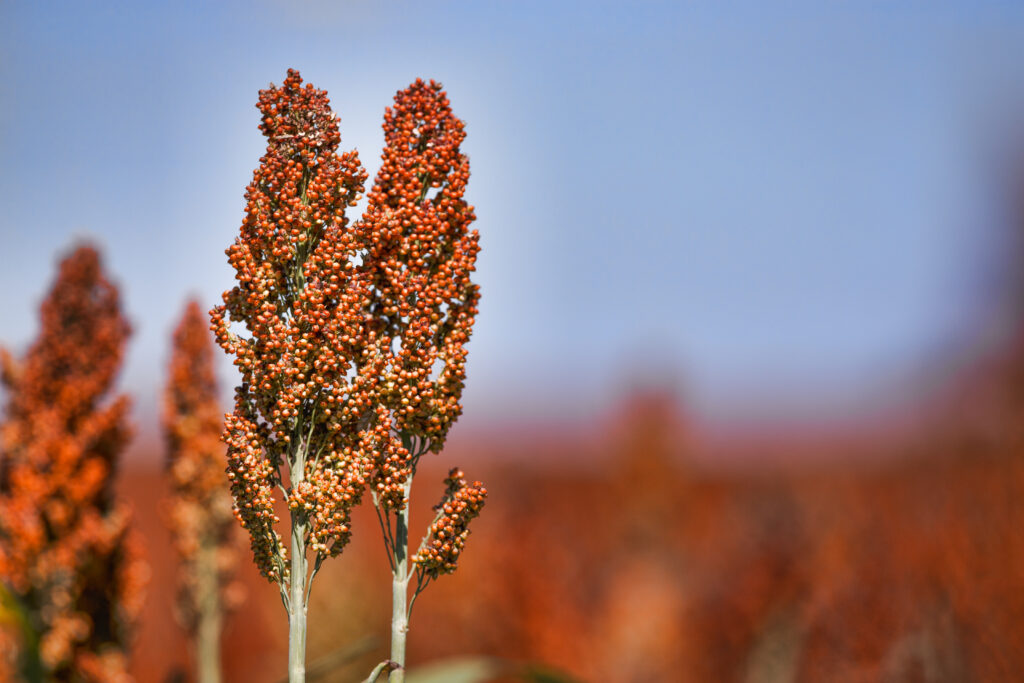
“Because it’s an annual, you can reach maximum biomass yield within a single growing season rather than waiting multiple years,” Texas A&M University graduate student Evan Kurtz says. “There’s already 25 to 30 million acres of annual crop land available where we can put this bioenergy sorghum, and that means we can deploy improved cultivars quickly and adapt as conditions change.”
Kurtz says resilience is one of sorghum’s defining traits. He explains that sorghum has undergone roughly 60 million years of evolutionary selection, which makes it exceptionally drought- and heat-tolerant. It requires about 50% less nitrogen than corn, and it can grow in challenging soils and high temperatures. That reduces both cost and environmental impact.
He says the crop also brings immediate processing advantages.
“Some cultivars accumulate a lot of sucrose in the stem,” he says. “You can break open the stem and even taste the sugar. That means we’re not just dealing with structural carbohydrates. We have sugars that can be directly fermented, and that adds flexibility in how we use the crop.”
He positions sorghum as more than a fuel source describing it as more than a bioenergy crop.
“It’s a multi-bioproduct platform,” he says. “The waxes, the sugars and the biomass can all be directed into different value streams depending on what we need.”
In bracket terms, this is a contrast between a system that compounds value over time and one that adapts quickly to changing conditions. The audience ultimately advances poplar, but the tension between those approaches carries forward.
Semifinal Two: Mixed Prairie vs. Switchgrass
The second matchup shifts the conversation away from individual crops and into systems thinking, and mixed prairie makes that shift explicit.
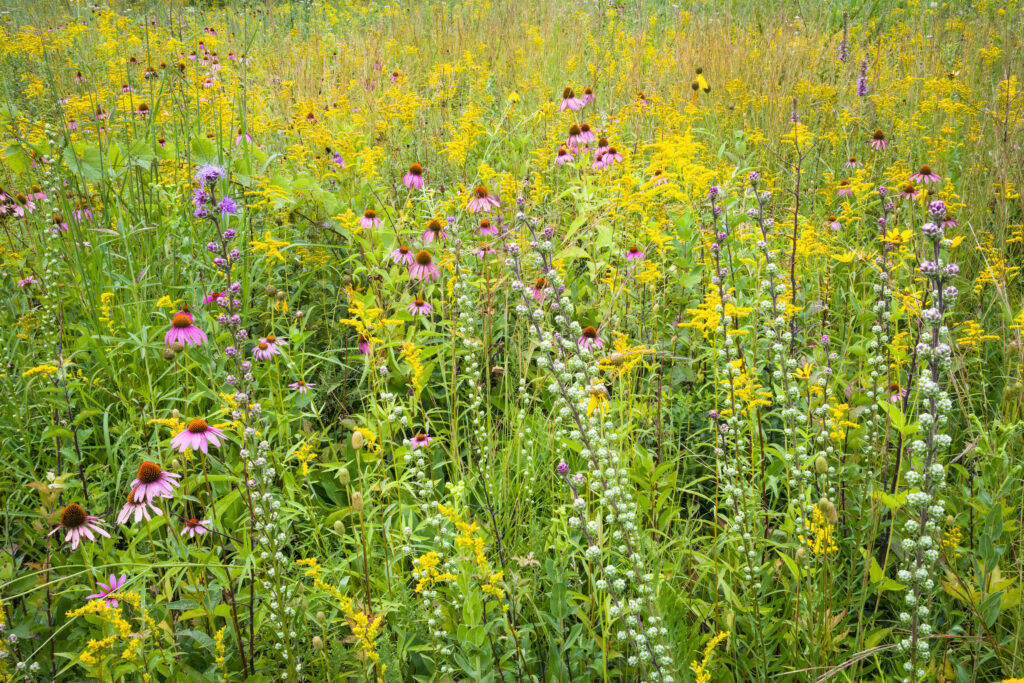
“As the name implies, it’s a mixture of species, and out of all the systems we’re talking about today, this is the one that is closest to a natural system,” Michigan State University postdoctoral researcher Dileepa Jayawardena says. “These systems can be considered self-sustaining. They require very limited management, and in our long-term experiments, we haven’t applied a single drop of pesticides since establishment.”
Jayawardena says when you include legumes, they fix atmospheric nitrogen and share it with the system, so nitrogen requirement is low. Pest pressure is also reduced because species are not concentrated in one place, and natural enemies help control pests.
The system also changes how performance is measured over time.
“In monoculture systems, you often see a rapid increase in biomass in the first few years and then a decline,” he says. “In polyculture systems like mixed prairie, biomass production increases gradually over time, and in many of our sites, we are now seeing higher yields than monocultures.”
He acknowledges the tradeoff is that the species composition changes over time, which means the chemical composition also changes.
“One of the things we need going forward is biohubs that can act as intermediates between the field and the refinery,” he adds. “They can manage inventory and quality control so that the feedstock going into the refinery is more consistent.”
Switchgrass counters with a more familiar model, one that balances many of the benefits of perennial systems with the practicality of a single species crop.
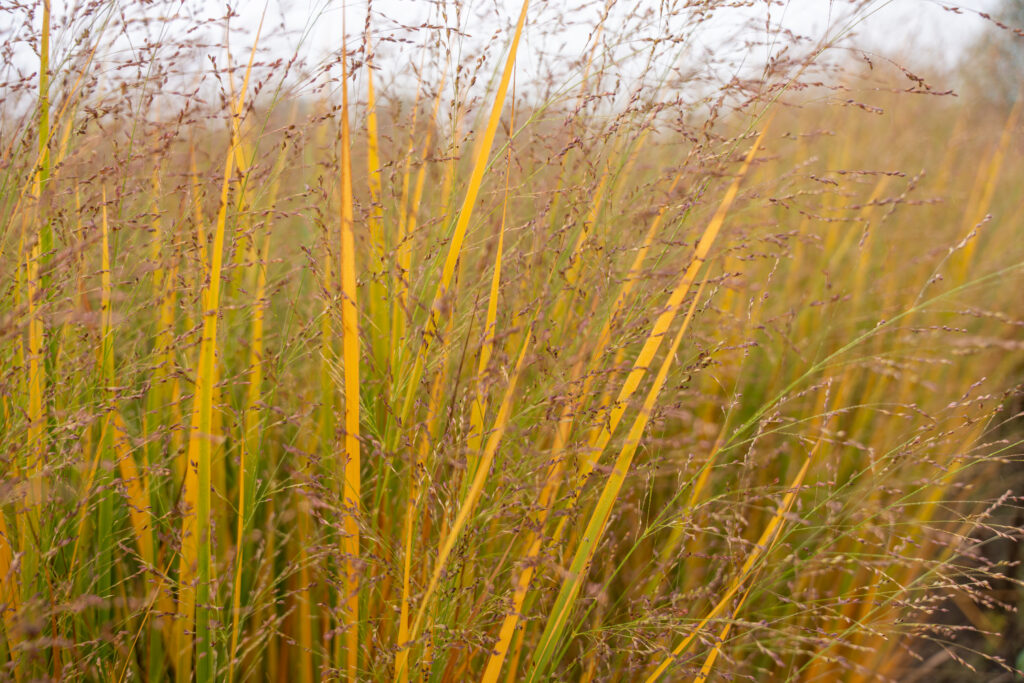
“It’s a plant that many farmers are already familiar with and know how to grow,” Michigan State University postdoctoral researcher Colette Berg says. “It’s a perennial, so once it’s established, it can produce for years, and it can be harvested with equipment that growers already have.”
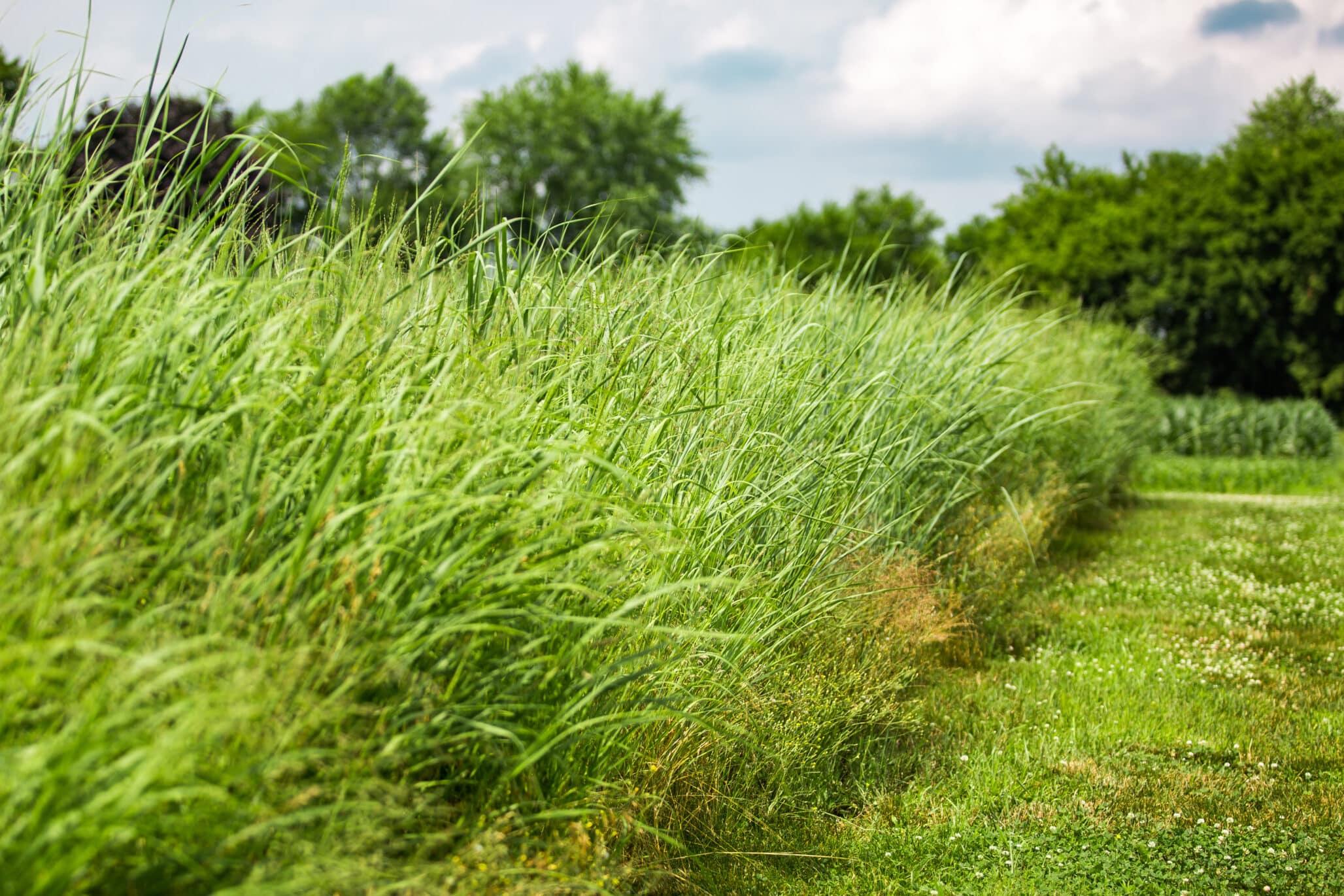
With adaptability as a key strength, switchgrass has a native range from Canada to Mexico with a lot of genetic diversity. There are varieties adapted to very different environments, including drought-prone areas and flood-prone areas.
“Switchgrass can grow on soils that aren’t suitable for most crops, so it’s not competing with food production” Berg says referring to its central role in marginal land use. “At the same time, it provides ecosystem benefits like carbon storage, erosion control and nutrient filtering.”
She also acknowledges switchgrass’ challenges.
“There are compounds like saponins that the plant produces, especially under disease pressure, and those can inhibit fermentation,” she says. “But we’re working on that through breeding and processing approaches, and there’s evidence that we can manage those effects.”
In this matchup, consistency wins and switchgrass advances.
The Championship Poplar vs Switchgrass
The final round puts two perennial systems head-to-head, but they represent different philosophies. Poplar pushes toward maximum output and product diversification, while switchgrass emphasizes balance and ease of adoption.
Berg says switchgrass fits into today’s system in a way growers can realistically adopt. It’s perennial, it’s resilient and it performs well on marginal land. It’s a system that growers can integrate without completely changing how they operate.
Smith says poplar expands what the system can become. “
When you think about the amount of lignocellulosic biomass we can produce and the range of products we can derive from it, poplar becomes more than just a fuel crop,” she argues. “It becomes a platform for multiple industries.”
The audience ultimately selects poplar, but the outcome is less like a definitive answer and more like a reflection of what each system prioritizes.
Why Does the Bracket Break Down?
As the discussion closes, one point rose to the top. The bracket format forces a winner, but the system does not.
Kurtz says the future is not about replacement.
“Each one of these bioenergy crops has its own little niche and they all have a very important role to play in the bioenergy landscape,” he says. “We’re not looking at a situation where one crop replaces everything else.”
That perspective aligns with what the seed industry is starting to see more broadly. Different crops solve different constraints, and the future of bioenergy is likely to be a portfolio rather than a single dominant species.
The Real Game Is Economics
The science is quickly advancing. The agronomy is improving. Processing technologies are evolving. The market, however, remains uncertain. Although, Berg says the economics are still taking shape.
“I don’t think we really know what the market’s going to look like yet” she says. “A lot of it is going to depend on policy, infrastructure and how we value sustainability over time. Switchgrass is a lot cheaper in terms of inputs. You don’t need as much fertilizer, you don’t need to replant every year, and that changes the economics.”
Similar arguments surface across all four systems. Lower inputs. Use of marginal land. Additional value streams beyond fuel.
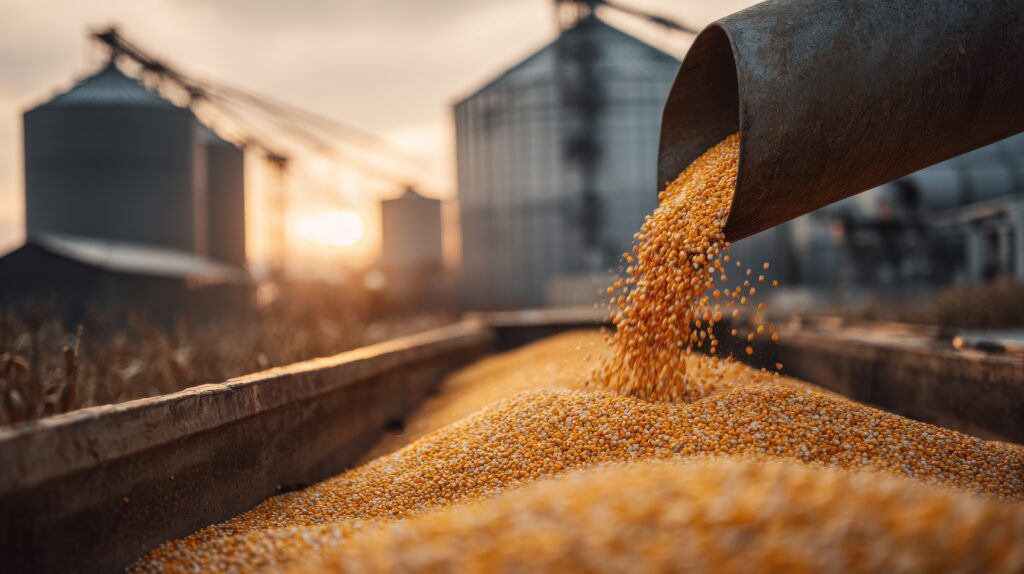
Corn still anchors the system, but it no longer defines the boundaries.
If seed had a Final Four, the takeaway is not who won. It is how many viable contenders are now in the game, and how differently they approach the same problem.