A candid look at agility, leadership, and why independents still thrive when they stay willing to change.
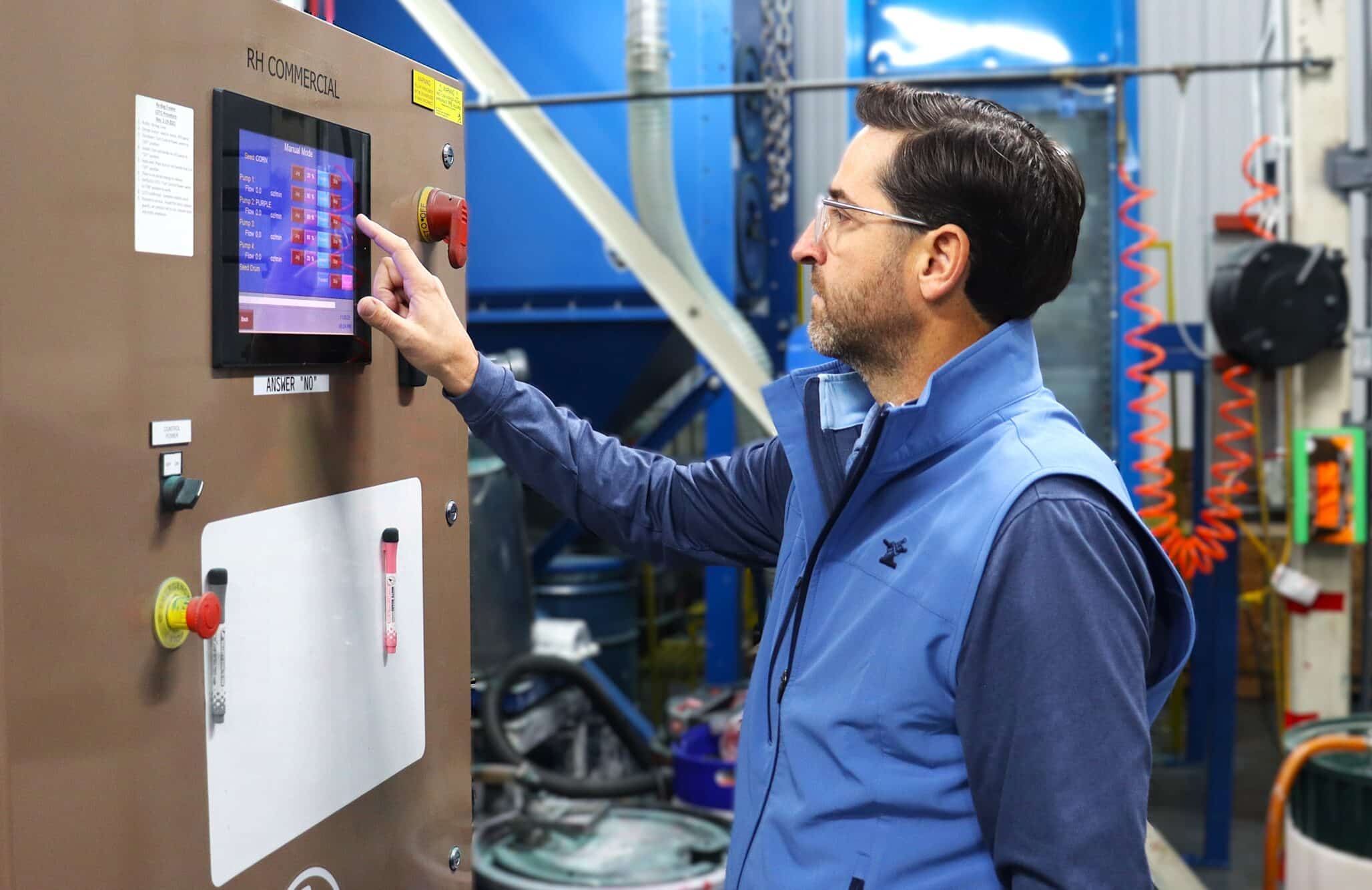
Aaron Conaway didn’t grow up in agriculture, and he didn’t plan on landing in the seed business. He was studying aeronautical technology at Purdue with no ag background when September 11 reshaped the aviation industry and his future.
“I was a junior when September 11 happened, and that made aviation uncertain,” he says. He and his now wife wanted to build a life in their hometown of Tipton, but aviation opportunities were limited. His father-in-law, who owned a seed company founded in 1936, offered him a chance to try something completely different.
“I came in sweeping floors, bagging corn, learning from the bottom,” he says. Three years later, a major wave of consolidation swept through the industry. When the family decided to sell the Campbell Seed retail brand in 2006 and focus on production, Conaway saw clearly where independents fit and why they mattered.
“After managing the transition, watching Monsanto purchase brands and seeing where we fit, I understood how important independent production was,” he says.
Total Seed Production (TSP) was born that year, and the company tripled its business within five years, cementing its commitment to the independent sector.
As Conaway steps into the Independent Professional Seed Association (IPSA) presidency, he brings a perspective of someone who started at the bottom of a seed tower, weathered multiple waves of consolidation, and built Total Seed Production into a fast-growing independent force. In this candid conversation, Conaway reflects on agility, leadership, the future of IPSA, and why he believes independents will always have a place in the seed industry if they are willing to adapt.
SW: As you step into the IPSA presidency in January, what is your vision for the association, and how can IPSA best support independent seed companies over the next year and beyond?
Conaway: Growth. Which is probably going to take some people off guard a little bit, even though the independent sector has continued to shrink. But our association has a lot of upsides to it. I wasn’t 100% familiar with all the things that IPSA did prior to joining the board, and the push IPSA has had behind the scenes from a government perspective and a regulation perspective has been huge. We’ll continue doing the work on behalf of the independents in that sector. I think we have a real opportunity to continue to grow our membership in a time that seems to be declining in memberships or in conferences, but we’re coming off one of the highest attended conferences last year. Going into Indianapolis, we’ve got a lot of momentum and excitement. There’s growth in membership because there are companies and individuals we can attract to our association that aren’t currently members.
AI has also been a big buzz, and Cat Frans (IPSA’s executive director) has done a fabulous job building a framework around how to use it. We’re doing a better job and a more focused job at bringing value to members in creative ways. From a marketing standpoint, we’re trying to roll in memberships to give additional opportunities for members through IPSA. There are a lot of exciting things happening. New board members are coming on with new ideas, and there’s been a lot of excitement and momentum.
SW: How do you define “independent” in today’s seed landscape as companies enter more collaborations and technology partnerships?
Conaway: There’s a root to independence that still stays strong as far as being self-sufficient and sometimes maybe stubborn to change. That’s the negative. The positive is the ability to make independent decisions about who to collaborate with, being adaptable and flexible enough to pivot as the world comes at us. Large companies can’t always do that.
Independent companies can sometimes be too rigid in their thought process, but the way we operate our business is agile and flexible, and willing to take on new conversations or new partnerships. We get to decide if it’s the right approach for us, and if it is, we can move swiftly. I like the swift and agile piece, having multiple collaborations and partnerships at once, and not getting bogged down by hurdles larger companies have.
SW: Where do you see the greatest opportunities for innovation among independents right now?
Conaway: Efficiencies are a big piece. AI has been a buzzword for years and continues to gain momentum. Being able to do more with the same bandwidth or fewer staff is a big opportunity. Larger corporations have deeper pockets, but independents need to figure out how to leverage AI to be more nimble, flexible, and efficient, to be more profitable and potentially grow faster than competitors or non-independents.
SW: What barriers still prevent independents from fully capitalizing on emerging technologies, and how can IPSA help remove those barriers?
Conaway: Education is a big piece, and being able to bring those pieces forward and show how to utilize them or even understand them. Options are important because independents stretch across the United States, and all independent companies are drastically different.
Larger corporations have a lot of similarities. Independents don’t. IPSA can bring lots of different options to the table so independent companies can capture what works best for them.
SW: Policy and regulation continue to shift. Which issues do you think will have the biggest impact on independents?
Conaway: Government politics and regulation are a sandbox we don’t play in much. We keep our head down and work on the things we can control. We’ll jump in where we feel like we’re experts and can make a difference, but to monitor and track high-level policy shifts, we just don’t; we keep our nose to the grindstone.
There’s so much up in the air. There hasn’t been any certainty in the government. I can’t remember the last time there was certainty. The unknowns have become the norm. The people who adapt and understand when to worry and when to focus on their business are the ones capitalizing on growth. This is the new norm, and everyone must adapt to it.
SW: Consolidation continues across ag inputs and technology. How can independents stay competitive while maintaining identity and flexibility?
Conaway: One of the biggest things I was taught early on by my father-in-law is to figure out what you do best and do better than everyone else and then do a lot of it. It’s simple but holds a lot of weight, and we’ve proven it in our business.
There’s always a place for independent companies as long as they’re willing to change. If they start to become rigid or fear change, that’s when they lose their place. If you welcome change at every level, there’s always a place for you in the seed industry.
SW: Talent is a major pressure point. What can independents do differently to attract and retain the next generation?
Conaway: It’s a multi-prong approach. The ag-based foundation coming out of school isn’t as large as it once was, and even when students have an ag focus, it’s different. They’re more technology-minded, more willing to push the envelope.
We’ve had to continually adapt our organization to capture and bring in talent with the interests they have. Once we understand their career path, we can be flexible and provide them with additional opportunities to continue to grow inside our organization.
SW: Total Seed Production operates in a complex marketplace. What lessons from TSP’s growth will influence how you lead IPSA?
Conaway: We must stretch our comfort zone. If ideas come in that may make the association better, we must consider trying them. We need to look at different things, different ways, and be adaptable and flexible. We’ve had so much momentum the last three years. To keep that momentum, we must try new offerings and provide new value.
SW: How do you balance leading a company and leading an association, along with family life?
Conaway: Strong Team and Great People. Yes, I hold the title of president, but I don’t feel like I hold a very big title. I’m a meeting scheduler at most. I’m a head coach of a team. Our success has come from the team. My family balance comes from a team of 5 at home.
The association is the same. We have a great board. Constant communication and teamwork are what make it stronger. My job is to help lead that team and give people the platform to do what they’re really good at.
SW: How important is humility in leadership?
Conaway: It’s the foundation. Honesty, trust, and humility are the key factors to being a good leader. I make a conscious effort to be the same person at work, at the association, and at home. That’s just the life I live.
SW: Finally, can you tell me a little about your family?
Conaway: My wife Christy is the backbone of everything I do. She holds a PhD of Natural Medicine, and she has made me better emotionally, physically, and mentally. She’s my solid foundation. We have three boys. Maverick is 21, plays college golf, and is studying business with the intention of finding his way back to our family business. Oliver is a freshman at Vincennes University focused on Precision Ag and Diesel Mechanics. He has worked in the business for the past 5 years and plans to come back to our operation. Raleigh is a freshman in high school and has a lot of passions and people skills, and has worked the past 2 summers in our business. He’ll be super successful whichever direction he chooses.