How soybeans are teaching scientists a new way to breed for stress resilience
Heat waves and droughts aren’t just climate buzzwords — they’re yield killers. But soybeans have a secret: they cool their flowers and pods like tiny natural air conditioners, leaving the rest of the plant to fend for itself. Now, scientists want to turn that survival tactic into a breeding strategy.
When it comes to protecting yield in soybeans, researchers are looking past the leaves and into the plant’s reproductive core. At the University of Missouri, Ron Mittler and his team have uncovered a biological survival mechanism that reveals these legumes have a clever way of staying cool where it counts — and that quirk of physiology might just be the seed industry’s next big trait target.
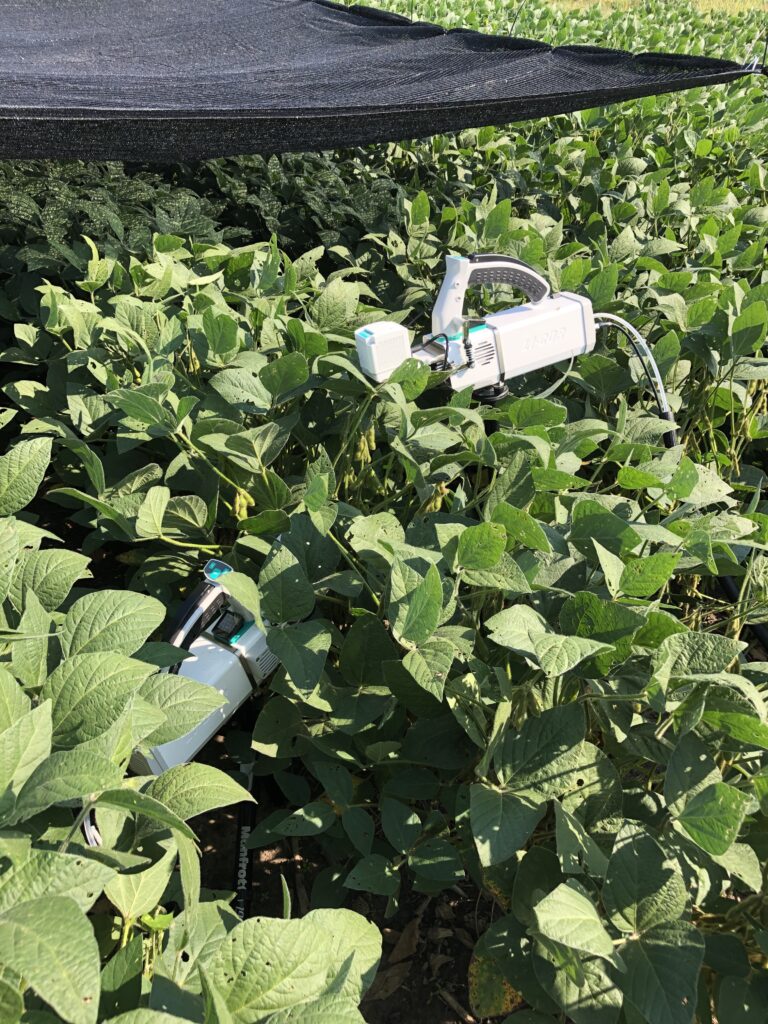
The process, called differential transpiration, allows soybean plants to conserve water by selectively cooling flowers and pods, the tissues responsible for reproduction, while closing off stomata in the leaves. This seemingly simple change in physiology could become a cornerstone trait for future soybeans bred to survive intensifying climate extremes.
“Plants can cool themselves only one way, and that’s transpiration,” Mittler explains. “They open the stomata — the pores on their leaves, flowers and pods — and lose water. That process cools the plant. But if they open all the stomata, they lose a lot of water. So instead, they close the stomata on the leaves and keep them open on the flowers and pods. That allows them to cool the tissues that matter most for yield.”
He estimates this strategy allows soybeans to protect their reproductive tissues form overheating while using only 5% of the water needed to cool the entire plant. He adds that it reflects evolutionary pressure on annual crops like soybeans to protect reproduction at all costs.
“For annual plants, the priority is to invest everything they can in the production of seeds,” he says. “So if you need to cool the plant by transpiration, you prioritize cooling the reproductive tissues over the vegetative tissues. It’s a whole different universe.”
A New Target for Breeding
The discovery opens new possibilities for both traditional breeding and genome editing.
“We can look at all these genotypes and see if they are prioritizing transpiration better,” Mittler says. “Can we breed that into our elite cultivars? Another option is to use genome editing for example, increasing stomatal density on reproductive tissues or keeping them open longer.”
His lab is now evaluating thousands of soybean genotypes, including parental introduction lines, to identify those with more effective differential transpiration. At the same time, they’re testing genetically modified soybean plants in the greenhouse to validate targeted changes to stomatal function.
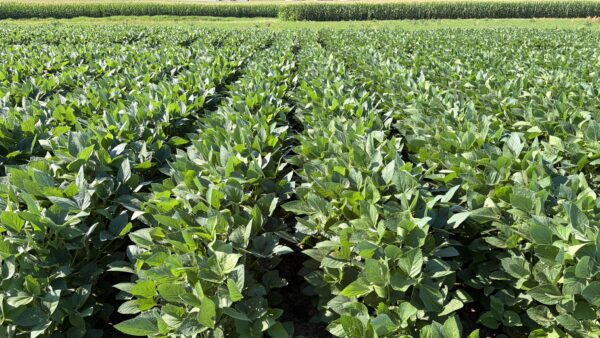
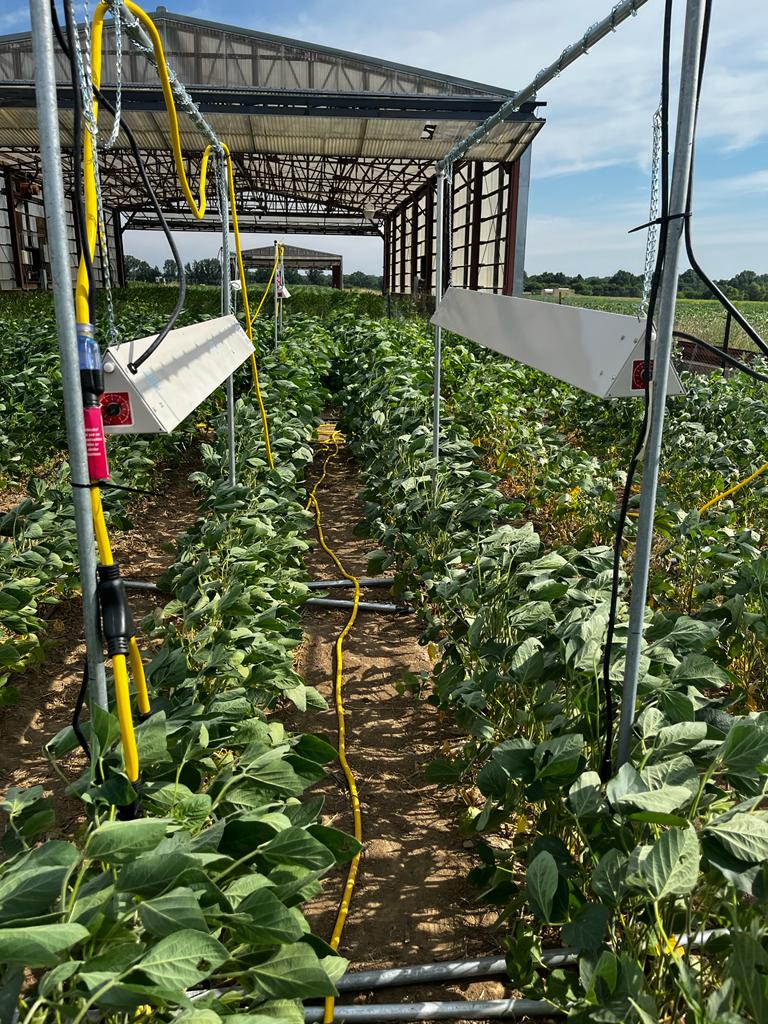
To carry out the research, Mittler’s lab uses rainout shelters to prevent rain from disrupting the drought experiment. Imagine these giant, mechanized greenhouse-like structures moving on railroad rails so that they can cover the field if there is rain. In combination with the rainout shelters, his team uses irrigation so that they can have complete control over the conditions, whether well-watered or drought. To induce heat, they hang heaters above the plants. So, in combination with the rainout shelters and the irrigation, they generate control, drought, heat stress and drought+heat stress conditions.
“We can alter the genes that control the number of stomata on the reproductive tissues,” Mittler says. “Also, we can play around with the regulation — for example, keep them open longer. So there are two ways: one based on anatomy and development, and one based on regulation.”
Subhead: From Lab Bench to Breeder Bench
Mittler’s hope is that once these markers are better defined, commercial breeding programs will pick up the work and accelerate delivery to the market. But, he says, the scale of industry involvement will be critical.
“If a big company takes it on, it’ll go faster,” he says. “Even with them, I hope within five years we’ll have better chances. It’s sort of a race, because climate change happens, and scientists and companies are trying to catch up.”
For Mittler, this discovery ranks among the most exciting in his career.
“After we published our papers in soybean, very quickly Chinese groups described this in tomato,” he says. “I think most annual plants will probably do that.”
He’s also seeing growing recognition from the crop science community.
“I was invited to give talks at big crop conferences, and people told me this was really exciting. I think we found something important.”
And while the science is exciting, the urgency is real.
“Initially it was really hard to convince granting agencies and journals to get funding for this,” Mittler says. “Now climate change is causing these stress combinations — drought and heat, even flooding and heat — and people are realizing we need solutions.”