At MAS Seeds, variety innovation is made possible thanks to top of the range R&D, where data science and plant selection combine their strengths to keep up with the challenges of sustainable agriculture.
At the centre of this strategy, a dedicated Data science team works with the selection teams and combines agroclimatic modelling, artificial intelligence and genetic statistics to speed up genetic gain.
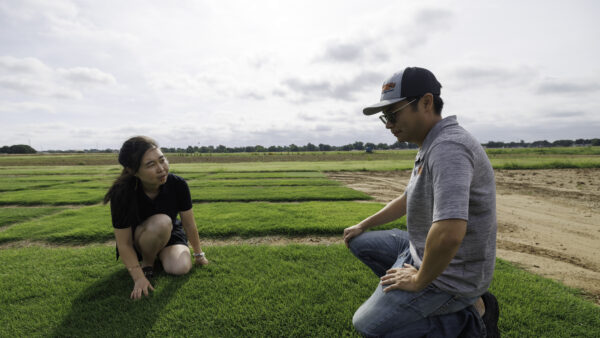
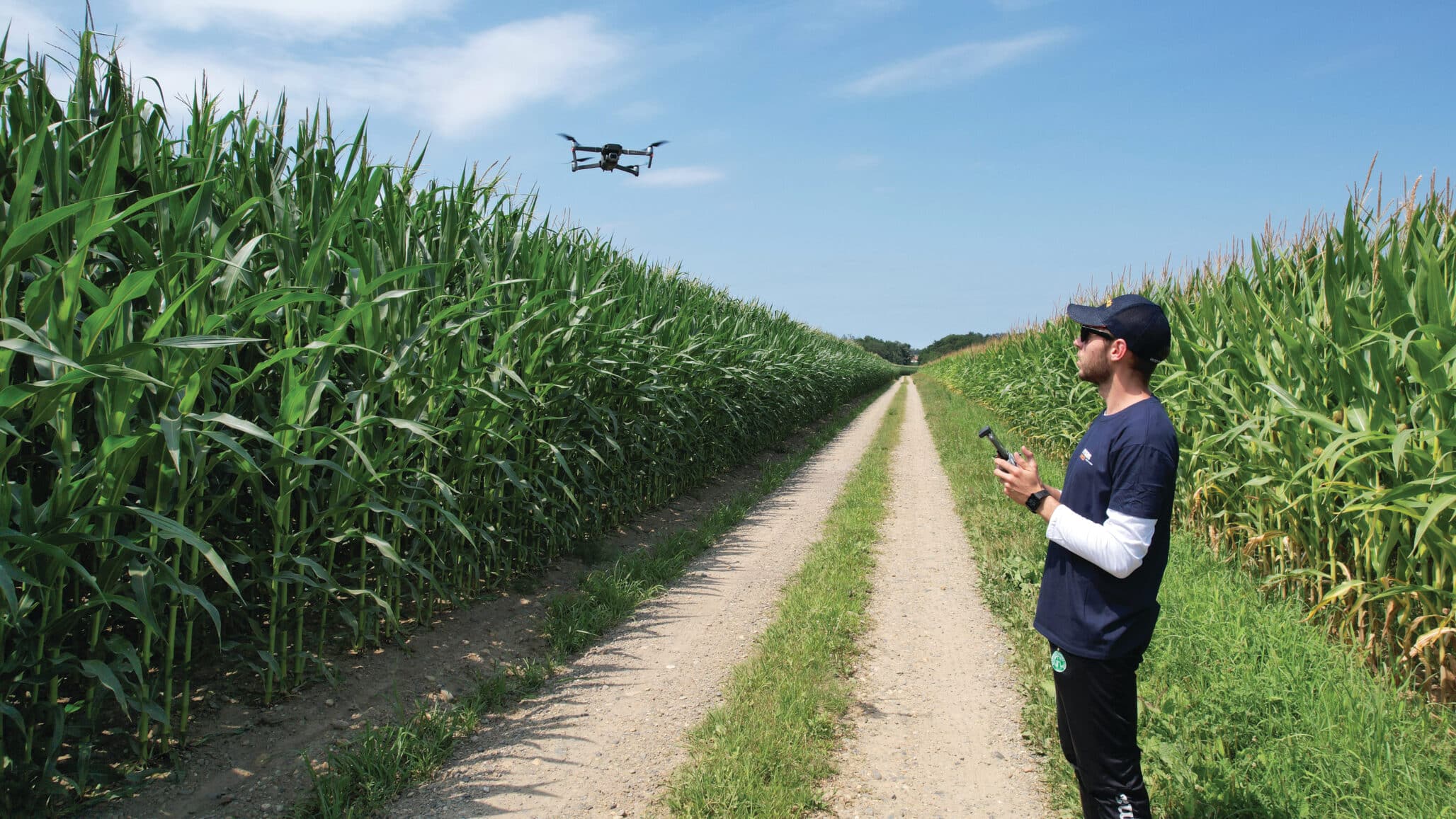
Drones, testing platforms, high-throughput phenotyping tools, molecular biology laboratories… Each variety is carefully analyzed using these technologies, generating millions of data information: phenotypic (morphology, physiology, yield components), genotypic (DNA profiles), and environmental (climate, crop management, soil moisture).
Acting as true “data crunchers,” data scientists analyze, cross-reference, and appraise this data to transform it into information using powerful predictive models. The outcome? Optimizing each step of the selection process, better understanding the environment, and refining the varieties’ positioning.
At MAS Seeds, the WATERLOCK, HelioSMART, and GREEN+ labels translate this innovative complexity into understandable benchmarks for farmers. Behind these names lies a requirement: to offer tested, reliable varieties adapted to specific stressors, and validated by a rigorous protocol combining data science, field expertise, and product selection.
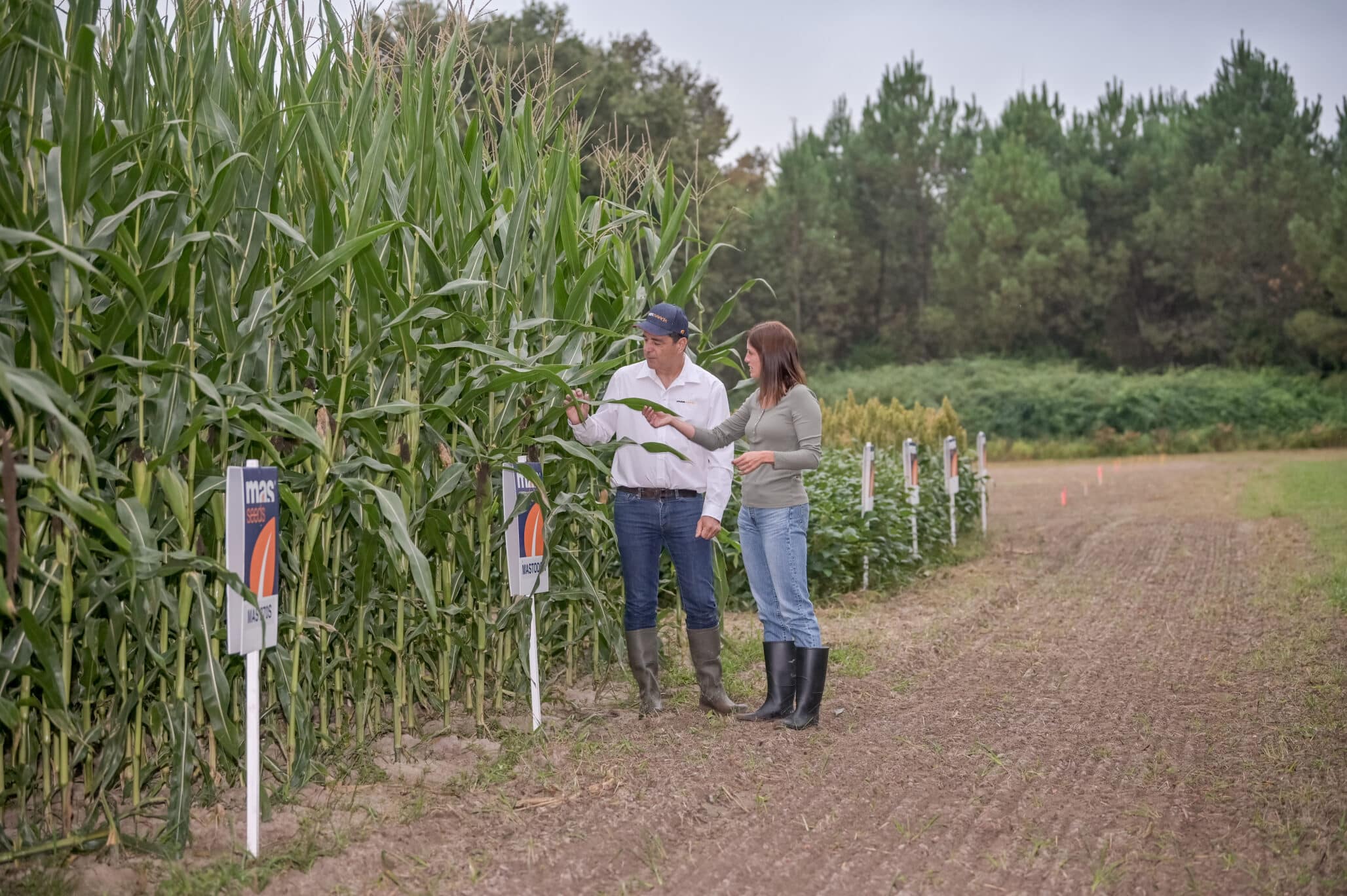
This innovation is reflected in our products, such as MAS 448G, a WATERLOCK certified hybrid maize, selected for its tolerance to water stress. Using more than 35 agroclimatic (rainfall, temperature, soil reserves, etc.) and agronomic indicators (ear regularity, resistance to limiting conditions, flowering), its resilience has been confirmed in various drought contexts. It is particularly aimed at farmers seeking performance and security in summer drought situations.
This method also extends to the fodder sector, where the challenge of resilience in the face of climate change is just as important. With the GREEN+ label, MAS Seeds identifies forage maize varieties selected for their ability to stay green longer (stay-green), particularly in hot conditions; in order to secure harvests and guarantee good silage quality and conservation. This is the case of MAS 270S, an early hybrid that combines high potential for forage yield, good tolerance to diseases such as helminthosporium leaf spot, and vegetative vigor until harvest. A robust and consistent solution, particularly suited to circumstances where heat can compromise performance.
The same logic applies to sunflowers with the HelioSMART label: varieties are selected for their tolerance to Downy Mildew, Sclerotinia, and Verticillium. These diseases can reduce yields by up to 100% in extreme cases. Based on a network of high-pressure health trials and metabolic profiles, HelioSMART varieties exhibit high genetic tolerance (scores of 8 to 9 out of 9). Such is the case for MAS 900SU, which has been among the best varieties for two consecutive years in our trial network. Its full health profile secures the entire cycle, from sowing to harvest, and allows for yields exceeding 5 t/ha.
This initiative puts data at the heart of innovation. Data science, acting as a true refinery of information, equips selection teams and product assessors with the best tools to design the varieties of tomorrow faster and with greater precision.