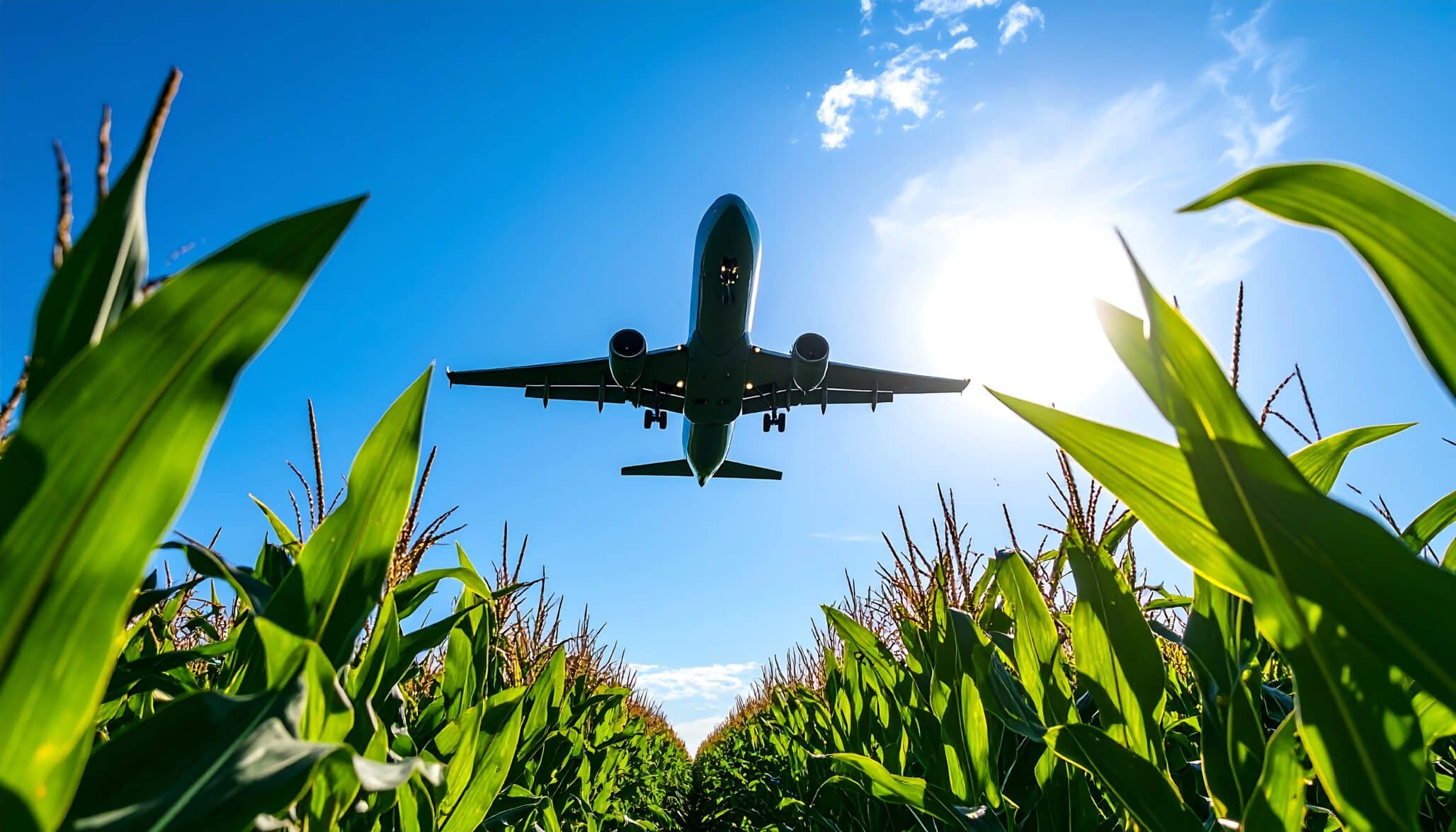
Ethanol’s next chapter could power the planes of tomorrow — but only if carbon-smart farming and flexible policy take off together.
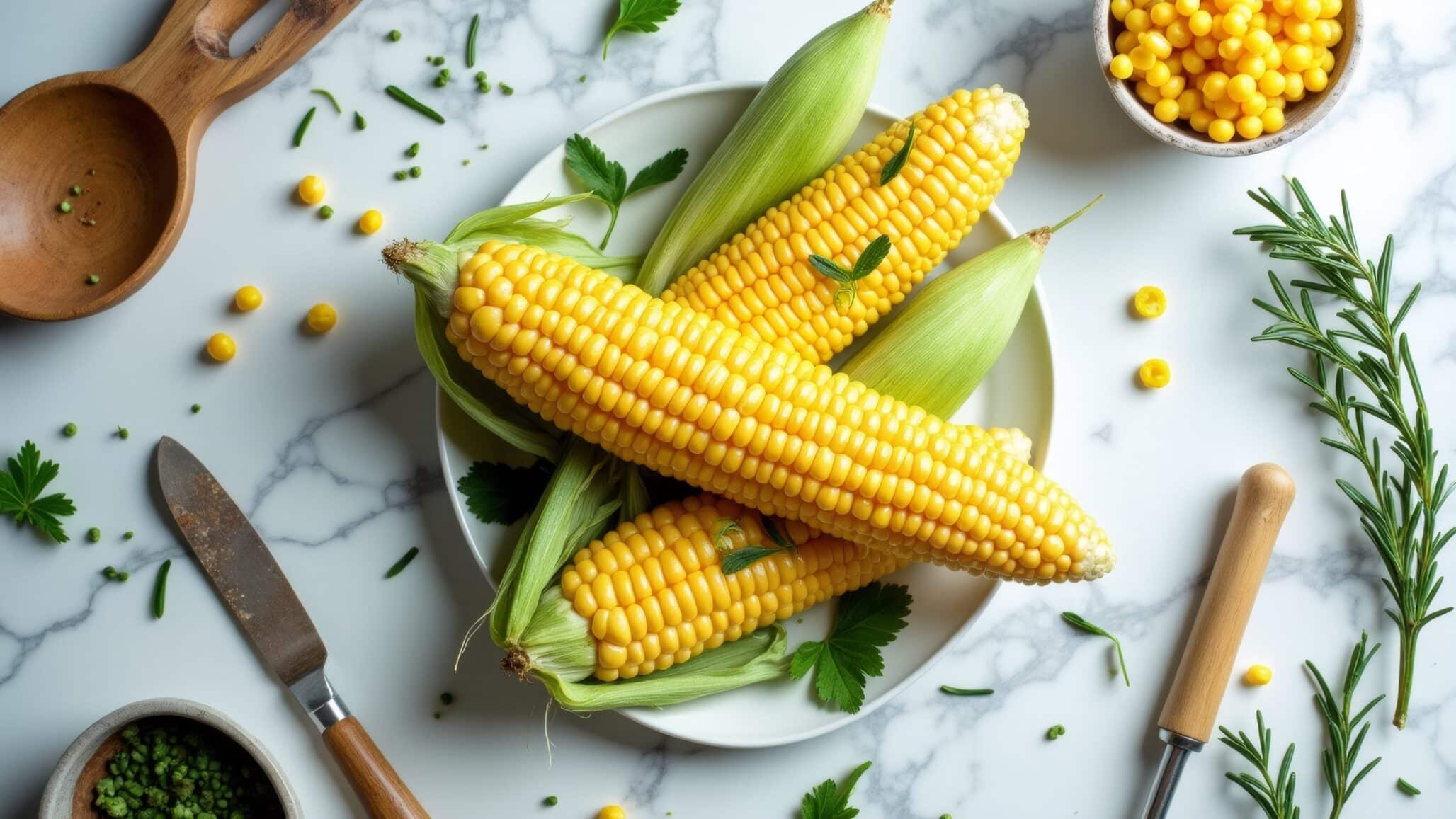
Corn may soon fuel more than cars. With airlines under pressure to decarbonize, ethanol is emerging as a promising source for sustainable aviation fuel. The technology is ready, the chemistry is proven, and the market potential is massive — but policy and timing could determine whether American farmers lead or get left behind.
The Inflation Reduction Act created the 45Z clean fuel production tax credit to reward fuels with low carbon intensity (CI) scores. The lower the score, the greater the credit. That simple equation could spark a new carbon race across agriculture, with every decision — from seed selection to nitrogen efficiency — influencing a farmer’s bottom line.

Kansas Corn’s director of policy and economics Taylor Williamson recently spoke on the topic at the American Seed Trade Association (ASTA) Forage, Turf and Conservation Seed Conference in Kansas City. He explains that race is already underway, but the rules are still unclear. He says the government’s delay in finalizing the 45Z regulations is putting growers at a disadvantage.
“If Treasury doesn’t get these rules out soon, it’ll be too late for the 2026 crop,” Williamson says. “Once the seed is in the ground, it’s too late to change your CI score.”
He believes the program could be a powerful tool to inject dollars into the ag economy if it’s rolled out in time for farmers to respond.
“This is one way to put cash into the ag economy during a time of really bad prices,” he says. “The program already exists. It just needs rules and regulations.”
From Field to Flight
Ethanol already makes up about one-third of Kansas corn’s market, but the sustainable aviation fuel (SAF) pathway could push demand to new heights. Even a small percentage of global jet fuel made from ethanol would have ripple effects across the grain economy.
Williamson breaks it down simply. If SAF could become 1% of the world’s aviation fuel, and 1%of that came from ethanol-based SAF, that would use about 5.6 million bushels of corn — roughly 10% of Kansas’ annual production. Push SAF to 10% of global aviation fuel, and even if only 1% of that is ethanol-based SAF, the number jumps to 56 million bushels.
“If an airport like Dallas–Fort Worth International Airport converted half its jet fuel to SAF made from ethanol, that’s 389 million bushels,” he says. “That’s why we’re paying attention.” “Similarly, if 10% of global aviation fuel were SAF, and 1% of that came from ethanol-to-SAF, you’d get to 56 million bushels. But when we talk about a scenario like DFW, we’re assuming a full 50% SAF made purely from ethanol.”
He says the potential for ethanol-to-jet-fuel production not only strengthens corn markets but creates a symbiotic relationship with the livestock industry. Ethanol’s byproduct remains feed grain, keeping value cycling through rural economies.
“There’s not enough used cooking oil in the world to fuel every plane,” Williamson says. “If we want real sustainable aviation fuel, ethanol has to be part of the solution.”
Flexibility Over Mandates
To qualify for the highest 45Z credits, farmers may need to meet specific carbon-reduction standards based on production practices. That could include adopting no-till, planting cover crops, or switching to enhanced nitrogen fertilizers. Williamson says the intent is good, but the approach risks being too rigid.
“Don’t tell us exactly how to do it,” he says. “Just give us a number, give us the data, and we’ll go do it.”
He says although Kansas is known as The Wheat State, its plentiful corn farmers know better than anyone that what works in one field may fail in another. Eastern Kansas often benefits from cover crops that improve soil health and water retention. Western Kansas, with half the rainfall, can’t often afford to sacrifice moisture to a cover crop stand.
“Cover crops work in some places and not in others — and that’s okay,” he says. “Not all farmers, especially in Kansas, farm the same way.”
Williamson argues that flexibility, not prescription, will determine whether the program succeeds.
“You can’t accomplish your goal unless farmers can make it work for their bottom line,” he says.
Seeds of a Low-Carbon Future
The carbon-intensity push is already influencing conversations far beyond ethanol. Seed developers are exploring hybrids with better nitrogen efficiency and improved residue management. Agronomy teams are looking at how microbial products, stabilizers, and data analytics can cut emissions. Ethanol plants are developing traceability systems to verify the carbon profile of each bushel they buy.
Williamson sees this as a defining moment for the seed value chain — a chance to link genetics, agronomy, and markets in a measurable way. He believes farmers are ready to adapt, as long as risk and reward are balanced.
“Farmers aren’t afraid to innovate,” he says. “They just need to know a government program won’t put them out of business if they take a chance.”
For now, he says everyone is waiting on Washington. The potential for ethanol to power the planes of tomorrow — and for farmers to get paid for lowering carbon — hinges on clarity that hasn’t yet landed.