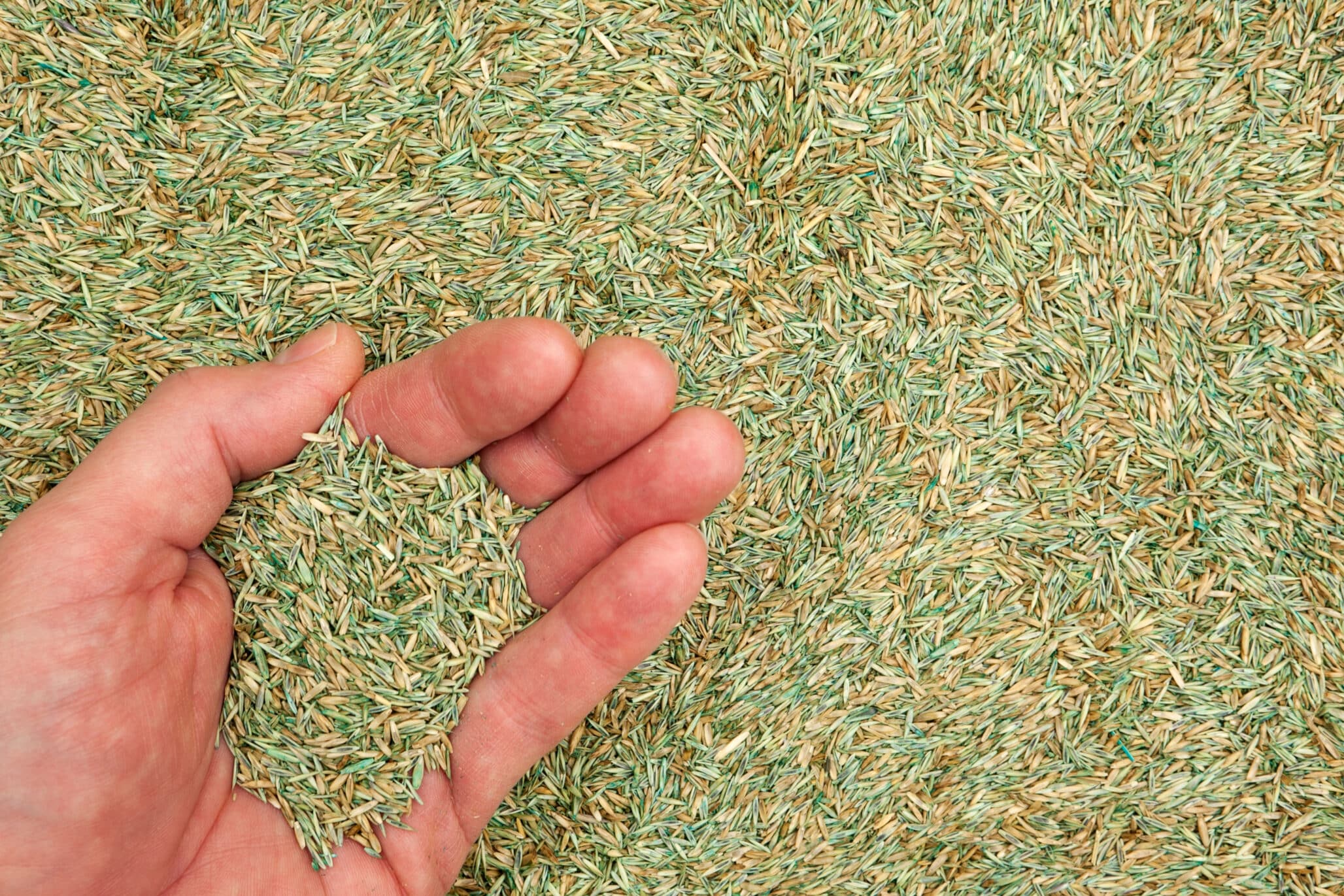

You checked the germination rate on the label, you followed the seeding rate, but the stand looks thin.
From my 25+ years in the seed business, I have learned that on paper, the math is logical, clean and consistent. What happens once the seed hits the ground, however, is none of those things.
In forage production, it’s easy to assume that every seed planted has a fair chance to emerge and contribute to stand establishment, but the biology is messier. Real-world conditions introduce hidden losses that dramatically change the outcome. Moisture loss before emergence, poor seed-to-soil contact, suboptimal timing, and seed movement after planting aren’t rare events. They are the normal conditions that most seeds face, and they stack up against your stand.
What does realistic mortality look like? Agronomy research gives us a range, because results vary widely depending on soil preparation, moisture management, temperature and seed quality. Under well-prepared conditions with good moisture management, growers can expect 10 to 30% mortality. With poor timing, or inadequate seed-to-soil contact, that number can climb past 90%. Under typical conditions, somewhere in the middle, 50 to 70% mortality is realistic. That’s not a failure of the math. That’s biology.
This links to our last article regarding coated seed in alfalfa and clover. One of the big mindset shifts in that industry over the past twenty years was growers learning to think in terms of plants per bag rather than pure live seed per acre. That reframe was a positive one. Coated seed was delivering more plants from fewer seeds, closing the gap between what was planted and what established. Now we’re looking at the size of that gap when nothing is done to address it. Biology will work against you by default, so what can you do to reverse that?
Coated seed is one tool that addresses this directly, building a micro-environment around the seed that improves the odds of emergence. But it isn’t the only lever. With careful attention to seedbed preparation, planting timing and moisture management, the odds improve. The point isn’t that any single practice solves the problem. The point is that the problem is larger than most seeding rate calculations account for.
So if your stand results have ever come in thinner than expected and the seeding rate checked out, the answer is probably not in the math. It’s in the biology.
Understanding where the gap exists is the first step to closing it.