From extreme weather to virus threats and limited diversity in the crop.
WHY IT MATTERS
If Part 1 explained what breeders are aiming for, this Part 2 explores why it’s so difficult to deliver. Watermelon may be a global success story, but its breeding reality is increasingly defined by pressure: climate volatility, rising disease incidence, evolving virus threats, and fewer crop protection tools available to growers.
At the same time, many key traits in watermelon such as sweetness stability, yield consistency, earliness and quality under stress, are polygenic and heavily influenced by the environment. Add the crop’s relatively narrow genetic diversity, and the job becomes a long-term balancing act: improving resilience and resistance without sacrificing flavour, colour, texture and shelf life.
This matters because the seed sector is now being asked to do more with less: fewer chemical options, tougher seasons, higher retailer demands, and consumers who won’t accept a “nearly good” watermelon. The next generation of varieties will depend on smarter trialling, better use of germplasm, and a growing toolkit of genomics, markers, digital phenotyping and (potentially) gene editing, all in service of one outcome: reliable performance in the field and reliable quality on the plate.
Watermelon breeding today is not only about choosing the right traits, but about delivering them reliably in a crop where many of the most important characteristics are polygenic, highly sensitive to environment, and increasingly exposed to external pressures beyond the breeder’s control.
Across the interviews, a clear picture emerges of a discipline under strain but also in transition. Breeders still walk fields, cut fruit, taste, score texture and judge plant architecture with trained eyes, because no algorithm can yet replace experience. But climate volatility, rising disease pressure and shrinking crop protection options have pushed watermelon breeding toward larger trial networks, deeper exploration of genetic diversity and heavier reliance on molecular and digital tools. The challenge is not whether to modernise, but how to do so without losing the practical intuition that has always defined successful breeding.
Climate Change: Breeding For the Weather You Don’t Recognise Anymore
Few breeders speak about climate change as an abstract future scenario. It’s already here, and it is already rewriting what “normal conditions” mean.
Diego Maestre, global crop manager melon & watermelon at BASF | Nunhems, describes climate adversity as one of the pillars shaping his programme’s vision. Growers face rising temperatures, unpredictable heat waves, soil-borne diseases, exhausted soils and increasing salinity. These pressures, he stresses, are daily realities. In response, breeding moves toward toughness: stronger root systems, improved plant coverage to protect fruit under extreme heat, and rustic varieties that can thrive under challenging conditions. This work requires persistence, long-term thinking and a global perspective, because the genetic pool must be broad enough to supply solutions for different regions.
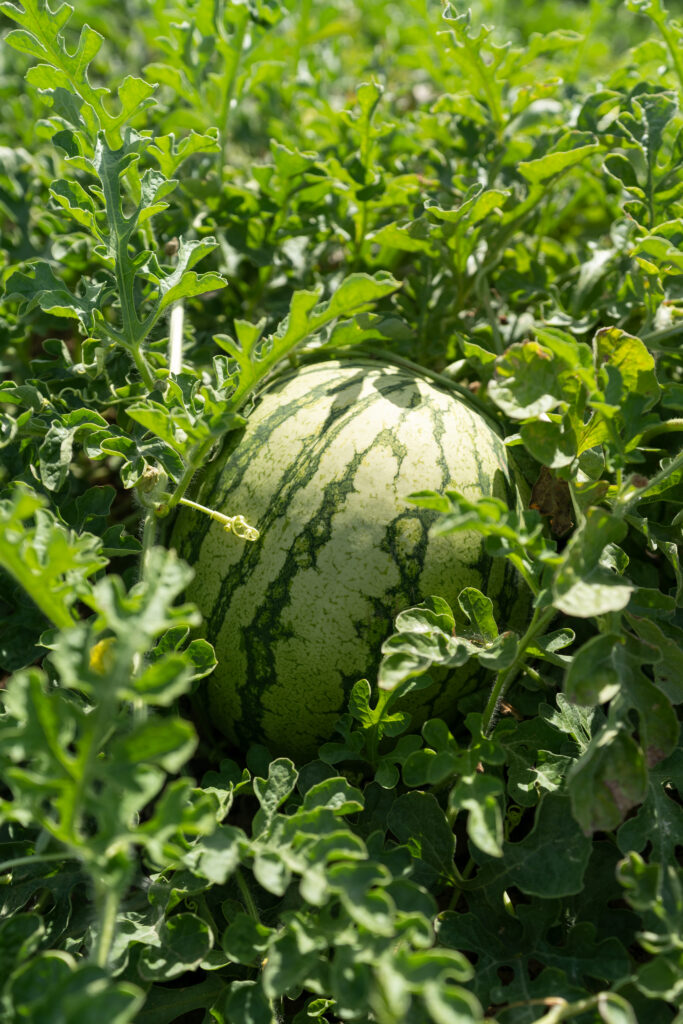
But Maestre adds a key warning: resilience is not enough. If the final fruit doesn’t delight consumers, the science doesn’t matter. Taste quality remains an uncompromising standard.
Jovan Djordjevic, watermelon breeder at Murray River Seed Co., and director of the UC Davis Plant Breeding Academy, describes climate pressure in direct, practical terms: heat waves, water stress, storms and erratic production windows are now realities across growing regions worldwide. His breeding vision leans toward varieties that deliver higher yield within shorter seasons, reducing exposure to both biotic and abiotic stress, while also lowering water, fertiliser and pesticide inputs. Time has become a breeding trait, Djordjevic explains. Finishing seven to 10 days earlier can mean avoiding the worst stress events altogether. In practice, he points to mini-seedless types that mature earlier than benchmark varieties as a clear example of using maturity timing itself as a climate-risk management tool.
Ashish Patel, head of germplasm development – cucurbits at Syngenta Vegetable Seeds, frames climatic resilience as the pursuit of stable performance under unstable conditions. The focus is on broad adaptability to abiotic stresses such as heat tolerance, cold tolerance and soil pH adaptability. Pairing data-driven genomic selection with intense multi-environment trialling helps find the right product positioning for changing market environments.
Juan Antonio Fernández, watermelon breeder at Semillas Fitó, notes that recurrent droughts are becoming more common, and growing conditions in formerly temperate areas are becoming harsher. Even where specific drought-tolerance research exists, he describes a broader selection direction: traits that help in arid conditions, including more powerful plants and root systems, drought and heat tolerance, and resistances that help maintain canopy and keep the plant at full capacity.
Megan Calvert, seedless watermelon breeder at Bayer, describes how her programme tests material in some of the most challenging areas in the world to ensure released varieties perform consistently and adapt to multiple environments. And because conditions are expected to become more extreme, the programme is also considering how production areas may shift and what will be needed going forward. She points to wild relatives in germplasm banks that show promise for challenging conditions, now being evaluated for future use.
Together, these answers show climate breeding as more than “heat tolerance”. It’s a systems approach: plant architecture, root strength, maturity timing, stability across environments, and the ability to keep eating quality intact even when the plant has been stressed.
Seed Production: The Seedless Bottleneck
Seedless watermelons may be the consumer default, but they bring their own production constraints, particularly around the creation of triploid varieties and the challenges in seed production.
Fernández explains that seedless production carries two major hurdles: production of tetraploids (female lines) and production of triploids (tetraploid x diploid). Both are complex, and both come with a learning curve that takes years. His emphasis is not just on technique, but on discipline: strict protocols for planning and product advancement, and careful selection of production areas, because seedless seed production is more demanding climatically than seeded.
Even without a long technical explanation, the implication is clear: breeding doesn’t end when the variety exists genetically. It must also be reproducible as a commercial seed product. For seedless systems, that additional step is often where timelines stretch and costs climb.
Polygenic Traits: When the Environment Argues Back
Breeders can identify a delicious fruit in one field, only to find that the same genetics behave differently elsewhere. That is the reality of polygenic traits and genotype-by-environment interactions.
Francisco Xavier Lopez Fernandez, global crop coordinator at Semillas Fito, lists fruit size, sugar content and earliness as examples of polygenic traits. Tackling them requires selection under high pressure across different environments and locations, both in parental lines and in the hybrids where those lines are used. It is repetitive, sometimes exhausting work, but it is how breeders separate “looks good once” from “works reliably”.
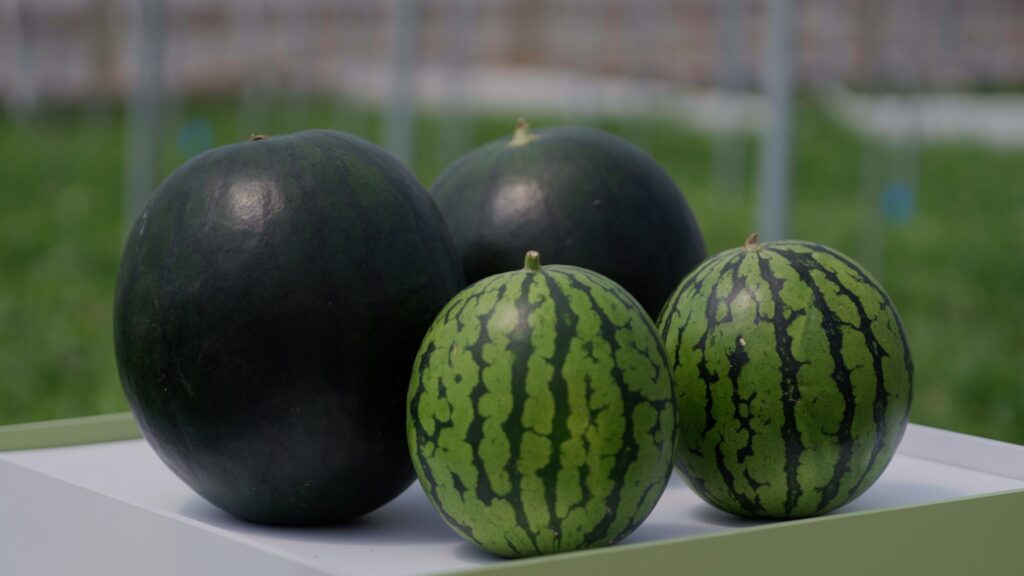
Calvert adds that testing in multiple environments and multiple countries remains essential to account for different factors impacting traits. But she also points to newer statistical methods, such as genomic selection, which can consider high-density genotyping and increased phenotyping to resolve some of those interactions. The practical outcome is better decision-making: selecting the best variety for a specific market based on multiple interacting factors, so growers can have confidence that seed choices fit their conditions.
This challenge connects closely to Djordjevic’s breeding strategy. He describes traditional hybrid breeding as simultaneously tackling more than 40,000 genes. His entire breeding nursery is genotyped at the individual plant level and is deliberately focused on maximizing heterosis, a hybrid vigor. Strong hybrid platforms are the vehicle for future innovation e.g., strong varieties allow us to add single-gene traits, including those that may come from emerging technologies like gene editing. In his framing, robustness at the hybrid level is not optional, it is what allows innovation to survive real-world environments.
Disease Resistance: From Helpful to Essential
If climate is one pressure, disease is another and the two are linked. Changing climates alter pest dynamics, and restrictions on crop protection narrow the tools available. In that environment, resistance breeding becomes central.
Patel lists key viral targets such as tobamoviruses, potyviruses and tospoviruses, alongside the need to keep up with new races of global pathogens such as Fusarium, anthracnose and powdery mildew. The word “evolving” matters here: resistance is not a one-time victory. Pathogen populations shift, and breeders must keep the package updated.
Fernández emphasises that resistance packages depend on target market disease incidence. Fusarium wilt and anthracnose form a common baseline, but grafting practices and local conditions shape priorities. Powdery mildew is increasingly important globally, while potyviruses and tobamoviruses are gaining relevance in certain areas.
Emilio Sarria Villada, breeding manager watermelon, squash and beans at Rijk Zwaan, expands the list, showing how differentiated between countries the threat landscape has become. Root diseases such as Fusarium are among the most challenging, tackled through grafting on interspecific rootstocks and through resistance introgression where rootstocks are not yet common. At the plant level, fungal diseases like powdery mildew and anthracnose remain significant, while viruses such as SqVYV and various tospoviruses can affect production in specific regions. Some pathogens impact fruit quality directly: CGMMV, acidovorax, and phytophthora. His programme’s objective is to integrate resistance while maintaining high fruit quality, because resistance that produces an unappealing fruit solves only half the problem.
“New” Diseases, or Old Ones Behaving Badly?
When asked about new diseases, Sarria Villada argues that the bigger trend is not brand-new threats, but the resurgence and increased incidence of familiar ones. Aphis gossypii infestations are becoming more frequent. Powdery mildew, once considered less critical, is now causing significant damage, particularly where effective chemical control is not available. The broader message is that disease pressure is rising and breeding must fill the gaps.
Lopez Fernandez points to tobamoviruses, especially CGMMV, becoming increasingly prevalent due to mechanical transmission, particularly in certain areas and during procedures such as grafting. He also mentions potyviruses and poleoviruses becoming serious due to vector adaptability under climate change. Again, the thread is consistent: disease dynamics are shifting, and breeding must keep pace.
Crop Protection Restrictions: Breeding Steps into the Gap
Several breeders describe how restrictions on crop protection products have changed breeding priorities. Less chemistry available means more reliance on genetic solutions and integrated systems.
Fernández links restrictions on pesticide use, lower maximum residue limits, respect for beneficial insects used in biological control, and growth in organic farming to the promotion of hybrids with adapted genetic solutions, i.e. varieties that can deliver yields while meeting sustainability and market requirements.
Calvert similarly notes that the loss of crop protection products has increased focus on diseases that were not previously as high a priority. This has intensified research on disease resistance, adaptability, and resilience, maintaining fruit quality in the absence of chemical treatments. She also hints at a broader ecosystem approach, where genetics interacts with other grower solutions beyond seeds.
Investment and Timelines: Why “Quick Fixes” Don’t Exist
Watermelon breeding is a long journey even for seeded types, and it stretches further for seedless. Sarria Villada gives a detailed view of the pipeline. It begins with creating parental lines carrying key traits for both male and female components. Even with relatively fast cucurbit cycles, that initial stage takes more than two years. Then come first test crosses and evaluation of hybrids. Promising lines are crossed with multiple partners over following years to find the best combinations. From hundreds of hybrids, only a small subset, perhaps 10 to 20, moves into multi-environment phenotyping. Then come commercial evaluations, and if everything aligns, a variety may reach the market in two to three years after that phase begins.
For seedless programmes, he adds, tetraploid line development adds about two extra years, slowing progress further. Modern breeding also includes marker-assisted selection, phytopathology testing, hybrid prediction analyses, and scouting genomic selection approaches. He emphasises multidisciplinary collaboration e.g. breeders, assistants, operations, molecular and phytopathology labs, genomic breeders, working across locations to make the system run.
The practical takeaway is simple: when retailers want a new format “next season”, breeding cannot obey that timeline. The seed sector runs on long horizons.
Staying Aligned with Growers: Information Becomes a Breeding Input
With such long development cycles, alignment with growers becomes critical. If you are breeding for eight to 10 years ahead, you must know where the market is going, without being able to know it perfectly.
Fernández describes building as many connections as possible between market and breeders. Teams in contact with farmers, shippers, packers, brokers, supermarkets and consumers funnel information to research. Trends and signals help breeders foresee market evolution, especially for seedless varieties that can take up to a decade.
Sarria Villada describes continuous dialogue and collaboration, with commercial and breeding teams visiting key markets each year to learn challenges. Insights are analysed country by country to define roadmaps by segment. Disease resistance priorities are aligned with local phytopathology researchers and official analyses.
Calvert describes colleagues in the field listening daily to growers and attending meetings to understand conditions and expectations. She provides a practical example: development of a polliniser variety designed to address grower challenges in pollination, shape stability and synchronisation with seedless types, showing how specific feedback can translate into breeding protocols and selection criteria.
Patel emphasises customer centricity and regular contacts with growers and partners globally, supported by cross-functional feedback to forecast disruptions and prioritise areas for solutions. The value chain ecosystem is monitored closely to keep pace with evolving consumer preferences and retail trends.
Maestre frames alignment as collaboration rather than following. Partnerships and co-creation are described as engines of progress, supported by a broader ecosystem of tools, agronomic support, marketing initiatives and innovation structures.
Diversity: Refilling the Genetic Reservoir
Finally, there is the genetic ceiling. Watermelon has limited diversity in commercial backgrounds, and many useful traits were lost during domestication. Djordjevic argues breeders must keep refilling the “genetic reservoir” without excessive red tape. With limited crop protection options, genetic resistance becomes essential. “Breeding success is defined in growers’ fields,” he says. Having diversity and options in the breeder kitchen is what allows fast, practical solutions when pressure hits. In his view, access to diverse germplasm is not about theory or curiosity, it is about preparedness. It’s not without a reason that old adage of Louis Paster says: “future favors the prepared mind”.
Calvert points to the USDA germplasm bank in Athens, Georgia (USA), as a strong resource, while acknowledging the challenge: much material is wild and not suitable for commercial products. Still, novel traits within it are being dissected through public research and could impact future commercial varieties.
Sarria Villada describes a collection representing diversity in wild relatives and landraces from domestication centres, supported by collaboration between breeding and pre-breeding. Mutant populations are also used to identify interesting mutations in a domesticated background.
Fernández offers the historical lens: during domestication, traits for resistance and stress tolerance were sacrificed in favour of larger fruits, sweetness, lack of bitterness, and improved colours. Now breeders must recover those sacrificed traits, often from wild accessions sourced from genebanks.
Technology: Molecular Tools and the Future of “Faster Without Shortcuts”
On the question of molecular techniques, several breeders are unambiguous: they are essential. Sarria Villada argues that complex traits such as yield, shelf life and flesh texture cannot be fully optimised through traditional methods alone. Marker-assisted selection, genomic prediction and molecular approaches are needed to accelerate gain.
Fernández describes biotechnological tools as fundamental for optimising time and resources when establishing parental lines. Molecular markers linked to resistances and traits increase speed and efficiency.

Djordjevic illustrates why genomics matters with a memorable one-in-a-billion analogy: “If you try to combine two sets of ten favorable genes from two different varieties using traditional selection, the odds of getting the perfect combination are about one in a billion; you have a better chance of winning the lottery! Genomic tools dramatically improve those odds, allowing breeders to identify winning combinations in minutes rather than years of field testing,” he explains. Still, he draws a clear boundary: “Technology should support breeder intuition, not replace it.” Nothing can substitute real-world field experience.
When it comes to new plant breeding techniques like CRISPR-Cas, Lopez Fernandez notes gene editing could become powerful, if legislation allows, enabling innovative products with greater efficiency and speed. Meanwhile, Sarria Villada highlights digital phenotyping and genomic selection as part of a broader digital transformation: collecting high-resolution data, improving selection accuracy, estimating breeding values early, and reducing time and cost while integrating sustainability goals.
The Direction of Travel
What emerges is a seed sector that is modernising quickly but still rooted in field reality. Breeders are building resilience for a climate that’s already changing, stacking resistances for a world with fewer chemical tools, and expanding diversity to recover traits lost long ago. They are using genomics and digital tools to move faster, but still measuring success in the simplest way: does it grow well, does it ship well, and does it taste good?
Watermelon, after all, remains a fruit of expectation. And the breeder’s job is to make sure the expectation is met, again and again, no matter what the season throws at it.
Read Part 1 Here: