A new AI-supported study suggests elevated CO₂, heat and drought may increase soybean production, but reduce starch and protein levels in the seed.
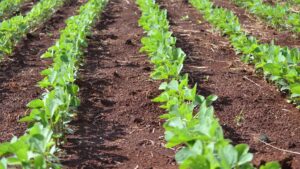
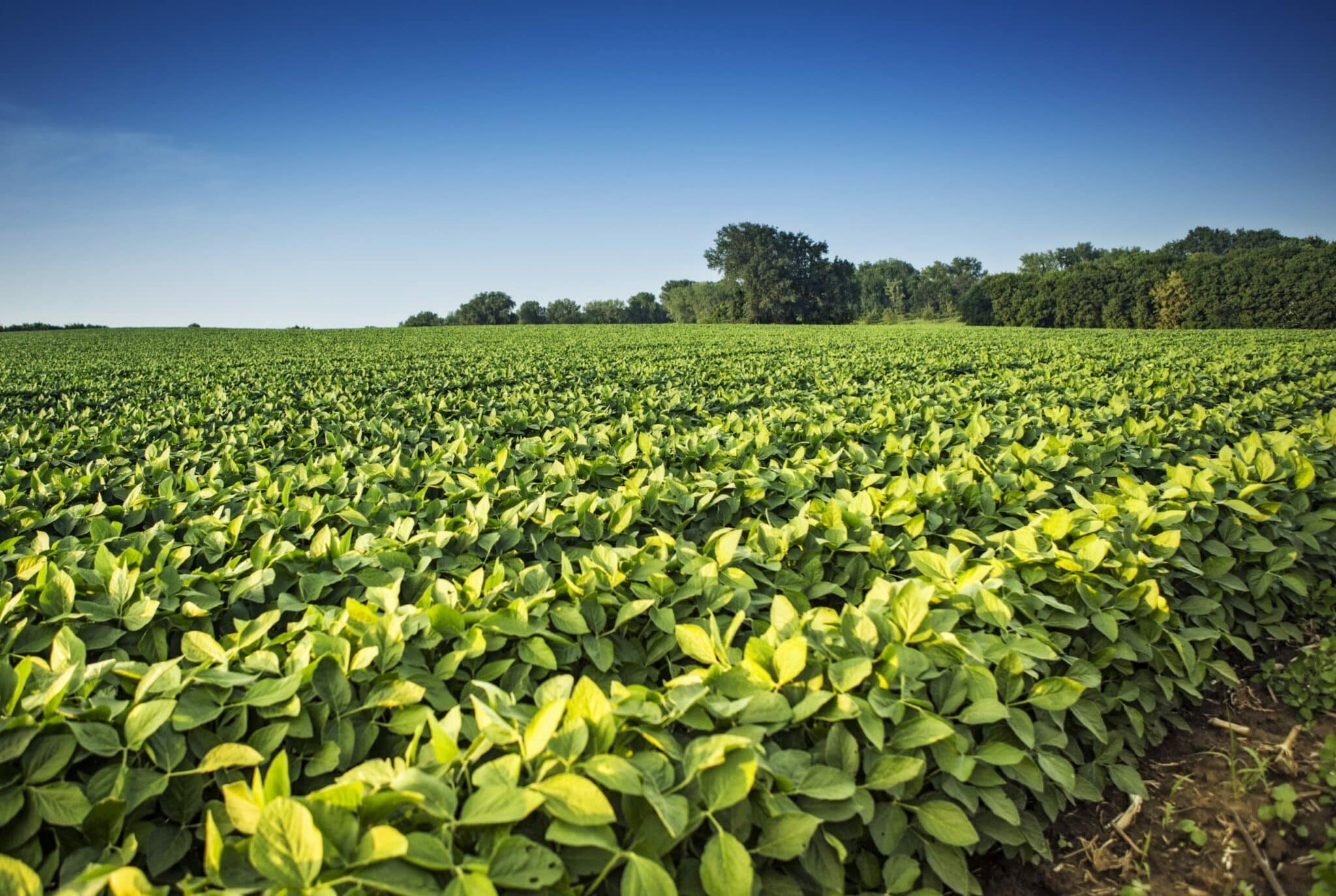
A study published in Food Research International has analyzed how three climate pressures — increased carbon dioxide (CO₂), high temperatures and drought — could affect soybean quality. Using artificial intelligence (AI) and predictive modeling based on experimentally verified data, the study found that soybeans exposed to all three factors could produce 50% more beans, but with lower nutritional quality.
The study was led by scientists from the Laboratory of Ecological Plant Physiology (LAFIECO) in the Department of Botany at the University of São Paulo’s Institute of Biosciences (IB-USP) in Brazil. Researchers found that soybeans exposed to the triple climate impact had 20% less starch and 6% less protein. They also recorded a 175% increase in amino acid content.
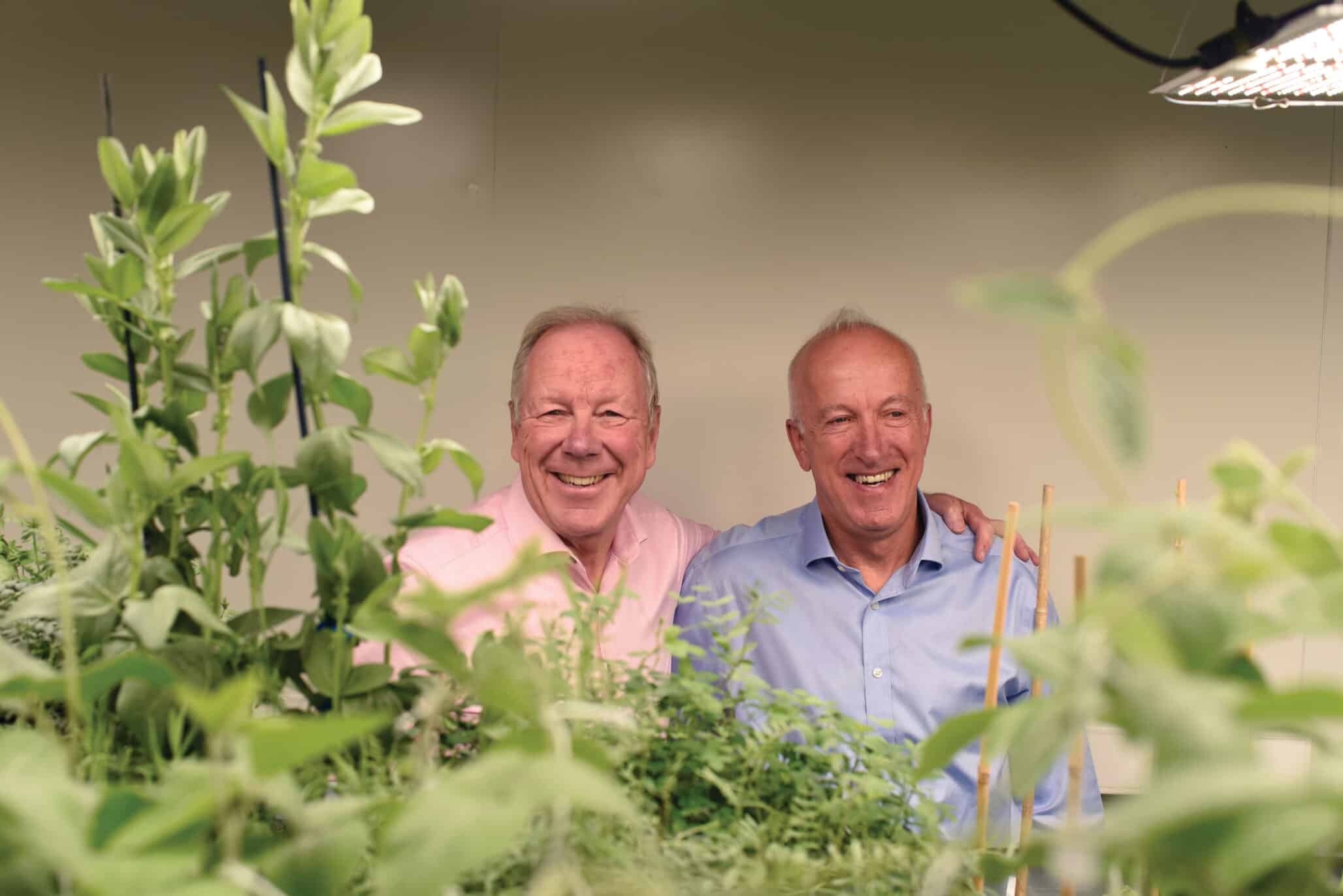
“That increase in amino acids was unexpected. We don’t even know the effect of it on animals. We need to understand the effects of the triple impact on protein metabolism, which is very important for soybeans used in animal feed. We’ve seen that protein decreases in drastic climate change scenarios. Additionally, the bean loses starch, meaning less energy,” summarizes Marcos Buckeridge, coordinator of LAFIECO.
Why Soybean Seed Quality Matters
Soybean is a major global crop for animal feed, food ingredients and oil production. That makes changes in seed composition especially important for agriculture. Even if future climate conditions increase the number of beans produced, lower starch and protein levels could affect the crop’s nutritional and economic value, according to a press release.
Buckeridge says the data could help improve predictive models used to assess the impact of climate change on global agriculture. The research team included specialists in bioinformatics, plant physiology and biochemistry, chemistry, statistics and mathematical modeling.
The group has previously studied combined stresses in soybean, but this is the first study to estimate the impact of elevated CO₂, heat and drought together.
CO₂ Can Help Plants Grow — But With Trade-Offs
Buckeridge says the fertilizing effect of increased carbon dioxide on plants is already well documented. “It causes the plant to grow faster, enabling the production of more seeds. And what about when drought is also present? We discovered that CO₂ protects the plant against the effects of drought. Even a moderate drought causes the plant to produce fewer seeds.
“But with high carbon dioxide levels, the leaf stomata close slightly [stomata are crucial microstructures for gas exchange and transpiration found mainly in leaves that open during the day in the presence of light]. In other words, the plant captures the carbon dioxide it needs for its processes but loses less water. That’s the protective effect CO₂ has against drought.”
The same protective effect can also reduce some of the damage caused by high temperatures. In an environment with both higher CO₂ and higher temperatures, the plant may continue to grow more strongly than expected.
“CO₂ generally increases the starch content in the leaf because, when it enters the plant and creates positive carbon pressure, the plant can’t always completely process it, since that metabolism is very complex with numerous metabolic pathways. As the flow becomes congested, the plant begins to store carbon as a reserve in the form of leaf starch,” says Buckeridge.
What Happens When Heat, Drought and CO₂ Combine?
The key question for the research team was what happens when all three effects occur together, in conditions closer to what crops may face in the field. The researchers focused on the soybean seed because it is the crop’s main agricultural product.
“It’s a very agriculture-focused study. I expected the three stress factors to cancel each other out, resulting in little change in plant growth. I was surprised that it grew more with all three stress factors. This means that temperature and high CO₂ are contributing to that effect since drought alone would cause the plant to produce less.”
According to Buckeridge, the lower starch content in the seed suggests that the plant redirected captured carbon toward building cell walls, including cellulose and hemicellulose, resulting in more fiber.
Buckeridge says, “In other words, high carbon dioxide causes a deviation from the normal metabolism of the bean. Drought causes a second deviation and temperature a third. When we combine the three, we get deviation number four. That means the process isn’t linear, which is one of the most important findings from our latest published work.
“The pathways of the stress factors are different. Temperature and drought act through distinct stress pathways, metabolically speaking. We already understand that and have published it. That’s why it’s important to understand their effect in combination with high CO₂.”
Testing Climate Stress in Soybeans
When studied individually, elevated CO₂ increased soybean production by up to 142%. High temperatures reduced yield by 91%, while drought reduced yield by 60%.
The combined triple effect — elevated CO₂, high temperature and drought — was assessed through predictive modeling based on experimentally validated dual-stress data. These included elevated CO₂ plus high temperature, and elevated CO₂ plus drought. The specific three-factor combination was not experimentally validated.
“Conducting the experiment with all treatments and controls simultaneously would be a massive undertaking. We’d need to consider control groups for the combinations of high CO₂ with temperature and drought, high CO₂ with temperature but no drought, high CO₂ with drought only without temperature, and I don’t have space in the system. I have chambers that raise the temperature, and I can create drought artificially by removing water from the plants. These experiments have already been tested and have yielded excellent results, allowing us to understand how different stresses affect plants separately and in combination,” Buckeridge explains.
The experiments used open-top chambers, which are tubes with open tops into which carbon dioxide can be injected. The chambers, which are about 1.60 to 1.70 metres tall, allow researchers to control CO₂ levels and temperature.
“When they were built, all the calculations were done with engineers from USP’s Engineering School to determine how long it takes for the CO₂ to enter and exit the chamber. In that experiment, we injected carbon dioxide so that the concentration inside would be twice the concentration in the ambient air [an average of 400 parts per million]. We therefore injected it so that there would be 800 ppm left.”
The chambers can also raise the ambient temperature by up to 5 C. “We put the plant under maximum stress, at the limit, with a temperature 5 °C higher and twice the CO₂, forcing it to respond.”
To simulate drought, researchers stopped watering the plants. The study used MG/BR-46 Conquista, a soybean cultivar from the Brazilian Agricultural Research Corporation (EMBRAPA). Buckeridge says it was “studied exhaustively because it’s necessary to simulate a drought similar to real-world field conditions.”
How AI Helped Predict the Triple Impact
The plants were exposed to individual and combined stress conditions, including ambient CO₂ and temperature, high CO₂, high temperature, high CO₂ plus high temperature, drought, and high CO₂ plus drought. Total biomass measured 60 days after the experiment began was used to predict soybean yield at 125 days.
To estimate the triple impact, researchers used AI tools trained on the experimental results. Generalized linear models were used to estimate the effects of the different factors, both individually and in combination. With support from USP’s Institute of Mathematical and Computational Sciences, the team also used machine learning approaches, including XGBoost and CatBoost.
“AI modeling was able to predict the results of two stress factors on the bean, as verified in the experiment. That leads us to believe that we can also rely on the results obtained from the modeling for the triple impact.”
Preparing Soybeans for Climate Change
The next step is to identify the genes responsible for soybean responses to different climate stresses and determine how those stresses affect plant metabolism.
“With that knowledge, we’ll be able to redesign the plant to produce the same amount of protein while losing less starch, for example. Ultimately, it’ll be possible to prepare the seeds for better adaptation to climate change.”
The researchers also want to understand how these findings could improve climate impact models for other crops.
“It’s likely that other species will behave similarly. We’ve already conducted the dual-effect experiment on sugarcane. Now, we need to test temperature and run the simulation using AI,” Buckeridge explains.