Euroseeds says the European Parliament’s rejection of the proposed high ILUC risk classification for soybean oil protects the EU soy value chain, but the file now returns to the Commission.
Europe wants to grow more of its own protein crops. It wants more resilient supply chains, less dependency on imported protein, stronger farmer options, and more climate adapted crops. Euroseeds had warned that one proposed policy move could pull in the opposite direction. The European Parliament’s rejection of that proposal is now a significant development, but Euroseeds says the underlying policy question remains unresolved.
At the centre of the debate is soybean oil and a technical term many readers may not encounter every day: ILUC, or indirect land-use change. In simple terms, ILUC looks at whether demand for a crop used in biofuels could indirectly push agricultural expansion into land with high carbon stocks, such as forests or wetlands. Under the Renewable Energy Directive (RED), crops considered high ILUC risk face limits in how much they can contribute to renewable energy targets.
The European Commission had proposed updating the rules and data used to classify high ILUC risk feedstocks. The concern from Euroseeds and a wider group of European organisations was that soybean oil would be classified as high risk in a way that could have consequences far beyond biofuels.
Euroseeds joined COCERAL, COPA-COGECA, Donau Soja, the European Biodiesel Board (EBB), FEDIOL, FEFAC and GAFTA in calling on the Council and European Parliament to object to the Delegated Regulation, or at minimum to ask the Commission to withdraw it and re-examine the underlying methodology. On 8 July, the European Parliament adopted a Motion for a Resolution objecting to Commission Delegated Regulation (EU) 2026/2680. In a follow-up statement, the coalition, welcomed the vote as a signal in favour of evidence-based policymaking and greater coherence between renewable energy, agriculture and food security objectives.
For the seed sector, the issue is not only about fuel. It is also about whether Europe can create the market conditions needed for more soybean cultivation, more investment in varieties, and a stronger domestic protein crop base.
Branislava Popov, technical manager variety registration and seed marketing at Euroseeds, says soybean should not be viewed only through the lens of biofuels. “For Europe, it is foremost a protein crop, a rotation crop, and a crop where breeding progress can help farmers respond to changing climate and challenging market conditions, specifically high fertiliser prices,” she says. “If policy reduces the economic attractiveness of European soy, it also risks reducing the incentive to invest in the new varieties farmers will need.”
What ILUC Means, and Why Soy is Involved
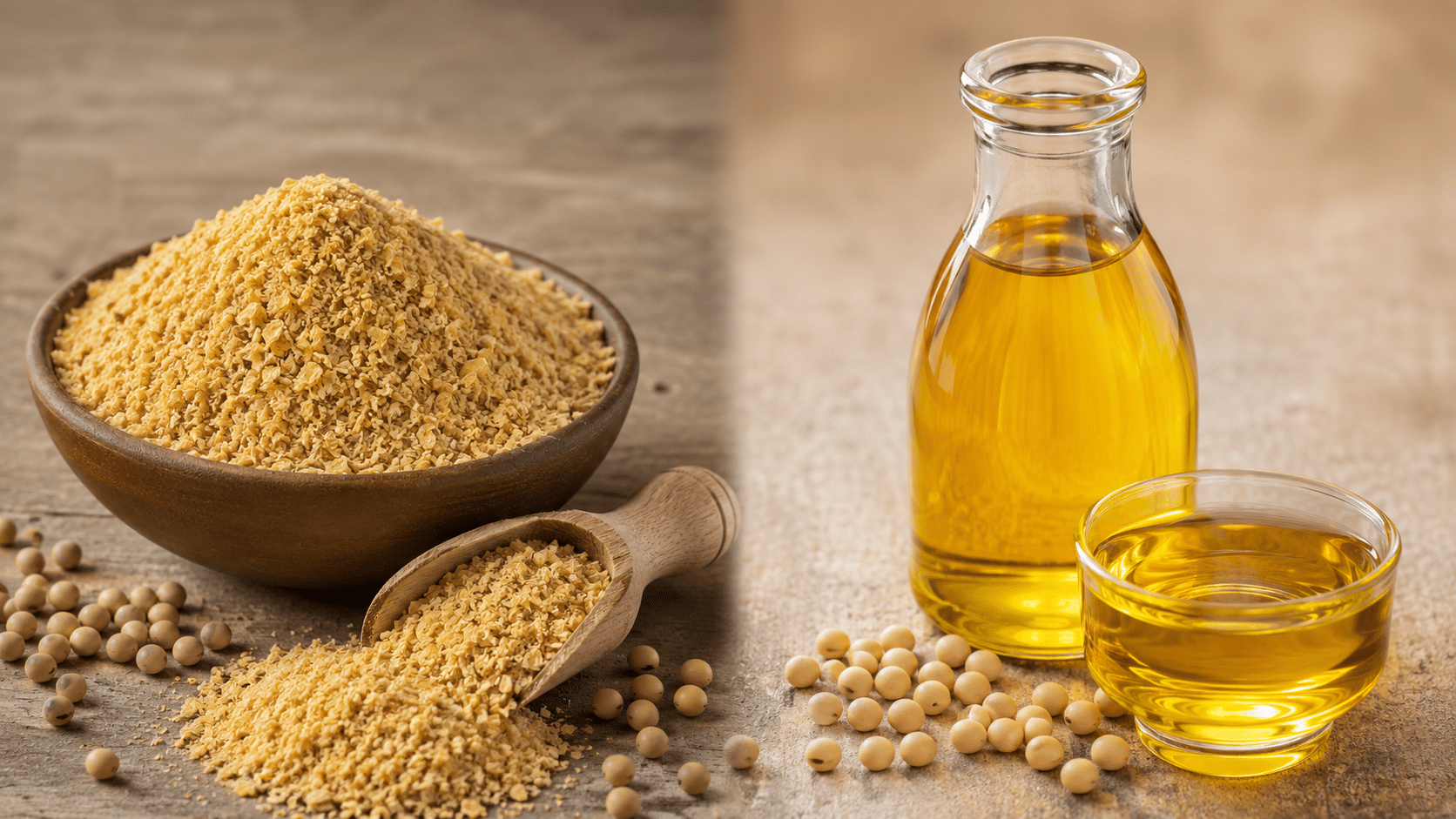
The ILUC debate is complicated because it connects climate policy, energy policy, food and feed markets, trade flows, and land use. A crop may be grown for several markets at once. Soybean is a good example. It is processed into soy meal, which is widely used in animal feed, and soybean oil, which can go into food, industrial uses and biofuels.
The joint statement argues that Europe’s soy expansion is mainly driven by demand for soy meal, not soybean oil. Soy meal represents the major protein output of the crop. Yet soybean oil still matters because processing economics depend on both parts of the bean. If one outlet is weakened, the whole value chain may become less attractive.
Those concerns explain why the proposed high ILUC classification raised alarm among organisations representing farmers, seed companies, traders, processors, feed manufacturers and biodiesel producers. Their warning was that restricting soybean oil in biofuels could reduce demand for European grown soybeans, put pressure on crushing operations, and make Europe more dependent on imported protein meals.
According to Garlich von Essen, Secretary General and CEO of Euroseeds, the discussion may look technical, but the consequences are very practical. “Europe cannot ask farmers and breeders to invest in protein crops while at the same time weakening one of the markets that helps make those crops economically viable,” he says.
Why Soy Meal and Soybean Oil Belong in the Same Conversation
Soybeans are often discussed as a protein crop, and rightly so. The meal is the main reason soy is so important for feed markets. But the oil is not a side issue. Like many crops, soy depends on the value of multiple outputs. Farmers, processors and breeders all operate in a chain where the economics of one part affect the viability of the whole.
If the oil component loses access to an important market, processing soybeans in Europe may become less competitive. That could reduce demand for European-grown soybeans. And if demand weakens, farmers may be less willing to include soy in their rotations, even where agronomic conditions are improving and new varieties are becoming available.
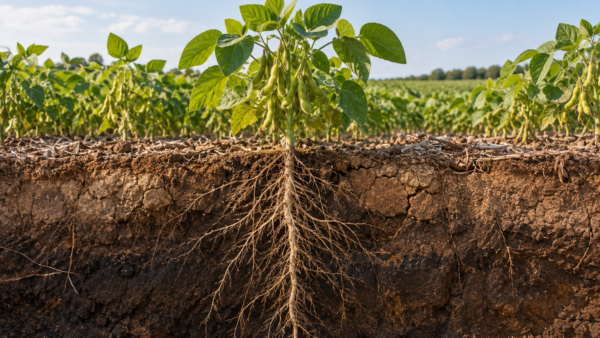
This matters because soybean can contribute to more diverse crop rotations. As a legume, it can support nitrogen management and help reduce fertiliser needs. At a time when input costs, fertiliser dependency and soil health remain high on the European agenda, the crop has a role that reaches beyond feed protein.
Seed World Europe has previously reported on the expansion of high-performance soybean cultivation in Europe, including the need for varieties tailored to European growing conditions. It has also covered wider efforts to strengthen legume breeding and close yield gaps through projects such as Legume Generation, in which Euroseeds is a partner, and BELIS, where Euroseeds contributes through the Stakeholder Advisory Board as an external party. The current ILUC debate therefore arrives at a sensitive moment: Europe is trying to build momentum behind protein crop breeding, while the market signal for one key crop could become less clear.
For Popov, this market signal matters because breeding is not a short-term activity. “Breeding is a long-term investment,” she says. “For crops such as soybean, companies need confidence that there will be a stable and growing European market for improved varieties.” When policies create uncertainty around the crop’s economic future, she adds, “that uncertainty can travel upstream all the way to breeding programmes.”
What This Means for Breeders
For plant breeders, the question is not simply whether soy can be grown in Europe. It is whether the crop can keep improving fast enough to become more attractive for farmers across different regions.
European soybean breeding focuses on traits that are central to local adaptation and farmer uptake: maturity, yield stability, protein content, disease resistance, lodging resistance and performance under changing weather patterns. These are not quick wins. They require sustained investment, testing, registration work, seed multiplication and market development.
The joint statement specifically links Europe’s protein production goals to investment in soybean breeding. That is an important point. If Europe wants more domestic protein production, it needs more than political ambition. It needs varieties that perform reliably, markets that reward farmers, and policy signals that encourage the seed sector to keep investing.
“Farmers will only grow more soy if the crop works in the field and in the market,” says Popov. Breeders can help with the field part by developing better adapted varieties, she explains, but the market part depends on coherent policy. “Protein autonomy requires both.”
Euroseeds’ concern was that the proposed classification would make that coherence harder to achieve. On one side, the EU is discussing how to strengthen protein crop production and reduce dependency on imports. On the other side, the ILUC proposal would have weakened the economics of a crop that is central to that ambition.
A Call for Policy Coherence
The signatories are not arguing against sustainability criteria. Their concern is that the methodology behind the proposed classification may not properly reflect the reality of European soy production and may not distinguish sufficiently between different origins, systems and impacts.
The joint statement points to concerns about data transparency, methodological choices and whether land expansion has been attributed correctly. It also argues that low ILUC certification is not a realistic alternative for many farmers because of the evidence requirements and administrative burden involved.
For Euroseeds, the broader message is that Europe’s climate, energy, agriculture and food security objectives need to work together. A policy designed for renewable energy should not unintentionally weaken the development of European protein crops, particularly at a time when policymakers are asking agriculture to become more resilient and less dependent on external inputs and imports.
von Essen stresses that the seed sector supports science based and sustainability-oriented policy. But science-based policymaking, he says, also means “using robust data, transparent methods and a full understanding of the consequences across the value chain.” Europe’s protein strategy and renewable energy policy should reinforce each other, he adds, “not create conflicting signals.”
The European Parliament has now adopted a Motion for a Resolution objecting to Commission Delegated Regulation (EU) 2026/2680, which would have classified soybean oil as a high ILUC risk feedstock under the Renewable Energy Directive. For Euroseeds and the other signatories, that result is an important step, but not the end of the discussion. The file now returns to the Commission, and the organisations are calling for a transparent, scientifically robust and coherent framework that supports both climate and energy objectives and sustainable European protein production.
For readers outside the policy bubble, the issue can be summarised quite simply. Europe wants more home-grown protein. Soybean is one of the crops that can help. But for that to happen, farmers need a viable crop, processors need viable markets, and breeders need the confidence to invest in better varieties.
“If Europe is serious about strengthening its protein supply, then every part of the chain matters: the farmer, the processor, the breeder and the policy framework,” says Popov. “Soybean can contribute to that objective, but only if policies recognise how the crop and its markets actually function.”