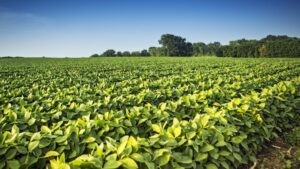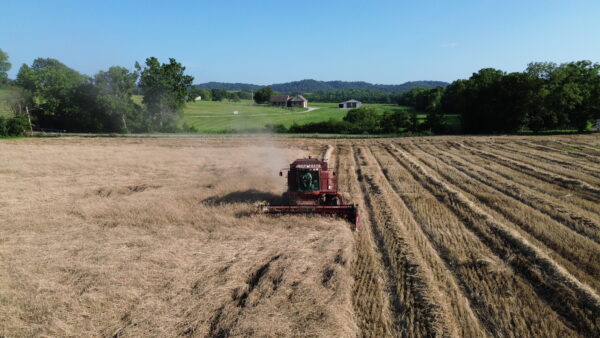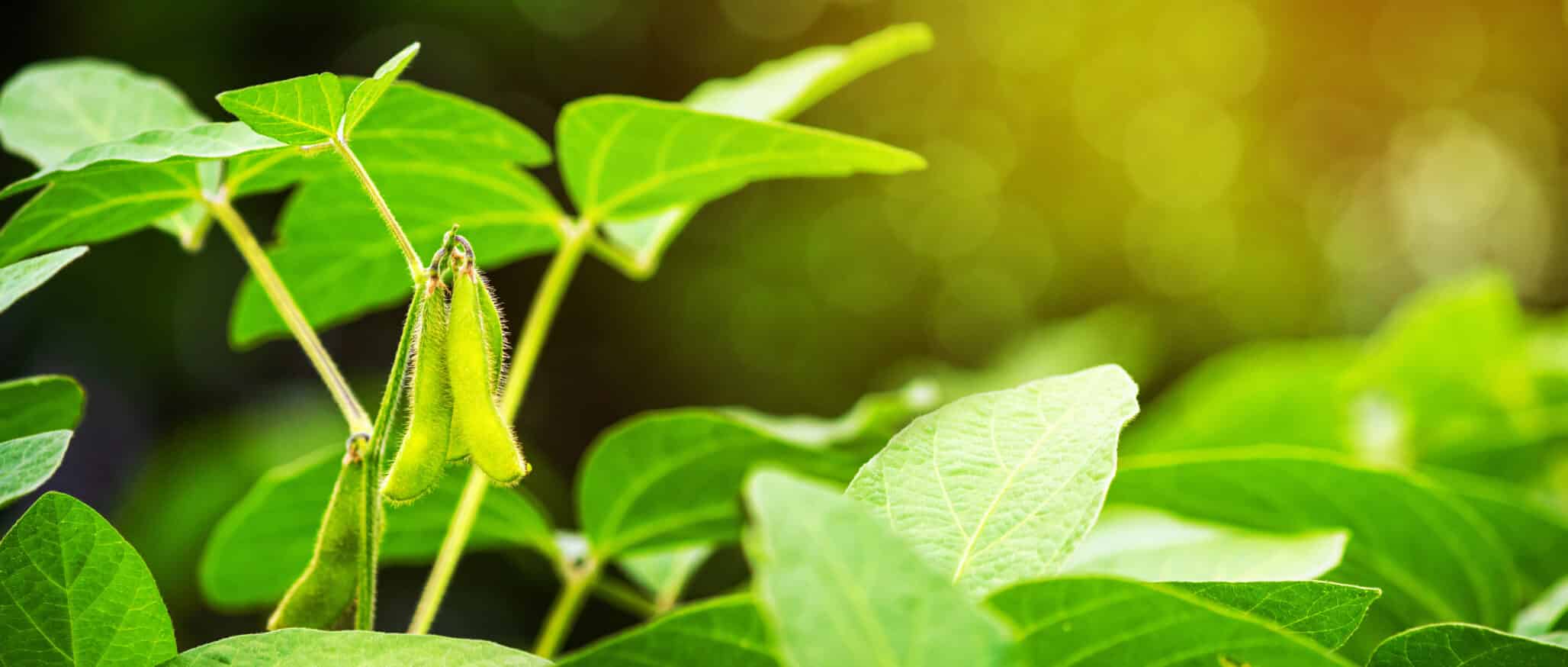
The project will test soybean maturity groups in more than 180 environments, giving producers and seed companies comparable data to identify cultivars adapted to different growing regions.
Researchers from Argentina, Uruguay, Paraguay, Colombia and Peru are establishing a regional network to improve soybean cultivar evaluation and make comparable performance data more accessible to producers, seed companies and crop advisers.
The Regional Network for the Evaluation of Cultivars, Reduction of Production Gaps and Transfer of Innovation, known as RRECSO-Americas, includes participation from INTA and support from the University of Florida. Fontagro is funding the project, which is being executed by the ArgenINTA Foundation.
“It is a regional network of soy tests to identify better adapted cultivars and support productive decisions,” said Cristian Vissani, national coordinator of Argentina’s National Soybean Cultivar Evaluation Network and an INTA researcher.
He explained that “the project proposes to develop national networks and a regional network of comparative performance tests under the same protocol.”
Building on Argentina’s Soybean Testing Network
RRECSO-Americas is based on the experience of Argentina’s National Soybean Cultivar Evaluation Network, known as RECSO, according to a press release.
Coordinated by Vissani, the Argentine model brings together public- and private-sector participants through standardized testing methods, shared financing, technical oversight and the transfer of cultivar performance information to the production sector.
“We wanted to take a leap and be able to include other countries in the evaluation of soybean cultivars. I am very happy for this meeting,” Vissani said.
The regional project will establish national testing networks and connect their results through a shared database and standardized evaluation system.
Soybeans to Be Tested in More Than 180 Environments
Researchers will evaluate soybean genotypes from different maturity groups in more than 180 environments over the course of the project.
Participating countries will use a common methodology, including a unified protocol manual and a baseline assessment for each country. Regional databases will combine soybean performance results with environmental and crop-management variables.
The network is intended to help researchers compare cultivar performance across countries, identify soybean varieties suited to specific environments and support variety-selection and crop-management decisions.
Research Will Cover Yield, Agronomy and Crop Health
Lead researchers from each participating country will help establish national baselines and organize the testing network.
INTA’s RECSO Technical Committee will contribute to the network’s governance structure, evaluation protocols and methodology for comparative performance trials conducted in microplots.
Technical work will address soybean ecophysiology, crop management, diseases, pest-warning systems and genetics. Participating INTA researchers include Marco Murgio, Lisandro Lenzi, Emilia Balbi and Cristian Vissani.
First Fontagro Investment in Soybean Research
Eugenia Saini, executive secretary of Fontagro, said the organization supports projects in which researchers from multiple countries work together and connect with the private sector.
“It is a pleasure to share this initiative with you.”
“Fontagro has a characteristic: when the Board of Directors decides to finance a project, it is consortia of countries that work simultaneously, with researchers who form an alliance where validation is made, connecting with the private sector according to their needs.”
She recognized that, “in 30 years, it is the first time we invest in soybeans” and said that, “if new needs arise from the implementation of this project, we can meet and move forward in a new project.”
Carlos Messina, director of the University of Florida’s UF/IFAS Crop Transformation Center, welcomed the opportunity to participate in the regional research.
“Thank you for the opportunity to participate. I am very excited about this initiative to do evaluations and science. Although the United States is not a member of Fontagro, thanks to Eugenia we can participate.”
“We are very happy to be part of something big and with a future.”
The project is expected to directly benefit approximately 5,000 soybean producers, 15 seed companies and 500 technical advisers, along with research and extension personnel at the participating national agricultural research institutes.