A new book argues that helping half of the Global South’s smallholder farmers adopt regenerative agriculture could meet the additional food demand to 2050 while restoring soils, biodiversity and rural livelihoods.
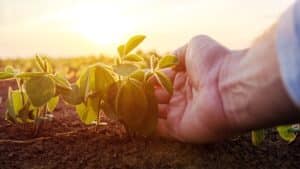
Helping smallholder farmers access training, financing, markets and agricultural inputs could increase food production while restoring degraded land, development expert Hugh Locke argues in a new book.
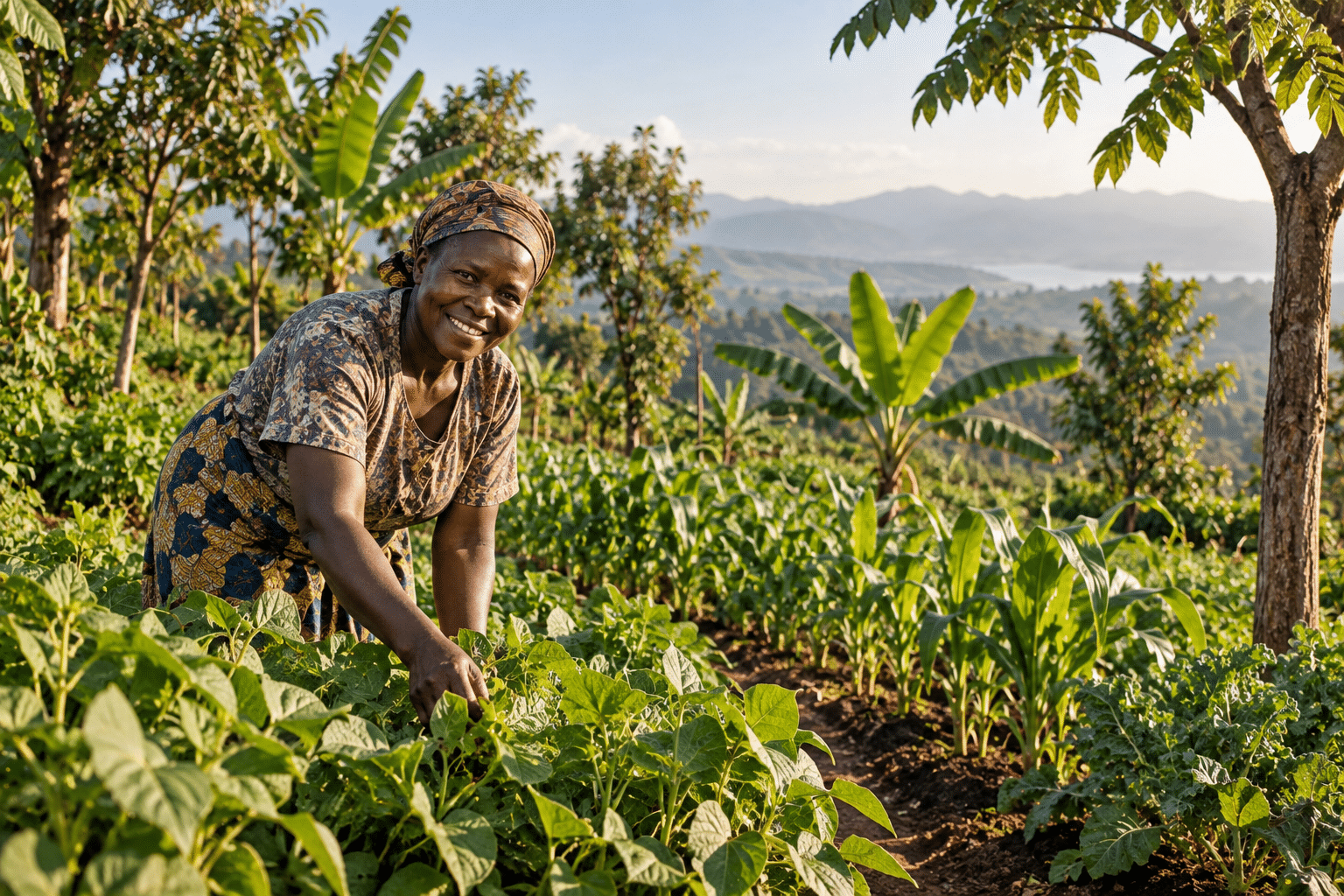
In Whole Earth Farming: Smallholders and the Great Regenerative Transformation, Locke proposes supporting approximately 240 million farming families in adopting regenerative agriculture and agroforestry. He argues that the resulting production gains could meet the additional food demand associated with population growth through 2050.
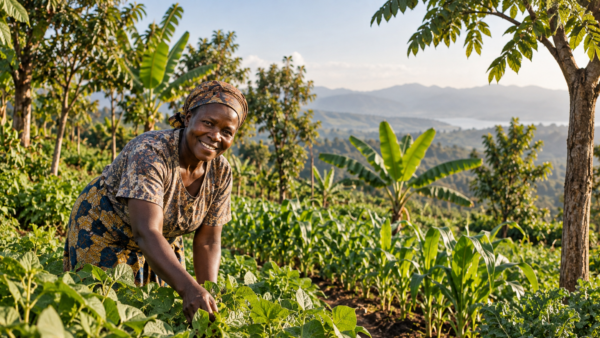
The book estimates that roughly 475 million smallholder farms in the Global South, typically operating on less than two hectares, already produce about 30% of the world’s food. However, many face limited access to the resources and services needed to improve productivity, according to a press release.
“The world’s smallholder farmers are too often treated as beneficiaries of development assistance when they should be recognized as architects of the next agricultural transformation,” said Locke, co-founder of the Smallholder Farmers Alliance in Haiti.
Linking Farm Support With Higher Yields
Much of the book draws on Locke’s experience with the Smallholder Farmers Alliance, which he established with Haitian agronomist Timote Georges in 2010. The organization now works with approximately 10,000 member farmers.
Locke reports that participating farmers receiving basic agricultural support based on sustainable practices have increased yields by an average of about 40%. Household incomes have risen between 50% and 100%, depending on local conditions.
The organization combines agroforestry with a system it calls “tree currency”: farmers plant and maintain trees in exchange for training, seeds, agricultural services and other inputs. Members plant approximately one million trees annually.
The approach links support for crop production with environmental restoration. Locke argues that the results also demonstrate how limited access to research, financing and extension services has held back smallholder productivity.
“This is not about nostalgia or returning agriculture to the past,” Locke said. “It is about recognizing where one of the greatest opportunities for the future now exists.”
Adapting Crop Practices to Local Conditions
The book describes regenerative agriculture as an approach intended to improve the natural systems that support farming, drawing on traditional agricultural knowledge, established sustainable farming methods and contemporary science.
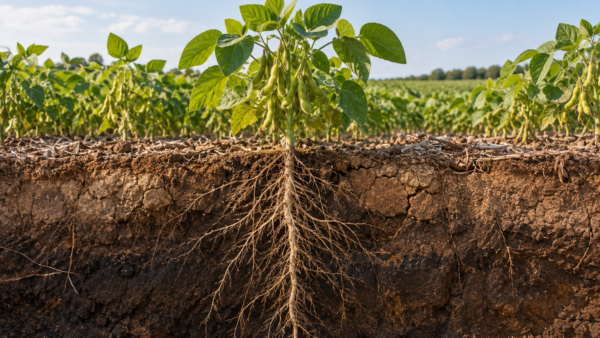
Depending on local conditions, practices can include crop rotations, cover crops, intercropping, composting, reduced tillage, agroforestry and livestock integration.
Locke argues that these methods should be assessed by their results, rather than treated as a universal checklist. Relevant outcomes include soil health, biodiversity, water quality and availability, carbon storage, food production and farmer livelihoods.
He describes this combination of farming methods and outcome measurement as regenerative agriculture’s “dual revolution”.
“The question is not simply, ‘Are you using regenerative practices?'” Locke said. “The more important question is, ‘Is the land, the ecosystem and the farming community measurably better as a result?'”
This distinction allows farmers to choose approaches suited to their crops, soils, climate and communities.
Measuring Environmental and Economic Outcomes
With regenerative agriculture lacking a universally agreed definition, Locke argues that credible measurement is essential.
The book highlights the emerging Regen10 Outcomes Framework, developed through more than two years of global consultation, as a potential reference for evaluating results while allowing flexibility in farming methods.
The framework considers ecological health, farmer livelihoods, food quality and community resilience, among other outcomes.
Locke argues that carbon storage alone is insufficient to establish whether a farming system is regenerative. A system that stores more carbon while damaging biodiversity, water resources or farmer livelihoods would fall short of the broader objectives he outlines.
Assessing the Potential Climate Benefits
The book also examines how changes in smallholder farming could affect greenhouse gas emissions and carbon storage.
Drawing on peer-reviewed research, Locke estimates that a transition involving approximately 240 million farms across 480 million hectares could eventually remove between 0.48 and 0.72 gigatons of carbon dioxide annually through soil carbon accumulation.
Including avoided emissions associated with reduced synthetic fertilizer use, the book estimates a combined annual climate benefit of approximately 0.6 to 0.85 gigatons of carbon dioxide equivalent at mature adoption.
Those projections apply during the period when soils are actively accumulating carbon. Locke notes that soils cannot continue absorbing carbon indefinitely: accumulation generally occurs over one to three decades before approaching a new equilibrium.
Results would also vary with soil characteristics, climate, farming practices and starting conditions.
“Regenerative agriculture is not a license to keep emitting carbon elsewhere,” Locke said. “It’s climate potential is important precisely because it comes alongside other benefits we urgently need anyway: healthier soil, greater biodiversity, more resilient farms, increased food production and stronger rural communities.”
Expanding Access to Research, Finance and Markets
Locke compares the ambition of his proposed transformation with that of the Green Revolution, which substantially increased agricultural production during the second half of the 20th century.
His proposed approach combines traditional farming knowledge, ecological science, locally adapted practices and systems for measuring environmental and social outcomes.
Smallholders could play a central role, he argues, because many retain traditional agricultural knowledge and operate diversified farms. Realizing that potential would require greater access to training, finance, research, markets, data and extension services.
The book’s proposed measures of success extend beyond production per hectare to include healthier soils, improved water systems, biodiversity, climate resilience and viable farming communities.
Exploring Agriculture’s Social Foundations
The book also considers principles from the Bahá’í Faith that Locke sees as relevant to agriculture’s future, including equality, consultation and justice.
It examines the farming community of ‘Adasíyyih in the Jordan Valley, directed by ‘Abdu’l-Bahá from 1901 to 1921. Locke argues that its use of crop rotation, agroforestry, livestock integration and soil-building anticipated practices now associated with regenerative agriculture.
He connects the principle that “the earth is but one country, and mankind its citizens” with the interdependence of farmers, governments, companies and international institutions. Locke describes the principles as “open-source foundational truths” that do not require religious belief.
Farmer Experiences From 18 Countries
Launched during Climate Week NYC, Whole Earth Farming includes 21 stories from 18 countries, with examples from Canada, the Netherlands, Colombia, Thailand and farming communities across Africa, Asia and Latin America.
In the foreword, Roy Steiner, senior vice president of the Food Initiative at The Rockefeller Foundation, describes the world’s smallholder farming households as “not a measure of the problem, but as a measure of the possibility.”
Steiner argues that agricultural transformation cannot be judged by carbon storage or crop yields alone and requires farmers to participate actively in shaping change.
The book also includes an introduction by actor and environmental advocate Rainn Wilson and endorsements from figures in agriculture, development and humanitarian work. Former U.S. President Bill Clinton said Locke presents lessons from smallholder farming “with both rigorous evidence and genuine humanity.”
Chef and humanitarian José Andrés emphasizes farmers’ contributions to food production and local economies, concluding: “Read this book. Then do something.”