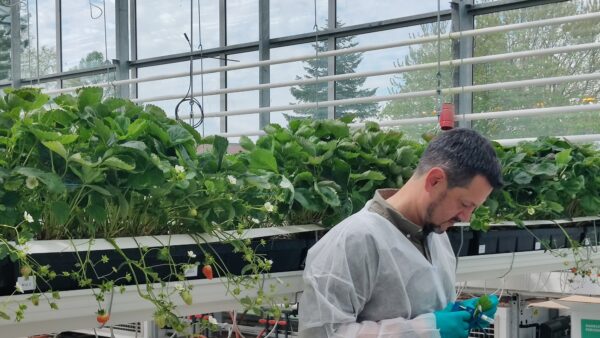
Inside Mas Seeds’ R&D engine, where climate modelling, genomics and advanced phenotyping are helping breeders anticipate what farmers will need next.
Innovation in plant breeding is no longer simply about identifying the best plants in a trial plot. Today, genetics, molecular tools, drones, environmental data and powerful prediction models are increasingly connected. At MAS Seeds, our goal is to turn these technologies into something very tangible: varieties that help farmers remain productive as growing conditions become less predictable.
Breeding for the Field of Tomorrow
For Colin Guillaume, Head of Corn Product Development, that starts with anticipating how farming itself is changing. Climate change is already influencing which crops farmers grow, which varieties they choose and how they manage them. Our breeding programmes therefore need to look ahead rather than simply respond to what has happened in the past.
Simulation models help us understand how future conditions could affect maize production and adapt our breeding strategies accordingly. We expect farmers to focus increasingly on the optimal economic return rather than maximum yield alone, while regenerative practices will become more important in building farm resilience through healthier soils and reduced risk.
That changing reality is also reshaping where and how we test new material. Our trial networks increasingly represent the conditions and farming systems in which future varieties will need to perform.
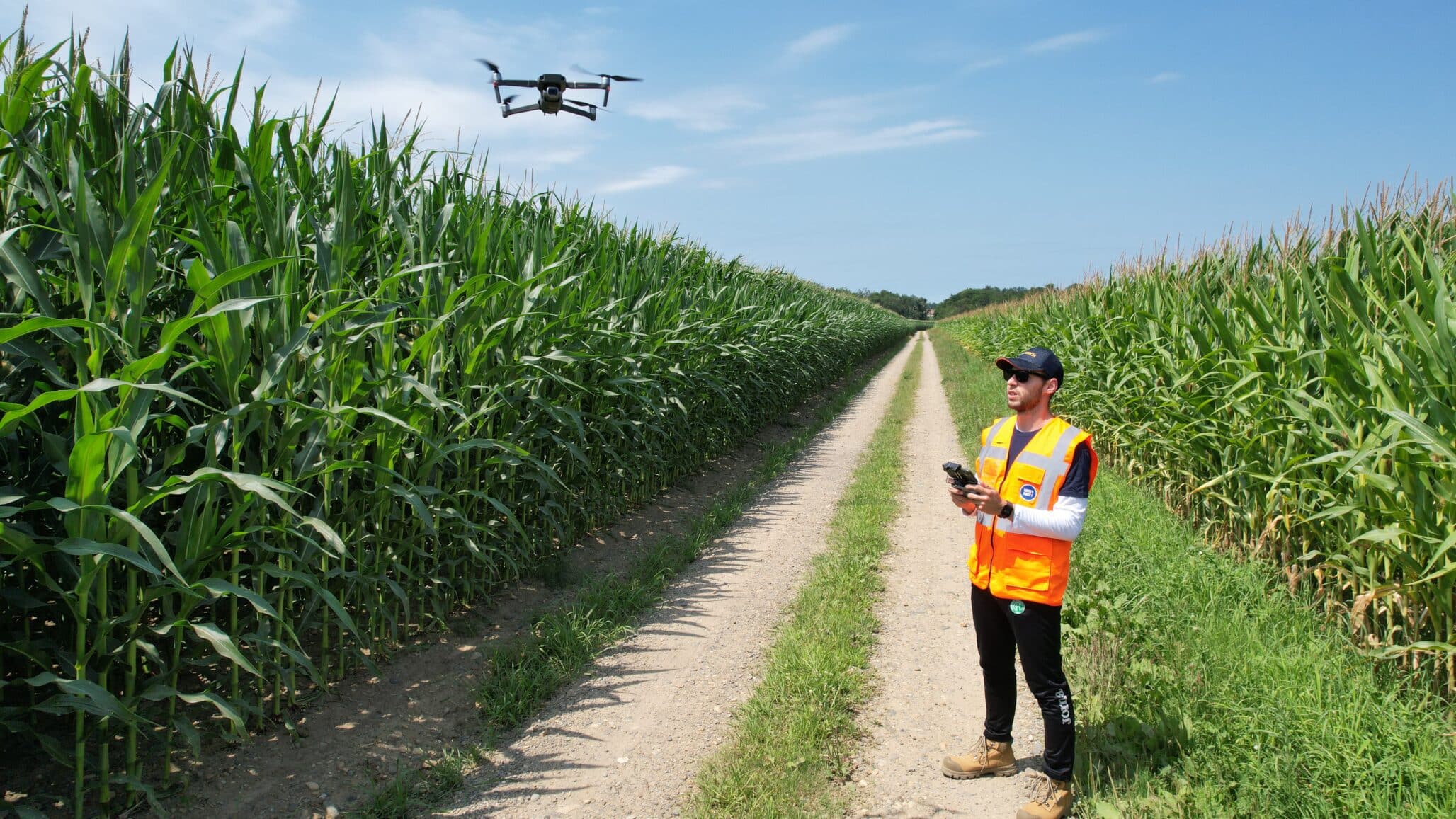
Technology allows us to go much deeper. High throughput phenotyping, including drones and imaging technologies, has greatly increased both the quantity and quality of data collected in our breeding programmes. This is particularly valuable during early selection, when breeders must evaluate very large numbers of genetic materials.
More information brings greater precision. It improves prediction models, helps us understand plant responses at the physiological level and allows promising characteristics to be identified earlier. For Colin, the equation is straightforward: “We are more precise, we identify interesting features earlier, and we can test more genetic variability.”
Perhaps the clearest example comes from climate data. Using our historical datasets, MAS Seeds has classified the different climatic scenarios that grain and silage maize may encounter across Europe. But rather than relying only on historical frequencies, we estimate how frequently these scenarios are likely to occur as the climate changes.
Breeders can then identify hybrids that perform particularly well within specific scenarios while remaining stable across several of them. The objective is not simply a hybrid that excels under ideal conditions, but one farmers can rely on when those conditions change.
Connecting Genomics With the Field
In sunflower, the challenge is equally complex. For Mihaela Patrascoiu, Lead of Sunflower Product Development, stable yield and oil performance remain fundamental to farm profitability, but hybrids must increasingly deliver that performance across environments affected by drought, heat and changing disease pressure.
Resistance to downy mildew, broomrape and rust, together with herbicide tolerance systems, has become a standard requirement. Climate change adds another dimension because diseases can become more frequent or severe or appear in new production areas. Anticipating those shifts is therefore becoming part of breeding strategy.
Here too, the real advance lies not in one technology but in connecting several. Genomic selection helps predict the potential of new material. Precise field phenotyping shows how plants actually perform, while environmental characterisation helps breeders understand why they perform differently from one location to another.
“The breakthrough is not one isolated technology, but the connection between genomics, precise field phenotyping and environmental characterisation within a single breeding approach,” Mihaela explains.
Combining those insights allows us to screen larger populations, identify promising combinations sooner and concentrate field resources on the candidates with the greatest potential. Breeding becomes faster and more precise, but the field retains the final word.
That distinction matters. For farmers, innovation is not about algorithms, datasets or laboratory techniques. It is about hybrids that establish well, cope with stress, resist important diseases and still produce a good harvest when the season is far from perfect.
For MAS Seeds, that is where innovation ultimately proves its worth: turning increasingly sophisticated R&D into dependable performance in farmers’ fields.
The technology may be complex. The objective is simple: better informed breeding decisions and more reliable varieties for farmers.