
Another growing season is behind us, and much of this year’s seed crop has been harvested, conditioned, tested, and placed into storage. Proper drying, handling, and storage are essential to preserving seed quality, but even under favorable conditions, seed continues to age. The quality measured after harvest may not be the same quality delivered to customers next spring.
Does Your Germination Percentage Tell the Whole Story?
Consider two corn seed lots, both with 95% standard germination. On paper, they appear equally promising. But when tested under cold, wet conditions, one maintains strong performance while the other shows a substantial decline.
Standard germination measures the ability to produce normal seedlings under favorable conditions, while vigor testing provides additional information about performance under stress. Cold testing in corn and accelerated aging testing in soybeans can help distinguish between lots with similar
What’s Behind the Germination Result?
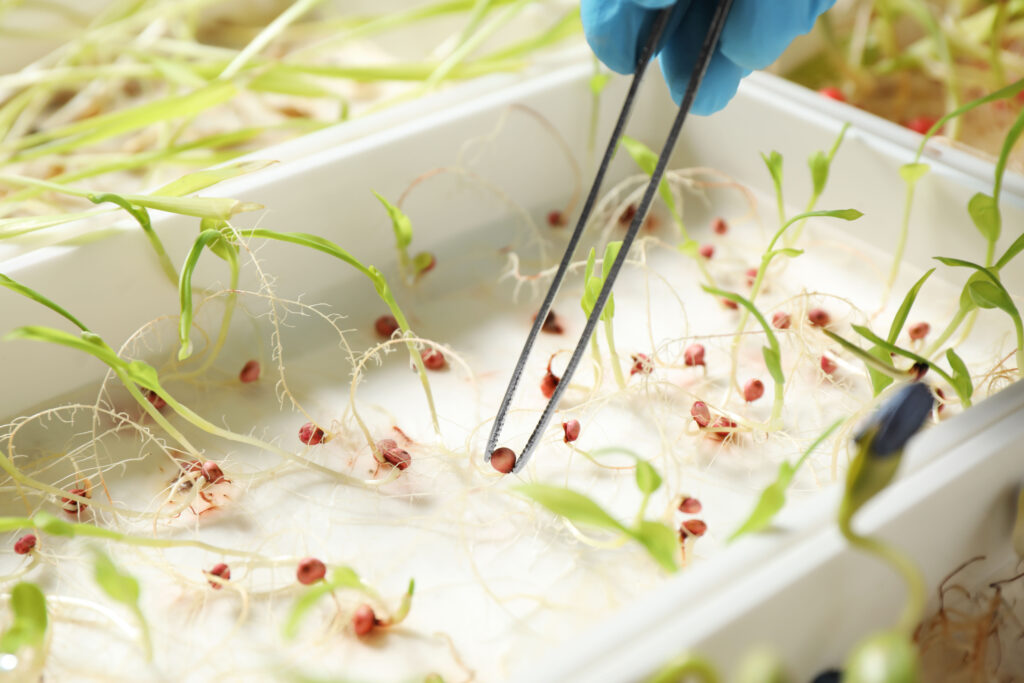
A germination percentage tells you how many seeds produced normal seedlings, but understanding why the others failed can be just as valuable.
At Iowa State University’s Seed Science Center, our germination reports include additional information about the seedling abnormalities and fungi observed during testing.
Fungi such as Aspergillus and Penicillium may raise questions about storage conditions, while findings involving Fusarium or Diaporthe may warrant closer investigation of seed health and treatment options. Likewise, abnormalities associated with mechanical damage or deterioration may suggest concerns that fungicide treatments can’t resolve.
These observations don’t always identify a definitive cause, but they can help direct attention toward the most useful next steps. Sometimes a conversation with the laboratory about what was observed can be just as valuable as the percentage itself.
When Should You Retest Stored Seed?
Seed quality changes over time, but not necessarily at the same rate for every lot. Initial quality, moisture content, storage temperature, mechanical damage, and storage duration all influence deterioration.
There is no universal retesting schedule. The important question is whether your results are recent enough to support the decisions you’re making.
Testing before spring distribution can reveal changes that weren’t apparent after harvest, but waiting too long may leave fewer options.
Make Your Results Work For You
The next time you review a seed test report, look beyond the final percentage. Consider what the vigor results, seedling abnormalities, and fungal observations reveal about the condition of your seed.
The Iowa State University Seed Science Center provides germination, vigor, and other seed quality testing to help customers understand their results and make informed decisions.
After all, your reputation depends on the quality of the seed your customers receive, not just the quality it had when it went into storage.