From unreliable weather stations to complicated software, Manitoba producers reveal why some agricultural innovations fall short — and how real-world testing could change that.
For all the excitement surrounding artificial intelligence, automation and digital agriculture, Manitoba seed grower Mark Keating has a straightforward question about new technology: Will it actually make his farm more profitable?
It’s a question that reflects a growing tension in Canadian agriculture. Technology developers are racing to introduce new products, but farmers are being asked to invest in those tools at a time when the financial consequences of making the wrong decision are greater than ever.
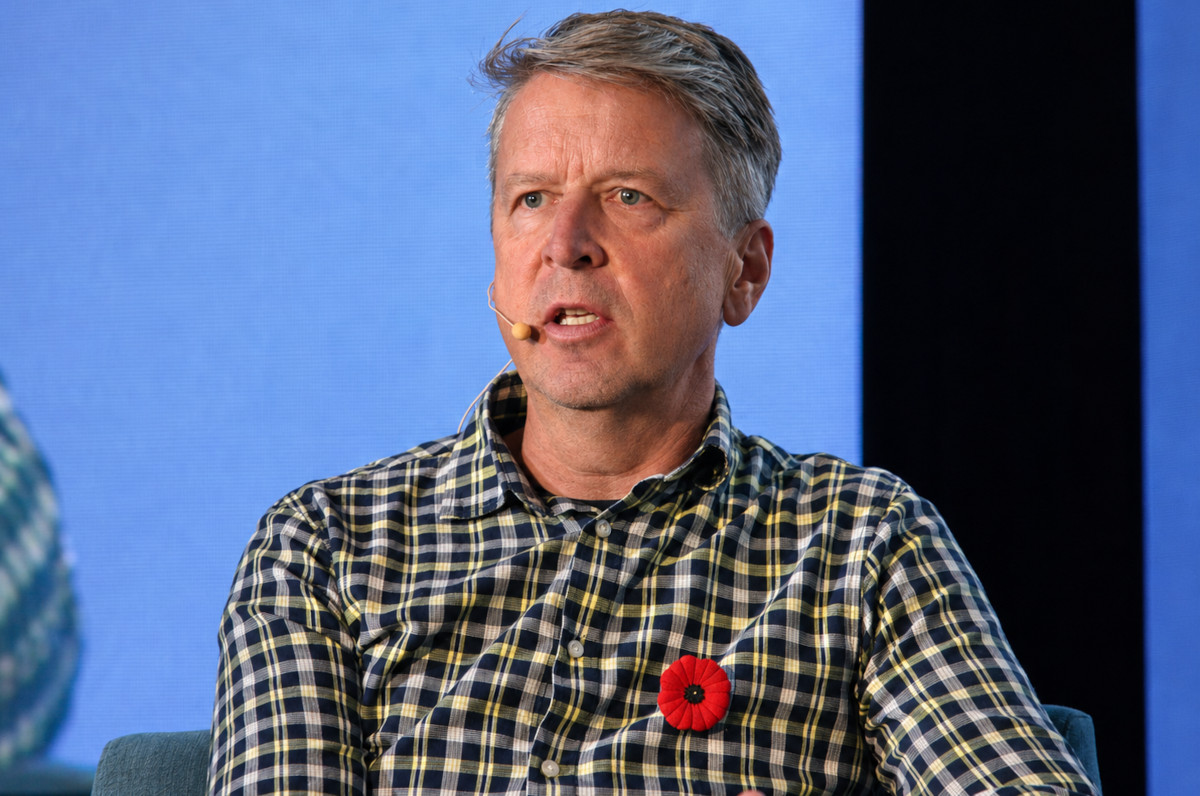
“Farming has always been risky, but in the relatively recent past, to me it’s shifted more from labour risk, you know, and sweat equity risk to flat out financial risk,” Keating told attendees at the Enterprise Machine Intelligence & Learning Initiative (EMILI) Agriculture Enlightened conference in Winnipeg on Nov. 5.
“There’s huge dollars required to grow a crop now, and we need every tool possible to basically maximise our returns or minimise our risk.”
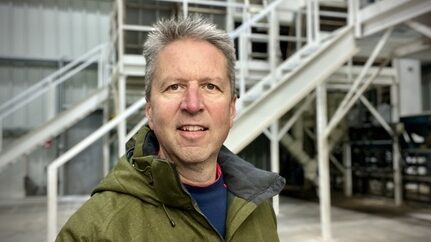
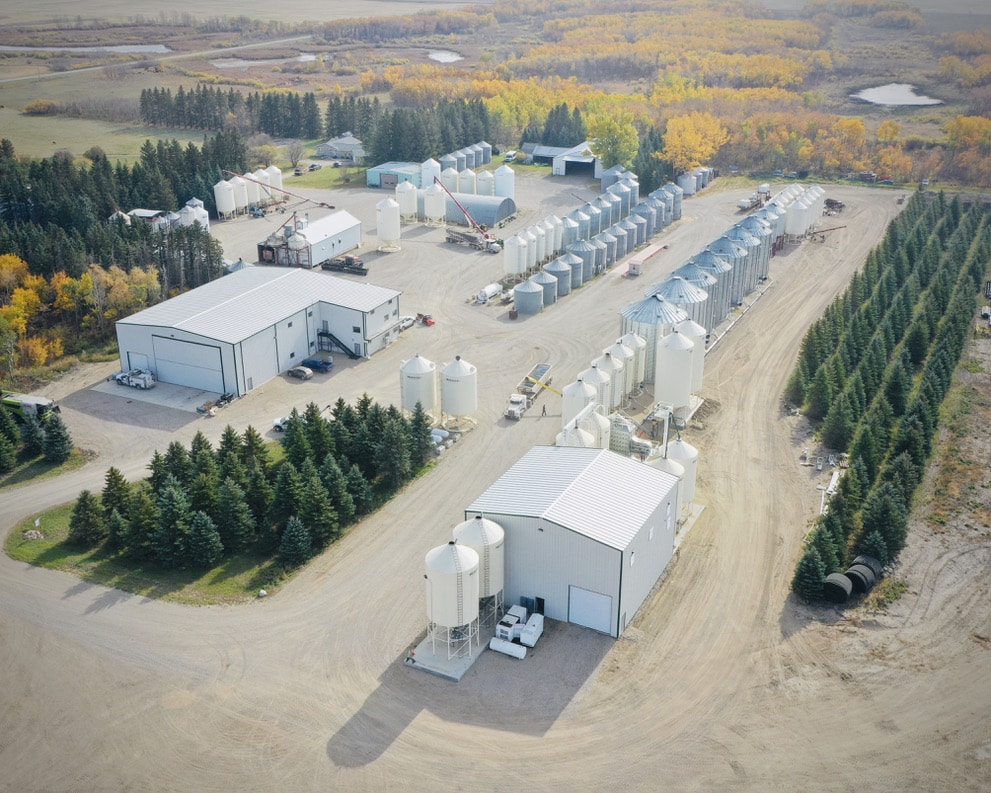
Keating, president and CEO of Keating Seed Farms and Keating Seed Corp. near Russell, Man., participated in a panel examining the importance of testing agricultural technologies under actual farm conditions.
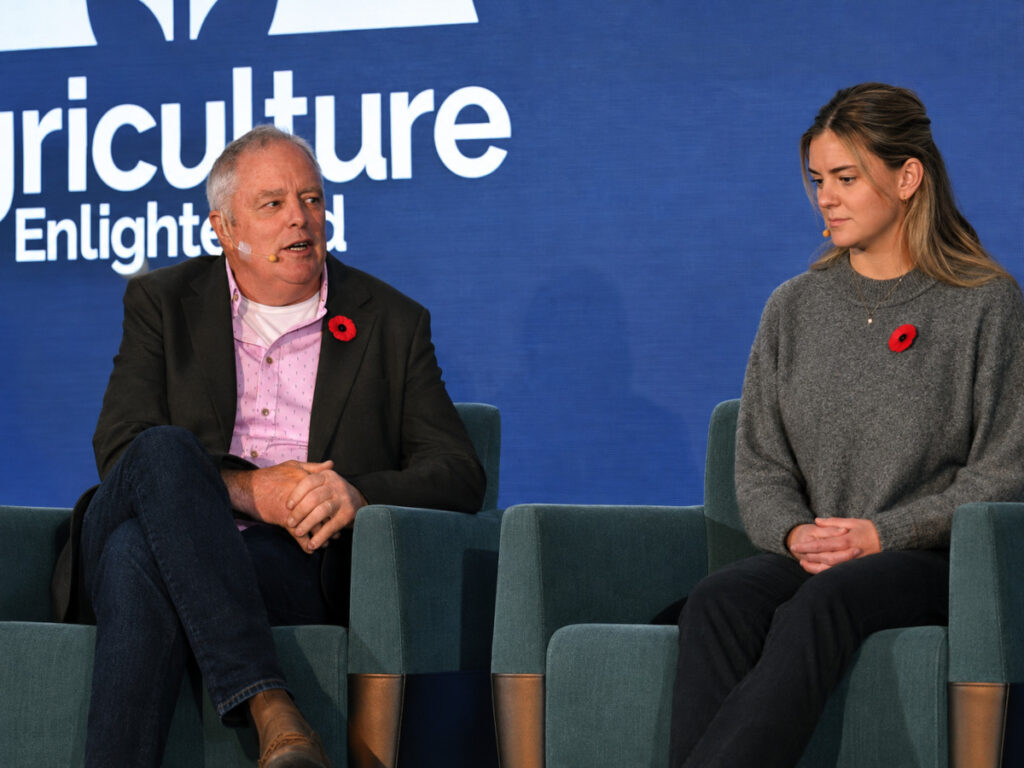
The discussion, titled Field-Tested: Real-World Farmers Testing Real-World Solutions, brought together producers and agricultural technology specialists involved with the Agriculture, Innovation, Validation, and Adoption (AIVA) Network.
Launched in May 2026 through a partnership involving EMILI, Farm Credit Canada and the Wabash Heartland Innovation Network, AIVA connects farmers with technology developers to independently evaluate emerging agricultural technologies before producers invest in them.
For Keating, who just completed his 35th harvest, that validation is increasingly important.
“We can’t afford to invest in a tool that doesn’t bring a return. So we need independent data that proves it brings a return,” he said.
“But on the other hand, we also can’t afford to miss out on a tool that does bring a positive return.”
When Technology Meets the Real World
For Rick Rutherford, a third-generation Manitoba farmer whose operation hosts innovation trials, one of the biggest challenges is helping developers understand the conditions under which their products must perform. Rutherford’s operation includes farms approximately two hours apart, creating a need for technologies that allow him to monitor conditions remotely.
That becomes challenging when sophisticated equipment struggles with something as basic as measuring rainfall. Rutherford described working with developers of advanced weather stations and discovering substantial variation in readings from electronic rain gauges.
The experience reminded him of the traditional rain gauge nailed to a fence post.
“It worked every time. It never missed. I didn’t have to worry about if the battery was up to date, if the solar collector was on it,” he said.
His point wasn’t that farmers should abandon digital technology. Rather, developers sometimes overlook basic operational requirements while concentrating on sophisticated features.
“To be able to bring it back to the reality of the farm is a big thing as we move forward,” Rutherford said.
Keating sees similar problems with farm management software. He has worked with numerous platforms over the years, each offering useful features but often failing to provide the reporting capabilities farmers actually need.
“It’s quite obvious that there has been some farm input to what has been developed, but not a lot,” he said.
Proving Technology Works Beyond One Farm
For Holly Johnson, an agronomist with Pitura Seeds, validating technology means proving its value beyond a single set of growing conditions. Farmers are familiar with the progression from laboratory testing to small-plot research and eventually full-scale field validation. But meaningful adoption generally requires that final step.
“Ultimately they’re not looking at anything before that field-scale validation because it’s risky economically and operationally,” she said.
Even then, success on one operation doesn’t guarantee success elsewhere.
“A new product that is validated on Rutherford Farms in Grosse Isle is not guaranteed to work at Johnson Farms in Dugald,” Johnson explained. “I think true success in validation is when any particular farmer in any geography can see the benefit and capture that ROI on their particular farm.”
Johnson offered a harvest example to illustrate how technology can improve decision-making. This fall, Pitura Seeds began using a remotely operated drop-pan system to measure combine losses. The technology allows operators to calculate losses using measured data rather than relying solely on visual estimates.
Johnson recalled discussing the system with Cal Pitura, who remembered walking behind a combine as a child to collect straw samples with a grain shovel. The objective was essentially the same: determine whether the combine was losing grain and needed adjustment.
“The goal of Cal back then and me this fall is the exact same. We’re trying to minimize our combine losses,” she said.
The difference is that today’s tools can provide more accurate measurements to guide those decisions.
Farmers Need Help Separating Hype From Results
Carl Havixbeck, farmer network success manager with AIVA, said one of the most consistent messages he hears is that keeping up with agricultural technology has become a job in itself.
“I just don’t have time. I can’t keep up to vetting the technology. I need help,” he said, describing a common response from farmers joining the network.
He believes AIVA could eventually function as a trusted technology adviser, much as producers rely on agronomists and other specialists.
Farmers aren’t necessarily looking for someone to tell them which products are exciting. They want to know which technologies address problems they actually face. Havixbeck recalled how his father, also a farmer, would respond after listening to a sales pitch about the latest innovation.
“So what? What does this mean to my operation? What does this mean to my business?”
He expects artificial intelligence to accelerate the number of technologies reaching the market, making it even harder for producers to separate useful innovations from products offering little meaningful value.
During its inaugural season, AIVA undertook 10 validation projects across four validation hubs, examining technologies including drones, crop-monitoring tools, agricultural software and autonomous equipment. Findings are expected in early 2027.
But the network’s value extends beyond formal research. Farmers also want opportunities to speak with other producers confronting similar challenges. Havixbeck said one member suggested creating a private WhatsApp group to facilitate those conversations, an idea he subsequently implemented.
Johnson agreed that farmer-to-farmer communication will be essential as technology becomes more sophisticated.
“There’s huge power in peer groups and farmer-to-farmer learning,” she said.
The Next Challenge for Agtech
Artificial intelligence emerged repeatedly during the panel as a technology that could transform agricultural decision-making while creating new challenges. Rutherford described a situation this summer when substantial rainfall left large areas of farmland underwater. His operation approached technology providers with a relatively simple question: Could they determine what percentage of the farm was flooded?
The response was slower than he had hoped, illustrating how technology development can struggle to keep pace with problems farmers need solved immediately.
It also demonstrated why testing programs must remain flexible enough to respond to unexpected conditions. For Keating, more formal validation and open sharing of research results could encourage faster adoption of technologies that demonstrate genuine value.
But the ultimate measure of success won’t be how quickly agricultural technology advances or how many products developers bring to market. It will be whether farmers have greater confidence that the tools they purchase will perform under the conditions they actually face.