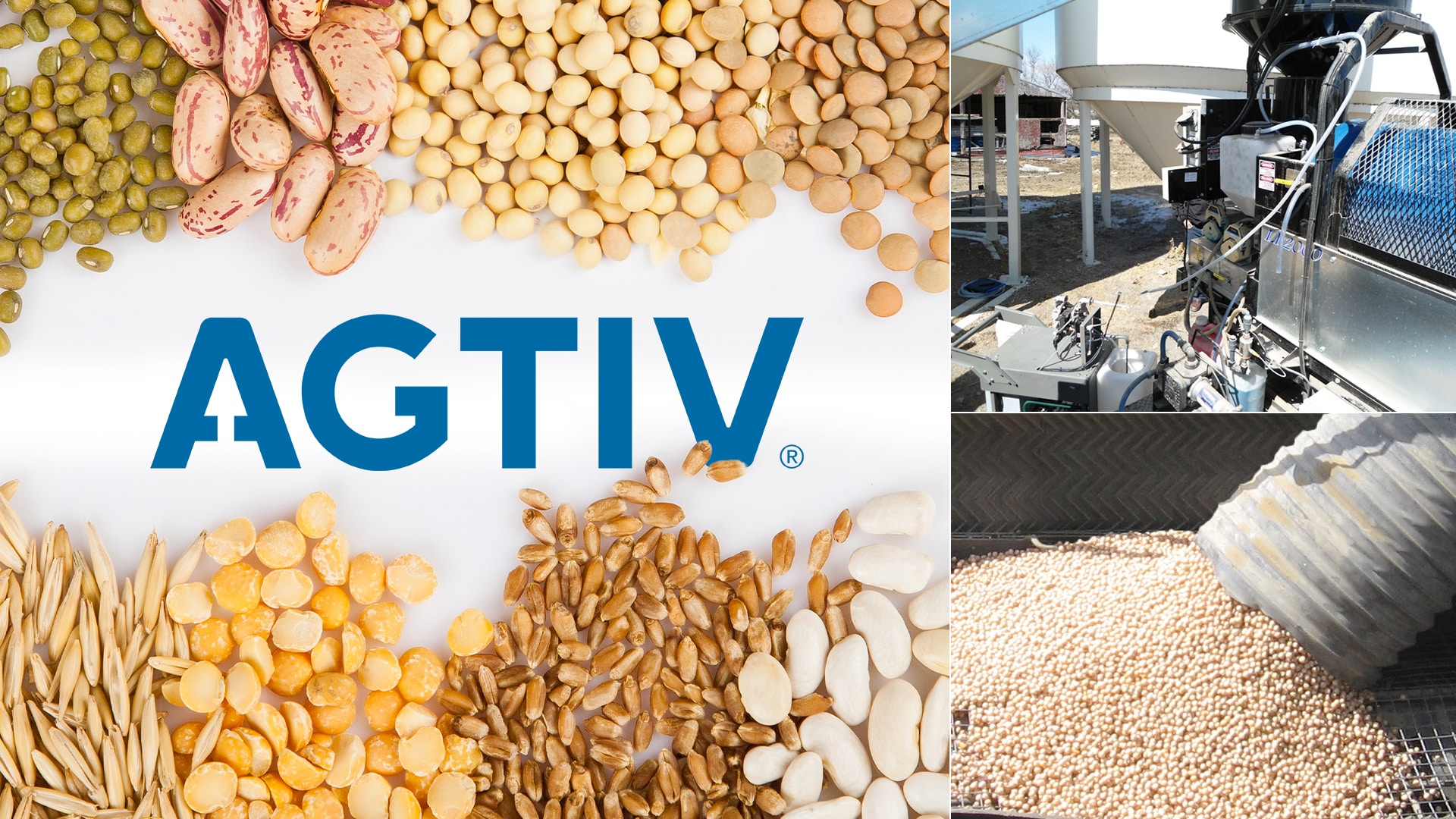
Biological seed treatments are becoming a more common part of crop input conversations, particularly as growers look for tools that can support crop establishment, nutrient use and resilience. For seed treaters, however, the value of a biological product depends on more than its agronomic potential. It must also fit the realities of commercial seed treatment: application timing, compatibility, storage requirements and the time between treatment and planting.
When evaluating an on-seed inoculant, seed treaters generally need answers to a few practical questions:
- Can it be incorporated into the existing treatment process?
- Will the active microorganism remain viable on the seed through the expected planting window?
- Does it have clear crop-specific positioning?
- Can it be handled and stored without adding unnecessary operational requirements?
The answers often come down to formulation, manufacturing quality, and how the biological is designed to perform after its application.
Why Viability Matters in On-seed Biologicals
Biological inoculants contain living microorganisms. Their performance depends on their ability to remain viable from production through application, storage, and planting.
That makes formulation especially important. Once a biological is applied to seed, factors such as moisture loss, temperature, seed treatment ingredients and storage duration can affect the microorganism’s survival. A product may have a strong active ingredient, but it also needs the right formulation and application guidance to maintain its intended activity on the seed.
For seed treaters, this means looking beyond the biological claim itself. An inoculant should come with quality controls, shelf-life data, and clear recommendations for use in a commercial seed treatment workflow.
Crop-specific Options For On-seed Viability and Flexibility
Soybean: extending the treatment-to-seeding window
Soybean treatment schedules do not always align perfectly with planting schedules. Seed may be treated well before conditions are suitable for planting, while weather delays or changing field conditions can extend the time it remains in storage.
This makes on-seed viability an important consideration. Active microorganisms in an inoculant need to remain viable from treatment through planting to support their intended agronomic benefits. That requires products formulated and tested to withstand expected storage conditions on treated seed.
For soybean treatment programs, AGTIV FUEL® L and AGTIV ENRICH® are liquid inoculants designed for on-seed application, with an on-seed shelf life of up to 30 days. AGTIV FUEL® L contains rhizobium to support nitrogen fixation, while AGTIV ENRICH® combines rhizobium and Bacillus to support nitrogen fixation and root development.
When treatment needs to take place further ahead of planting, EXTENDER™ L can be used with AGTIV FUEL® L and AGTIV ENRICH® to help reduce inoculant desiccation and extend the soybean seeding window to up to 240 days.
For seed treaters, this added flexibility can simplify planning, support earlier treatment and help accommodate the changing conditions that often shape the spring planting season.
Canola, cereals and corn: nutrient use efficiency with simpler storage
For canola, cereals and corn, biological technologies are increasingly being assessed for their role in nutrient use efficiency, yield increase and crop performance, especially in environments where nutrient availability or crop conditions may limit early-season performance.
AGTIV IGNITE® contains Serendipita indica, a beneficial microorganism associated with greater nutrient use efficiency and improved photosynthesis. In practical terms, this inoculant helps crops make better use of the nutrients available in the soil or supplied through fertilizer.
Operational fit remains just as important for these crops. While some biological seed treatments require cold storage to preserve microorganism viability, AGTIV IGNITE® does not. When treated seed is stored below 20°C, it provides an on-seed shelf life of up to 180 days for canola, cereals, and corn.
For seed treaters, this can simplify storage and logistics while providing a treatment window that fits many commercial seed treatment programs. As with any biological product, storage and handling recommendations should be followed closely to support the viability of the active ingredient through planting.
Choosing Biologicals That Work in the Real World
The potential of biological seed treatments is closely tied to how well they fit into everyday operations. For seed treaters, the most useful products are those that combine a relevant agronomic benefit with practical application, storage and planting flexibility.
Key considerations include:
- Crop fit: Is the product designed and positioned for the intended crop?
- On-seed viability: How long can treated seed be stored before planting?
- Application compatibility: Can the product be incorporated into the existing seed treatment system?
- Storage needs: Does the product require cold storage or specialized handling?
- Clear use guidance: Are application rates, storage requirements, and crop recommendations well defined and easily accessible?
Biologicals are not a one-size-fits-all category. Their value depends on selecting technologies that match the crop, the treatment program, and the operational realities of the seed treater. AGTIV FUEL® L, AGTIV ENRICH® and AGTIV IGNITE® offer examples of how biological technologies can be formulated around those practical needs, from extended soybean on-seed viability to no-cold-storage options for canola, cereals and corn; all while providing performance in the field.
For product specifications, compatibility information and application recommendations, visit PTAGTIV.COM/en/tools.