
Yield remains critical, but modern canola breeding is increasingly focused on harvestability, disease resistance and getting valuable traits to growers faster.
Canola has changed significantly in the 40 years since I first entered the industry. In the late 1980s, there were fewer than nine million acres of canola in production, all of it open-pollinated. Yields were highly variable. Weed control was mechanical or a mix of different selective herbicides. Our only disease focus was blackleg.
Hybridization has since revolutionized the industry. From the outset, Bayer has been developing canola for higher yield potential and earlier maturity. We’ve also worked hard to ensure that farmers have the greatest flexibility during the busy harvest season when they often find themselves juggling multiple crops, variable weather, temperature extremes and soil moisture deficits. Growers need to get through as many acres in a day as they can, so the faster and more efficiently they can harvest their acres, the better.
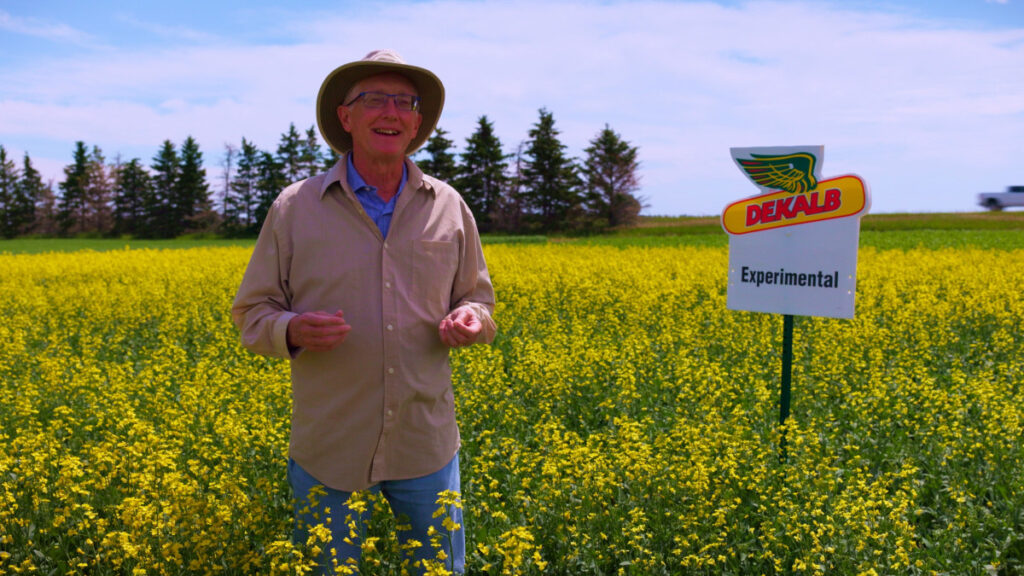
Our DEKALB product line offers growers more compact canola varieties with high pod-to-stem ratios. Less stem material going through their combines makes for a quicker and easier process. It also allows plants to naturally dry down rapidly. Often, those growing DEKALB hybrids don’t require a desiccant. Those drier plants are easier for growers to harvest, better for their straight-cut equipment and allows them to swiftly move their canola to the bin. And one less pass on the field translates into a lot less diesel being used.
Pod shatter resistance has also vastly improved compared to 20 years ago. Growers can now feel comfortable leaving their canola in the field a little longer, allowing them the flexibility to better manage harvest across their entire operation with less worry that adverse weather will erode their canola yields through shatter. Even just a few extra days can make all the difference to a producer’s ability to preserve quality, minimize yield loss, and maximize market pricing.
Our modern canola varieties help give them that.As we look to the future, we’ll continue to raise the bar on increasing yield potential and developing better screening techniques for disease and agronomic traits. In March 2025, we patented our Shatter Inducing Machine (SIM) which heavily challenges our canola for pod shatter resistance and allows accurate, trustworthy ratings. We are committed to continually adopting new technologies — from precision breeding to predictive modelling — in an effort to accelerate our development pipeline and reduce the wait time for growers to access canola hybrids with the traits they need to succeed.