With public research under pressure, new Ontario Seed Growers’ Association president Phil Nadalin is focused on strengthening the partnerships that bring new crop varieties to farmers.
When Phil Nadalin became president of the Ontario Seed Growers’ Association (OSGA) in March, people offered two very different responses.
“Most people have been saying condolences,” he jokes. “But congratulations are nice, too.”
The reaction reflects the workload that comes with leading a provincial seed association at a particularly complicated moment. Public plant breeding is under pressure, federal research capacity is being reduced and decisions involving seed regulation, intellectual property and variety development are becoming increasingly important to the people who produce pedigreed seed.
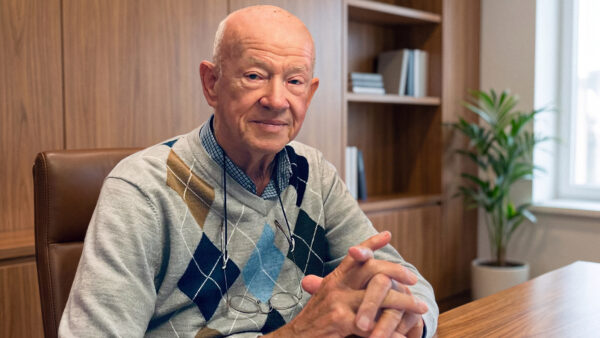
Nadalin also represents something different about OSGA leadership: he is not a seed grower. A sales agronomist with Bayer Crop Science, Nadalin joined the OSGA board as an industry representative. Ontario’s board structure reserves seats for both growers and members of the broader seed industry, creating a formal place for those perspectives to meet.
That structure is especially relevant now. The questions confronting Ontario seed growers do not fit neatly into public- or private-sector boxes. New varieties may originate at a university, a federal research centre or a private company, but getting those genetics into farmers’ fields depends on cooperation across the entire system.
“You’d think that coming from the industry side, it’s almost separate, but it really isn’t,” Nadalin says. “The public and private sectors are very intertwined.”
The Branch That Can Speak Up
The Canadian Seed Growers’ Association (CSGA) is not a lobby group — it serves as Canada’s national authority for pedigreed seed crop standards and certification. That responsibility gives it an essential but carefully defined place in the seed system.
Provincial branches such as OSGA play a different role. They can speak directly about regional concerns, build relationships with provincial organizations and bring member perspectives into political discussions.
“Given the structure of the provincial branches, that becomes the place where we can provide input and share perspectives with our elected officials, whether federal or provincial, and be more involved in issues that are impacting the everyday lives of our membership,” says OSGA Executive Director Colleen Acres.
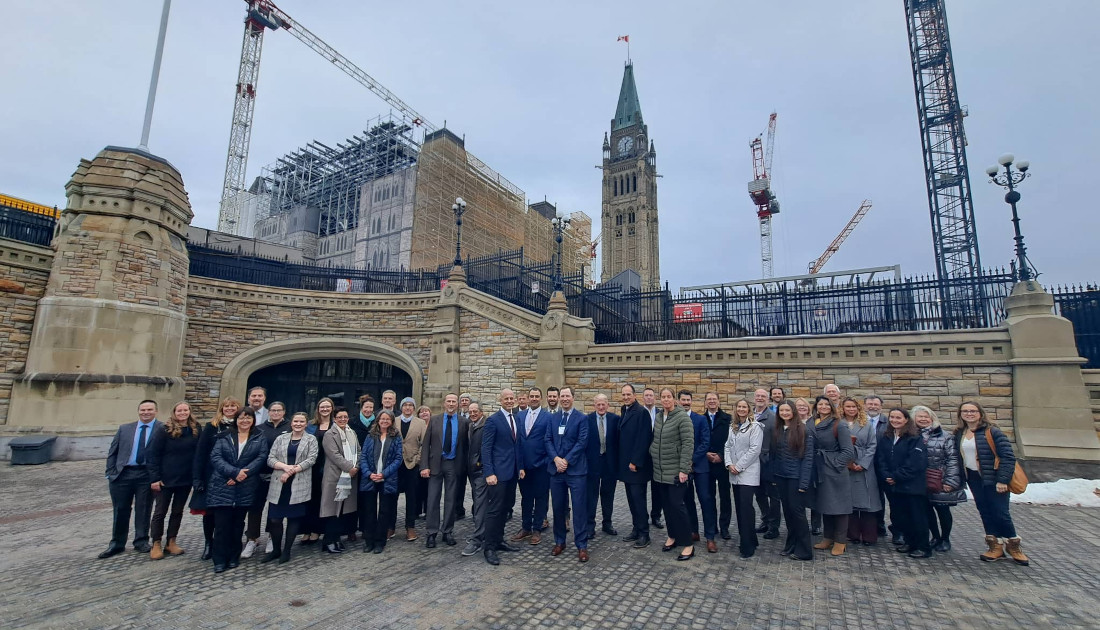
For OSGA, that work became especially visible when OSGA hosted the Interprovincial Seed Growers Meeting in Ottawa in November 2025. Provincial seed grower representatives met elected officials and attended Question Period on Parliament Hill, giving participants a closer look at how agricultural issues move — or fail to move — through government.
Nadalin was OSGA vice-president at the time.
“That was kind of our first foray into having members of Parliament involved, trying to have that gala and starting to build relationships,” he says.
Roots in Canada’s Original Seed Movement
According to OSGA’s 2026 annual meeting report, Ontario had 647 pedigreed seed growers in 2025 producing 157,390 acres of seed crops.
OSGA’s SeedOntario guide, produced in partnership with Seed World Group, connects that work directly with commercial farmers. The guide combines variety performance information with a directory of seed growers, helping farmers connect test results with a local source of certified seed.
The immediate issue consuming much of the association’s attention, however, is public research. Ontario growers may appear geographically removed from the announced closure of Agriculture and Agri-Food Canada research farms at Indian Head and Scott, Sask. Acres cautions against viewing those facilities as strictly western Canadian assets.
Indian Head performs functions that support the national variety-development system, including work involving breeder seed. A grower multiplying a new variety in Ontario may not realize that the earliest seed generations passed through a facility thousands of kilometres away.
Rather than waiting for another closure announcement, OSGA is beginning conversations with the Ontario Ministry of Agriculture, Food and Agribusiness, Grain Farmers of Ontario and members of the province’s plant breeding community.
Ontario has considerable plant breeding capacity to protect. University of Guelph programs have delivered important soybean, dry bean and wheat varieties to farmers. Public-private collaboration has been central to that success. University breeders work with provincial research infrastructure, commodity organizations, seed companies and seed growers to test, multiply and commercialize new material.
The university’s soybean breeding program, for example, has produced dozens of varieties adapted to Ontario and other Canadian growing regions. Its dry bean program has developed varieties combining yield, quality and disease resistance.
The Ontario Crops Research Centre network supplies field environments where experimental material can be evaluated across the province’s varied soils and climates.
AAFC’s Harrow Research and Development Centre has also contributed to dry bean breeding and disease resistance, work that remains important to a crop that gives Ontario farmers another rotation and marketing option.
AAFC Ottawa has also been a huge help in developing corn inbred lines and successful oat, barley, wheat and soybean varieties.
The goal is not to preserve every program exactly as it exists today. It is to identify the functions Ontario agriculture cannot afford to lose and ensure government understands the time required to rebuild them once people, plots or germplasm collections disappear.
One Table, Different Perspectives
Nadalin’s presidency brings the publicprivate relationship inside the association itself.
OSGA’s current bylaws provide for six grower directors and three industry directors. That composition distinguishes it from many other provincial seed grower boards, where leadership is drawn almost entirely from pedigreed seed producers.
The model gives Ontario growers direct contact with people working in seed development, regulation and commercialization. For Nadalin, weakening public research would not create an automatic opportunity for private companies to take its place. The two sectors often perform different but complementary jobs.
Public programs may work on crops, traits or agronomic questions for which a private return is uncertain or many years away. Private companies bring investment, technology, market knowledge and commercialization capacity. Seed growers connect both sides to the farm.
That is why OSGA’s advocacy is not built around choosing public research over private investment, or vice versa. It is about maintaining a system in which each can contribute.
“Everybody, from the board to industry, is watching this very closely,” Nadalin says.