The pursuit of efficiency can create remarkable opportunities. It can also leave us with fewer choices when circumstances change.
There’s an interesting thing about infrastructure. When it works, nobody thinks much about it.
You turn on the tap and water comes out. You drive down a road without wondering who maintains the pavement. You walk into a grocery store assuming there will be food on the shelves.
The systems that make ordinary life possible tend to become invisible precisely because they work so well.
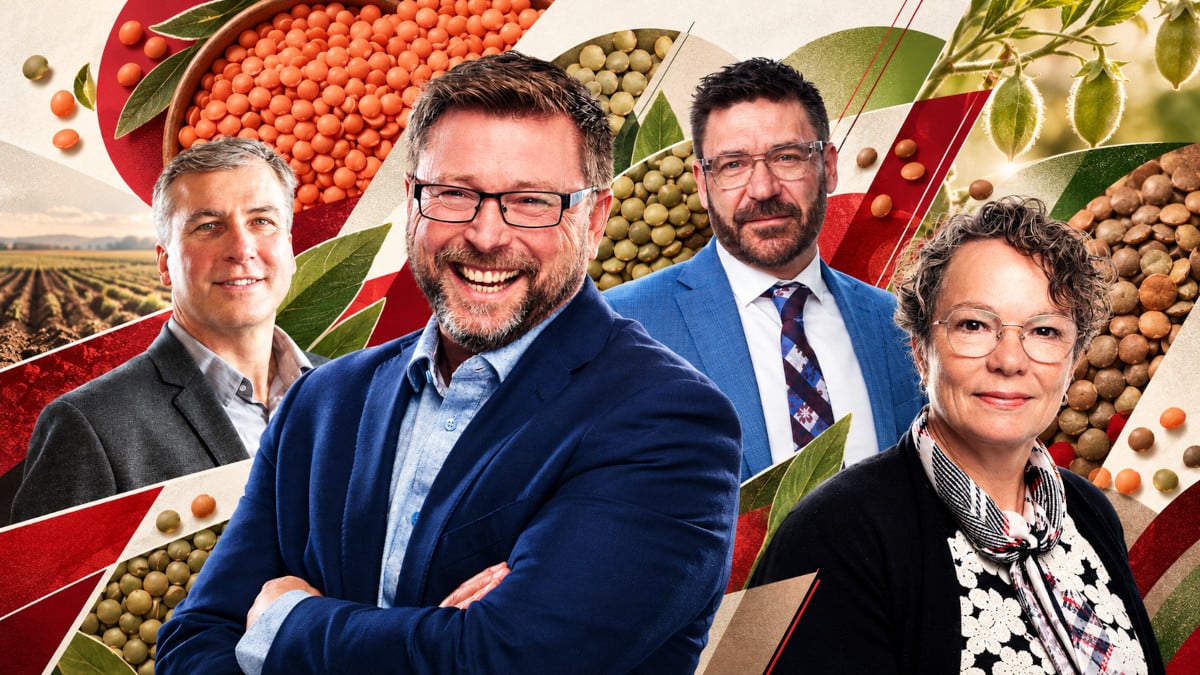
I’ve been thinking about that lately, partly because of a series of conversations I’ve had with people in the seed industry. They came from very different places, geographically and professionally, but there was something remarkably similar about them. Everyone was talking about change. What struck me was how much of that change depended on things we rarely discuss.
Consider a seed grower in the Maritimes.
I recently spoke with Eric Theriault, who has watched certified seed sales decline in his region for roughly a decade. He’s concerned enough about the situation that he’s considering reducing the number of varieties he handles from more than 15 to perhaps four or five. It’s tempting to look at that as a straightforward business decision. Demand falls, so a supplier reduces his offerings. That’s how markets work, right?
But there’s something else happening. Every variety that disappears from a seed grower’s lineup represents one less option for somebody. Every business that becomes less viable represents expertise, infrastructure and relationships that become more difficult to replace.
The consequences aren’t necessarily immediate. Farmers can keep planting familiar varieties. Seed can be sourced elsewhere. Life goes on. Until one day somebody needs something that used to be available locally, and discovers it isn’t anymore.
That’s the peculiar thing about losing capacity. You don’t always notice it when it happens. You notice it when you need it.
A few days ago, I moderated a webinar marking SeCan’s 50th anniversary. We discussed the enormous network of independent seed businesses that has developed across Canada. Nearly 600 member companies, representing an estimated $1.7 billion in infrastructure investment.
Those numbers are impressive, but I kept coming back to something less easily measured. How do you put a value on the relationship between a farmer and a seed retailer who has known that farm for 30 years? How do you quantify the judgment that comes from watching varieties perform across thousands of acres, under conditions no research trial could ever fully reproduce?
And what happens when that knowledge disappears?
We often talk about the seed industry as though it’s a collection of businesses operating within a regulatory and scientific framework. Technically, that’s true. But it’s also a collection of people who have spent decades learning things that aren’t necessarily written down anywhere. It’s knowledge accumulated through repetition, experience and occasional failure. And unlike a piece of equipment, it can’t just be purchased again when somebody decides they need it.
This brings me to something I find curious about the way we discuss innovation.
At Euroseeds in Valencia recently, much of the conversation revolved around new genomic techniques, regulations, intellectual property and emerging technologies. These are important subjects. The industry needs to keep advancing. But innovation has become such a dominant part of our vocabulary that I sometimes wonder whether we’ve developed a blind spot.
We’re really good at celebrating the creation of something new. We’re considerably less enthusiastic about maintaining the conditions that allow new things to succeed. A breakthrough in genetics makes a compelling headline. A seed grower quietly maintaining a market for a less popular crop doesn’t.
One is innovation. The other is just somebody doing their job.
Yet the first may eventually depend on the second.
This week, we also spoke with Jason Reinheimer of the Global Institute for Food Security about how Canada might rethink the structure supporting public plant breeding. His argument was that preserving something valuable doesn’t necessarily mean preserving the exact institutional arrangements that created it.
I think there’s wisdom in that distinction, and it applies far beyond plant breeding. Sometimes institutions become so closely associated with the work they perform that we begin treating the institution and the work as interchangeable. We assume that protecting one automatically protects the other, but it doesn’t.
But the reverse is also true. Changing the structure doesn’t automatically preserve the knowledge, relationships and capabilities that existed within it. It’s possible to create something more efficient on paper while making the larger system less resilient in practice.
The difficulty is that efficiency is relatively easy to measure. Resilience usually isn’t, at least not until something goes wrong. A business that carries fewer varieties may be more profitable. A research organization with fewer programs may have lower operating costs. A supply chain with fewer participants may be simpler to manage.
None of those outcomes is inherently bad, but each can also reduce the number of options available when change happens. And agriculture is an industry in which circumstances have a habit of changing.
There’s a concept in economics called option value. Basically, something can have value not only because of what it does for us today, but because of what it might let us do tomorrow.
I think that’s a useful way to look at the seed sector. A regional seed business, a specialized breeding program, an experienced seed analyst or a network of independent retailers may not appear indispensable when everything is running smoothly.
Their importance becomes clearer when a disease appears, weather patterns shift, a market changes or a familiar variety no longer performs as expected. What looked like duplication or excess capacity suddenly looks like flexibility.
None of this means every existing business, program or institution should be preserved indefinitely. Industries evolve, some activities become obsolete, resources are finite, and difficult choices have to be made. But I wonder whether we’re asking the right questions when we make those choices. We tend to ask what something costs, how many people it employs, how much revenue it generates or whether somebody else (or even a robot) could perform the same function more cheaply.
Those are legitimate questions, but we should also be asking what becomes impossible if it disappears. That’s a harder question because the answer often involves circumstances that haven’t happened yet. Maybe that’s why we don’t ask it very often. The discussions taking place across the seed industry right now are frequently framed around what comes next. New structures, new technologies, new partnerships, new ways of doing business.
I’m interested in those conversations, and I think they’re necessary. But the more of them I have, the more convinced I become that the important decisions aren’t always about what we choose to build. Sometimes they’re about what we decide we can afford to lose. And the trouble is, by the time we discover we were wrong, rebuilding it may be the most expensive option of all.