The EU’s new NGT framework creates a faster route for some gene-edited plants, but strict Category 1 limits may leave valuable innovation outside the gate.
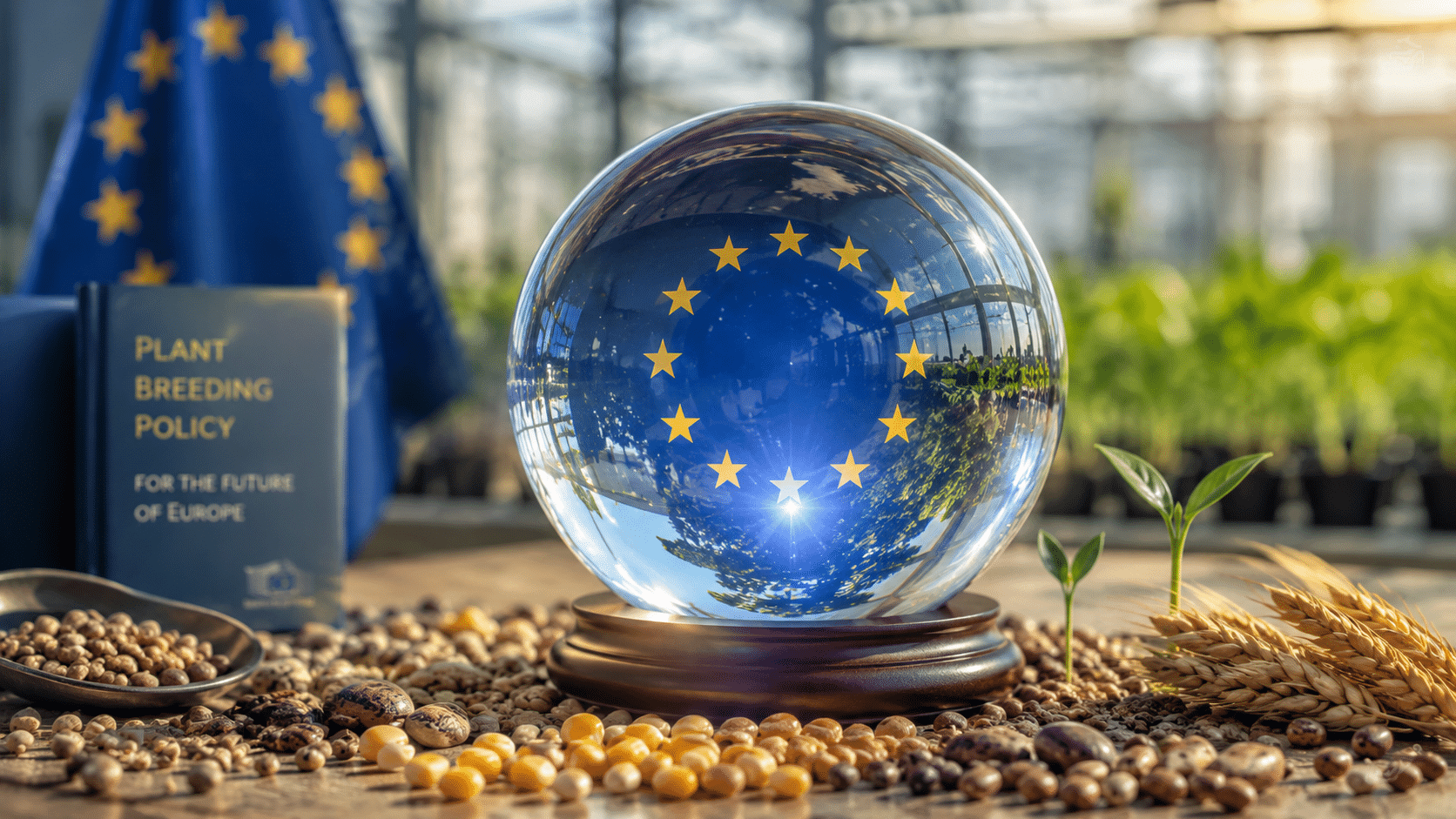
Europe has finally moved on New Genomic Techniques (NGTs), and for that the seed sector should allow itself a moment of cautious celebration. After years of legal uncertainty, political wrangling and the long shadow of the GMO debate, the EU is preparing to create a dedicated framework for plants obtained through targeted mutagenesis and cisgenesis.
That is no small thing. For plant breeders, it means that not every gene-edited plant will automatically be pushed into the full machinery of GMO legislation. Some NGT plants will be recognised as sufficiently equivalent to conventionally bred plants and will follow a lighter route. In a continent that has often treated molecular precision as a reason for suspicion rather than efficiency, this is progress.
Yet the celebration comes with a familiar European footnote. The door has opened, but someone in Brussels is standing beside it with a ruler.
The Two-Lane System
At the heart of the regulation is a two-category system. Category 1 NGT plants are those considered equivalent to plants that could occur naturally or be obtained through conventional breeding. These plants will not be regulated as GMOs, although they will still require verification and will be listed transparently. Category 2 covers the rest: NGT plants that fall outside the Category 1 criteria and therefore remain subject to GMO-style authorisation, risk assessment, labelling, traceability and, where relevant, monitoring.
For the normal seed person who does not spend evenings reading annexes of EU regulations for recreation, the distinction can be put simply. Category 1 is the fast lane for relatively simple edits that Europe is prepared to treat like conventional breeding outcomes. Category 2 is the slower lane for more complex edits, or for traits that the regulation has decided deserve stricter treatment.
The trouble is that the fast lane may be rather narrow.
The 20-Nucleotide Fence
One of the most discussed limits is the famous, or perhaps infamous, 20-nucleotide threshold. Under the Category 1 criteria, certain substitutions or insertions may involve no more than 20 nucleotides. There are also limits on the number of modifications, including an overall limit linked to the monoploid genome, and specific rules around protein-coding sequences. Deletions are treated differently and can be larger, which gives breeders some useful room for gene knockouts and gene silencing. But for insertions and substitutions, the 20-nucleotide boundary has become the symbolic fence around European comfort.
This is where the regulation starts to look less like a scientific tool and more like a policy compromise wearing a lab coat.
Twenty nucleotides may sound precise, but precision is not the same as wisdom. Plant genomes are not tidy filing cabinets where disruption can be predicted solely by measuring the length of an edit. A small change can have a large effect. A larger change can be perfectly familiar in biological terms. Natural variation, conventional mutagenesis and ordinary breeding can produce genetic differences far beyond what this threshold appears willing to tolerate.
From a breeding perspective, that is the frustration. The problem is not that Europe has created a Category 1 route. The problem is that it has created one and then surrounded it with restrictions that may exclude useful, safe and urgently needed innovations.
Trait Exclusions and Political Caution
The herbicide tolerance exclusion is another example. Politically, one can understand why it is there. Herbicide tolerance has carried controversy for decades, and lawmakers clearly wanted to avoid reopening the full GMO battlefield. But scientifically and practically, a blanket exclusion is blunt. It does not ask whether a particular trait, crop, farming system or use pattern could be beneficial or responsibly managed. It simply moves the plant out of Category 1.
The same applies to traits involving the production of a known insecticidal substance. Again, one can hear the political calculation. The regulation wants to reassure sceptics that this is not a free-for-all. But for breeders looking at pest pressure, climate stress, reduced pesticide availability and food security, these exclusions may feel less like prudence and more like Europe tying knots in its own shoelaces before entering the race.
Why SDN Categories Matter
This is why some critics from the innovation side say Europe is still working with one hand tied behind its back. The new framework may allow many SDN1-type outcomes, where a small targeted mutation is introduced without adding new genetic material. But more precise sequence changes associated with SDN2, and larger insertions associated with SDN3, are far more likely to fall into Category 2. The regulation does not simply say “SDN1 good, SDN2 and SDN3 bad”, but the practical effect may often point in that direction.
For readers allergic to gene-editing alphabet soup, SDN1, SDN2 and SDN3 are best understood as different levels of editing. SDN1 is like making a small, targeted change. SDN2 can make a more directed correction or replacement using a repair template. SDN3 can introduce larger pieces of genetic material. The higher one moves along that scale, the more likely the EU system is to become cautious, expensive and slow.
A Toolbox Too Narrow for Future Challenges
That matters because the future of plant breeding will not only be about making tiny changes. Breeders will need a wide toolbox to develop varieties that can cope with heat, drought, salinity, emerging pests, changing disease pressure, reduced inputs and shifting consumer expectations. Some valuable traits will fit neatly within Category 1. Others will not. The risk is that Europe celebrates the opening of one pathway while leaving too many promising roads blocked by cost, time and uncertainty.
There will be innovation under Category 1. Breeders are nothing if not resourceful. Disease resistance, quality improvements, resilience traits, and resource-use efficiency may all benefit from the new framework. In many cases, targeted deletions or small edits could deliver valuable improvements without triggering the full GMO route. For smaller breeding companies, universities, and public-private partnerships, that could be genuinely important.
But policy should not rely on breeders being forced to perform regulatory gymnastics. The purpose of modernising the law should be to enable responsible innovation, not to reward only those innovations that can squeeze through a molecular keyhole.
Counting Nucleotides Is Not the Same as Assessing Risk
The irony is that the EU itself recognises the central scientific point. Some NGT changes are indistinguishable from changes that could arise naturally or through conventional breeding. That is the entire logic behind Category 1. Yet having accepted that principle, the regulation then becomes nervous and starts counting nucleotides as if plant breeding were a game of regulatory Jenga.
Pull out the right 20 pieces, and everything is fine. Add one too many, and the tower must be inspected under GMO rules.
The seed sector can welcome the milestone and still criticise the handbrake. In fact, it should. A regulation can be better than the old system and still not be good enough for the challenges ahead. Europe needs more resilient crops, fewer unnecessary barriers to breeding, stronger competitiveness, and a regulatory culture that does not confuse caution with paralysis.
The Cost of Over-Engineering Reassurance
The 20-nucleotide threshold may have been designed as a reassurance mechanism, a way to tell sceptical audiences that Category 1 is limited, controlled, and safe. But reassurance has a cost when it becomes over-engineered. If the threshold excludes too many useful innovations, it will not merely classify technologies. It will shape which problems European breeders are allowed to solve quickly, and which ones they must solve elsewhere first.
That would be a strange outcome for a continent that talks so often about strategic autonomy, sustainability, and food security.
Welcome to the Future, but Keep It Short
Europe has taken an important step. It has been recognised that not all gene-edited plants should be treated like classical GMOs. That deserves credit. But by building a fast lane with a 20-nucleotide speed bump, trait exclusions, and a lingering fear of broader precision breeding, Europe may still be doing what it has done too often in agricultural innovation: moving forward while pressing the brake.
For plant breeders, the message is therefore mixed. Welcome to the future, but please keep your edits short.