Why has mental health has become a leadership issue for agriculture and what will it take to make asking for help part of the job?
Resilience is one of agriculture’s most celebrated traits. It shows up in the way farmers and seed professionals absorb risk, adapt to shifting markets and keep showing up when the workday stretches long past daylight. It is embedded in family operations passed down through generations and in companies that survive downturns by staying disciplined and determined.
But resilience, when it becomes the only acceptable posture, can quietly crowd out vulnerability.
In rural America, where independence is taught early and reinforced often, that pressure can make it difficult to admit when something is wrong. Asking for help can feel like letting the team down. Silence can masquerade as strength.
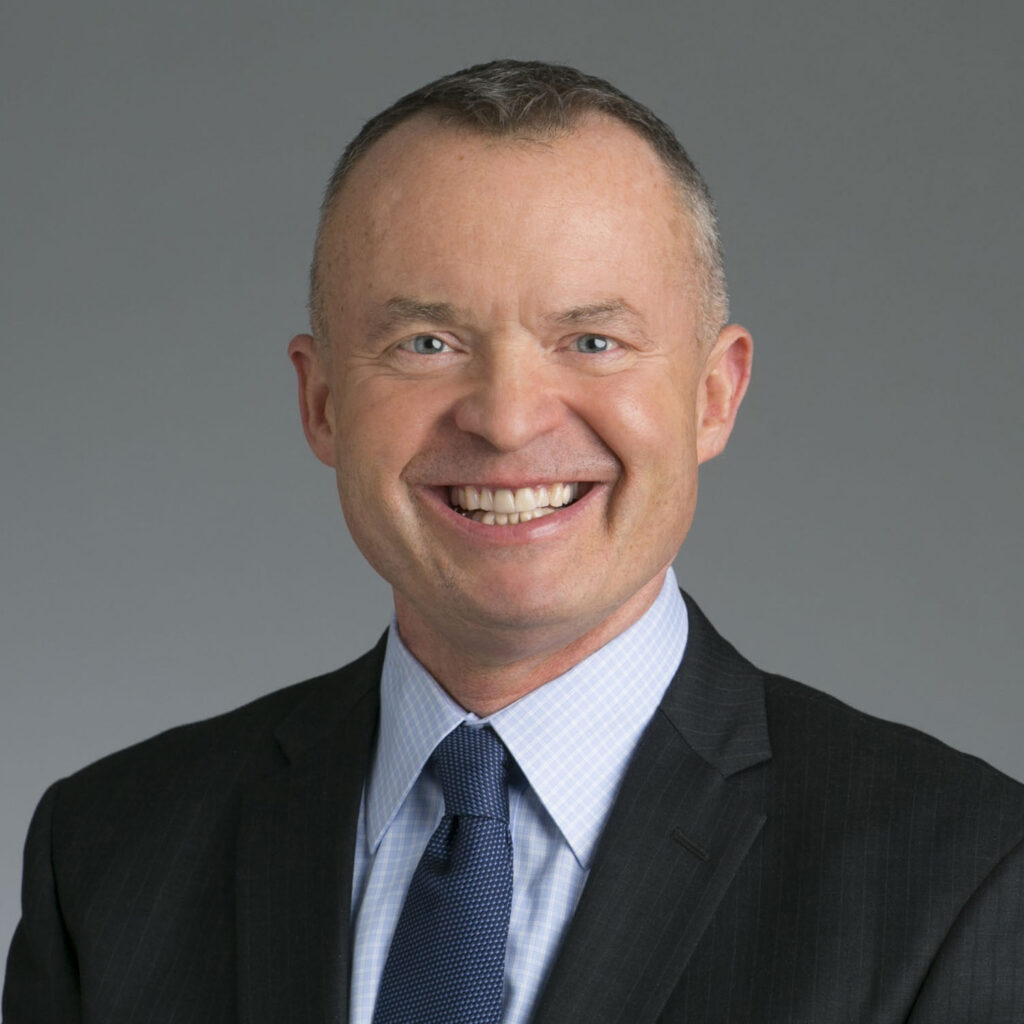
That tension sits at the center of rural mental health and it is the reason Jeff Winton founded Rural Minds, the only national nonprofit focused exclusively on mental health equity for the 46 million people living in rural America.
“People romanticize life on a farm,” Winton says. “But underneath that facade, in many cases, there are struggles and there are hardships.”
He speaks from experience, not abstraction.
A personal loss that exposed a systemic problem
Winton grew up on a multi-generational dairy farm in western New York, returned there later in life and now leads a national organization from the same land that shaped him. Rural Minds itself emerged from a moment that forever altered his family.
“My nephew Brooks worked on our family dairy farm,” Winton says. “By all measures, he was the life of the party. He was a very happy, very gregarious young man.”
Two days after thanking his uncle at his brother’s wedding, Brooks died by suicide. He was 28 years old and left behind three-year-old twins.
“He was the absolute last person we would have ever expected,” Winton says. “Clearly, he was suffering in silence.”
In the days that followed, the family faced a decision familiar to many rural communities: whether to talk openly about what happened or quietly move on. It was Winton’s mother who set the tone.
“She said, ‘This is going to stop with my family,’” he recalls. “We are going to talk about it, starting at Brooks’s funeral.”
That choice opened something unexpected. Other farm families began reaching out. Stories surfaced that had never been shared. Grief, long carried privately, found language.
“All of a sudden, the floodgates opened,” Winton says. “That’s when we realized this wasn’t just our story.”
A crisis hiding behind familiar landscapes
The data confirms what those early conversations revealed. Suicide rates in rural America are nearly 50 percent higher than in large urban areas. Young people in rural communities are 74 percent more likely to die by suicide than their urban and suburban peers. Farmers are estimated to be three and a half times more likely to die by suicide than people in other professions.
“This is a runaway train,” Winton says. “And it’s moving faster, not slower.”
Access to care remains one of the most visible barriers. Nearly three-quarters of rural counties lack a psychiatrist. Only 12 percent of physicians practice in rural communities even though 14 percent of the U.S. population lives there. Even primary care can be hard to reach.
“When I moved back to the farm, I waited six months to get into a primary care physician,” Winton says. “That’s not unusual where I live.”
Telehealth, often positioned as a solution, is constrained by infrastructure gaps many outside rural America rarely consider.
“Nearly 30 percent of rural families have no broadband, not because they can’t afford it, but because it simply isn’t available,” Winton says. “My farm manager doesn’t have internet because the line stops at my house. There was no return on investment to go farther.”
Transportation compounds the problem. Many rural communities lack public transit, ride-share options or even reliable cell service. For hourly workers, traveling several hours to see a provider can mean losing wages they can’t afford to forgo.
And even when care exists, stigma can still keep doors closed.
“In a small town, everybody knows everything about you,” Winton says. “People worry about having their pickup truck parked outside the mental health clinic. News travels fast.”
Why agriculture absorbs the pressure first
Mental health challenges in rural America rarely exist in isolation. They intersect with economic stress, workforce shortages and uncertainty that land directly on agriculture.
“Farmers are under tremendous pressure right now,” Winton says. “Market disruptions, shrinking export opportunities, labor shortages, hospital closures. It all stacks.”
Trade disruptions have left some producers without reliable buyers. Labor shortages have intensified as immigration uncertainty ripples through agricultural communities. Hospital closures and potential health care cuts raise new questions about access and affordability.
“That stress doesn’t stay on the balance sheet,” Winton says. “It shows up in people.”
For seed companies and ag businesses, the implications are not abstract.
“Regardless of where you live, you depend on the mental and physical wellness of the people in rural America to raise your food and fiber,” Winton says. “This is not only a matter of compassion. It’s a matter of practicality.”
Changing culture starts with leadership
For Winton, the question isn’t whether agriculture can change its approach to mental health, but who is willing to lead that change.
“It starts at the top,” he says. “Within companies, it starts at the top.”
Culture, he argues, is shaped less by posters and programs than by what leaders are willing to say out loud.
“Leaders need to speak openly and honestly and allow people to know that it’s okay to speak about depression or anxiety, just like it’s okay to speak about cancer or diabetes,” Winton says.
But words alone are not enough. Policies must reinforce that message.
“HR policies need to allow people struggling with mental illness the same flexibility and compassion and coverage as they do other physical illnesses,” he says.
In an industry built on toughness and endurance, that shift can feel unfamiliar. Yet Winton believes it is essential for retaining talent and preventing crises.
“This is an illness,” he says. “And we have to start treating it as such.”
Meeting rural communities where they already trust
Winton says Rural Minds is built on a simple premise: trust is local.
“You cannot expect people in rural America to go somewhere foreign to them and open up,” Winton says. “They want to be met where they are.”
Rather than creating new systems from scratch, the organization works through existing, trusted institutions such as churches, agricultural organizations and long-standing community groups.
“We’re not asking people to change who they are,” Winton says. “We’re bringing the conversation to places they already trust.”
That philosophy extends to youth. Rural Minds is piloting peer-to-peer programs in partnership with FFA, 4-H and rural school districts, recognizing that young people often turn first to each other.
“Young people are more likely to talk to other young people than to parents or teachers,” Winton says. “We’re helping them be the eyes and ears of their communities.”
The organization has also launched a mental health program for veterinarians, a profession with elevated suicide risk and deep connections to farm families.
“They’re often the ones seeing stress up close,” Winton says. “And they need support too.”
A leadership moment for seed companies
For seed companies, the message is clear. Mental health can no longer be treated as a private issue employees navigate alone.
The workforce that develops, produces and delivers seed lives in the same rural communities facing provider shortages, economic pressure and persistent stigma.
“This is about leadership,” Winton says. “It’s about creating an environment where people know they can speak up before a crisis.”
That leadership does not require companies to have all the answers. It requires permission.
“When leaders say, ‘This is okay to talk about,’ everything changes,” Winton says.
The work remains deeply personal for him.
“I miss my nephew every day,” he says. “But I feel his presence because I’m doing what I know he would want us to do.”
Resilience will always matter in agriculture. The challenge now is ensuring it no longer comes at the cost of silence.