A decades-long breeding legacy, a new genetic discovery and a future shaped by stacking, rotation and gene editing.
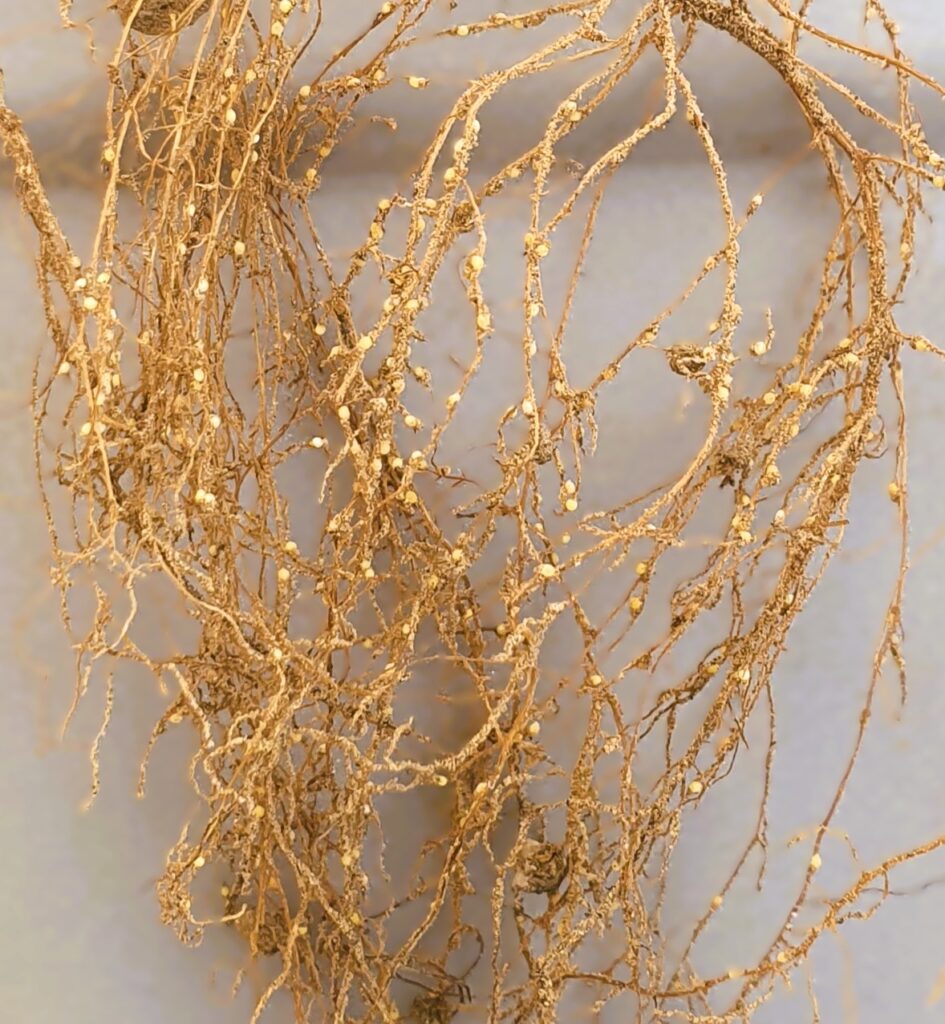
Soybean cyst nematode (SCN) rarely announces itself. It doesn’t flatten a field overnight or show up with a dramatic visual warning. It works slowly. Quietly. Yield slips. Roots struggle. Plants never quite reach their full potential.
And for decades, the seed industry has responded in a familiar cycle — breed resistance, deploy it, repeat.
But beneath that rhythm, something else has been unfolding. Missouri researchers have been asking a different question. Not how to manage SCN this season, but how to stay ahead of it for the next generation of seed.
That story stretches back farther than many people realize.
SCN was first recognized in 1954 in North Carolina. The most significant discovery of SCN resistance, known as PI 88788, was reported during 1970s. This genetic resource has been a major source of commercial cultivar development over the past 35 years and it accounts for aproximately 95% of all commercial U.S. varieties. After that, resistance becomes less effective due to SCN population adaptation.
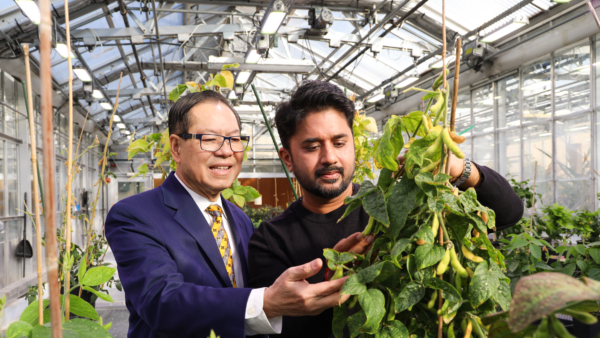
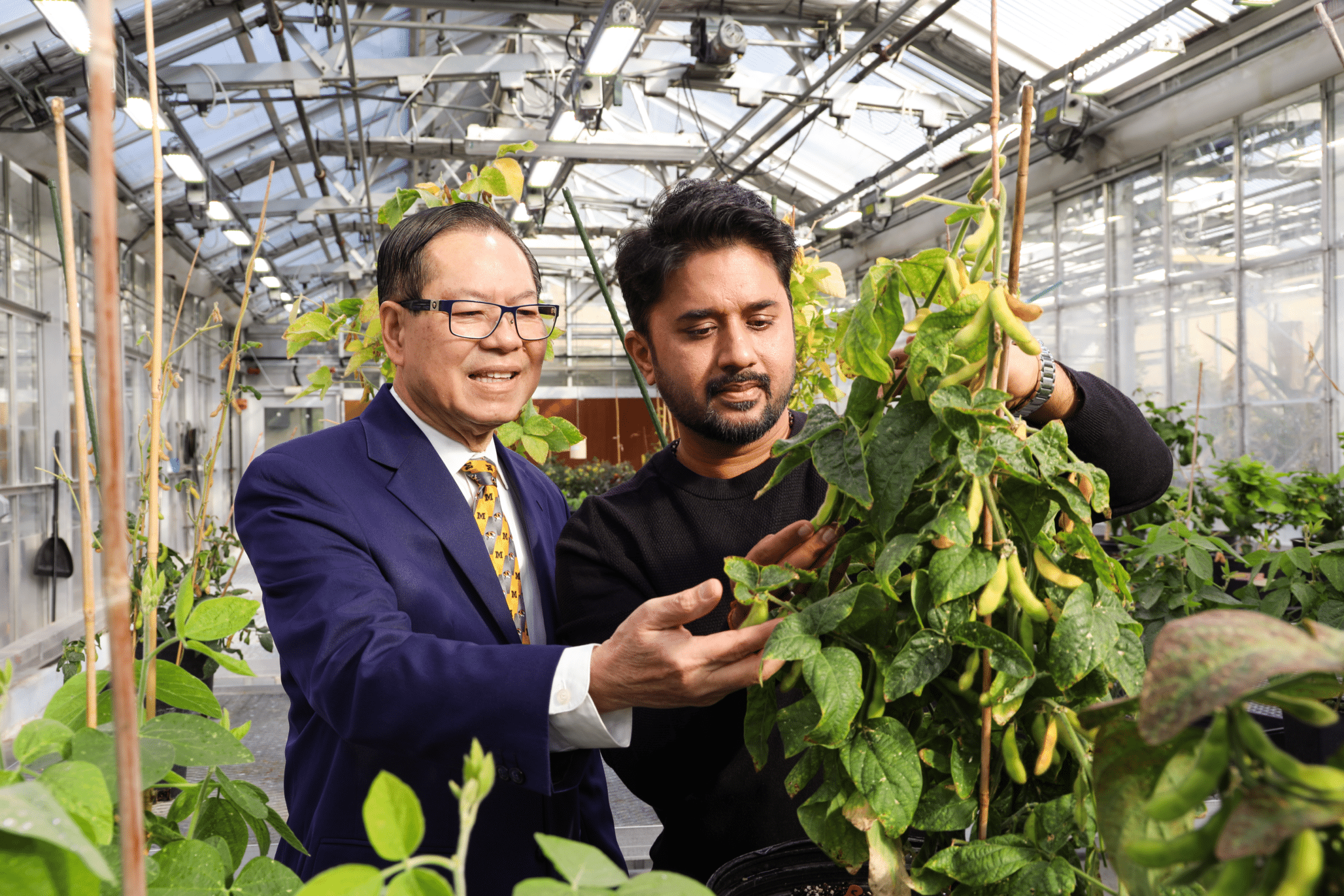
“Most of the new discoveries in SCN-resistant germplasm, pretty much started at the Delta Research Center in Southeast Missouri back in the early 1980s,” University of Missouri soybean geneticist Henry Nguyen says.
Nguyen has been studying SCN at Mizzou for more than 20 years. He frames SCN as a long arc, not a moment. Breeding programs in the Missouri Bootheel, decades of screening, incremental gains layered one on top of another. The industry didn’t arrive at today’s resistance landscape overnight; it was a slow build.
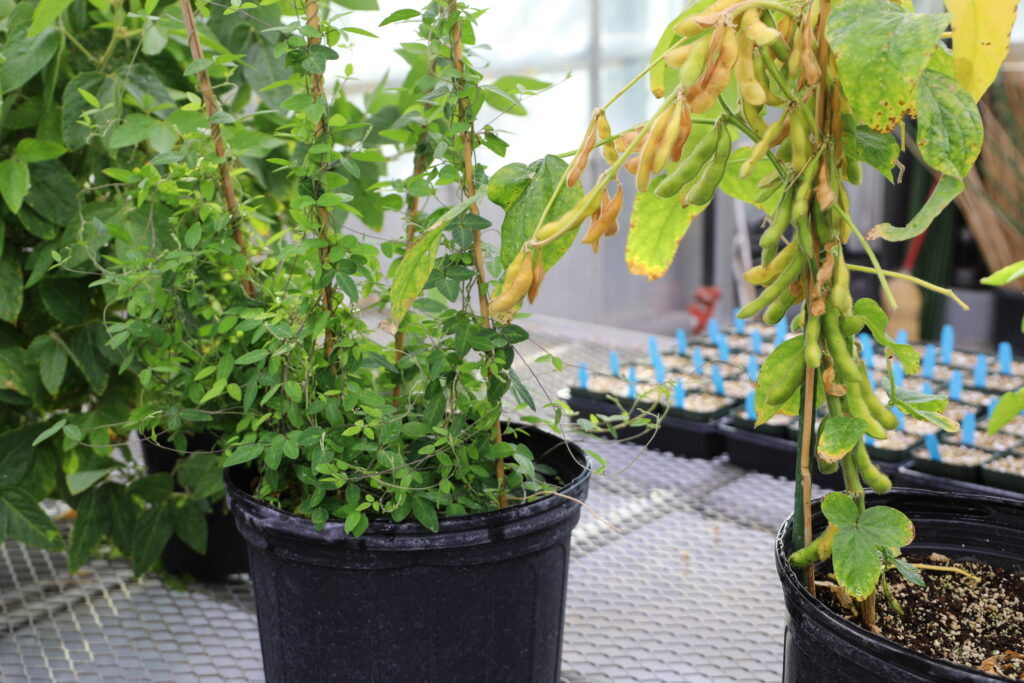
Over time, one source of resistance proved dependable. It delivered strong performance, and seed companies quickly scaled it. Farmers widely adopted it.
The Success Created its Own Pressure
“We end up with more than 95% of all of the commercial soybean varieties in the U.S. that carry that one locus,” Nguyen says.
It wasn’t a mistake. It was the natural outcome of a system that rewards reliability. When something works, it becomes the standard. When it becomes the standard, it becomes the foundation of breeding pipelines and commercial portfolios. And Nguyen says when it becomes the foundation, biology begins to push back.
“If you depend on one source, you find difficulty,” Nguyen says.
Resistance isn’t permanent. It’s a negotiation. A moving target that shifts as nematode populations adapt.
The Limits of Relying on One Answer
Genetic resistance remains soybean’s most important defense against soybean cyst nematode. Much of today’s soybean crop relies on resistance derived from the PI 88788 plant introduction. Over time, however, many SCN populations have adapted to reproduce on that source. That shift is driving renewed interest in alternative resistance sources such as Peking and other plant introductions emerging from public breeding programs and germplasm collections.
But adoption has been uneven, often slowed by performance tradeoffs and breeding complexity.
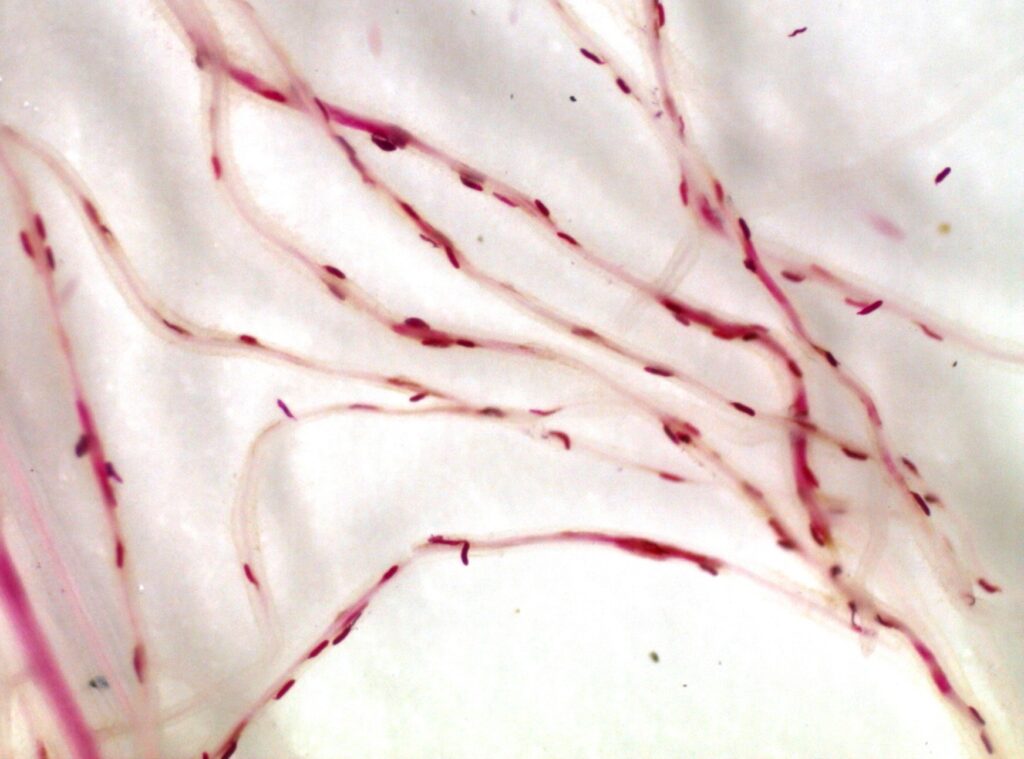
“Plant breeding at the end is still number one yield, number two yield, and number three yield,” Nguyen says. “Just like real estate — location, location, location.”
Resistance matters. But farmers plant performance first. That tension shapes every decision breeders make.
For years, the system moved forward with what worked best in that balance. Until the science itself started to change.
From Screening Plants to Understanding Genes
Historically, SCN resistance research focused on identifying resistant lines and moving them into breeding programs. The approach delivered results, but it relied heavily on observation and association.
Now the work looks different. Instead of screening hundreds of lines, researchers are sequencing thousands. Mining the genome. Searching for resistance sources that don’t resemble the ones the industry already leaned on.
“What we’re looking for would be new sources of resistance that are different from what is already known,” Nguyen says.
The goal isn’t simply more resistance. It’s different resistance and mechanisms SCN hasn’t already learned to work around.
“It’s all about rotation… rotation of the genetic variety,” Nguyen says.
He asserts that rotation in crops has long been standard practice. Rotation in genetics is becoming just as critical.
Inside the Discovery Process
For Sushil Chhapekar, a Ph.D. plant molecular biologist in Nguyen’s lab for the past four years, the work unfolds as a narrowing sequence of questions.
“We screen those thousands of genomes… we’ve identified (approximately) 20 to 30 lines,” Chhapekar says.
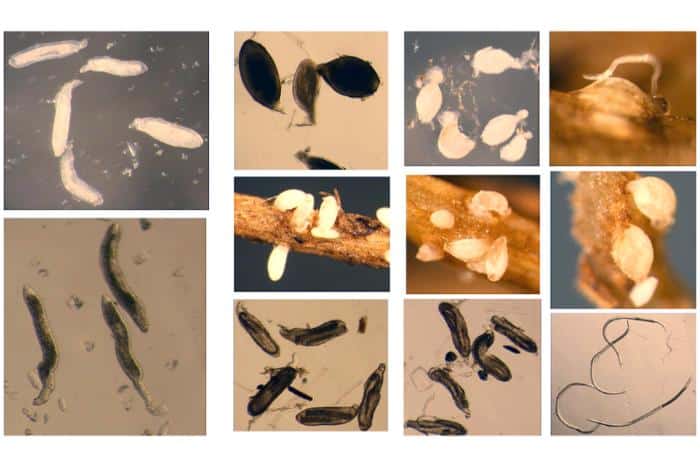
From there, the process shifts from data to biology. Roots. Cysts. Counting. Evaluating how different nematode populations respond.
Researchers evaluate resistance using standardized phenotyping scales based on how well nematodes reproduce on soybean roots, Chhapekar says, allowing them to compare genetic sources across populations.
Their testing revealed something the industry has been sensing but not always quantifying. Many varieties labeled resistant are operating closer to moderate resistance under today’s SCN populations.
“Currently, most of the commercial lines which farmers are growing do not have broad spectrum resistance,” he says.
The consequence shows up where it matters most.
“In the field we can see the yield draft,” Chhapekar says. “We can see the yield potential is decreasing.”
In the field, PI88788 mediated resistance shows significant yield drag where nematode populations has adapted it, especially common across Midwestern U.S. The research pushes further — mapping loci, isolating candidate genes and confirming their role.
“We identified those genes so we are knocking out those genes… confirming their function,” Chhapekar says.
Breakthroughs in plant breeding rarely arrive as dramatic moments. They emerge slowly, through confirmation and repetition.
“That was really good… when we screen the thousands of lines, and through deep genome mining then we got about 20 lines which still has the potential… to help the farmers,” Chhapekar says
What Changes for Breeders
Understanding resistance at the gene level shifts the development pathway.
Breeders can still rely on molecular markers to track resistance traits. But now they’re beginning to understand the mechanisms behind them — opening the door to more targeted approaches.
And increasingly, gene editing enters the conversation.
“The beauty of gene editing… you can specifically target that particular… genomic location,” Nguyen says.
That precision could help separate resistance traits from unwanted yield penalties and accelerate integration into elite germplasm.
Nguyen is careful about timelines, grounding expectations in the realities of breeding and commercialization.
“I will say at least another five years to get new genetics to the farmer fields,” Nguyen says.
That estimate depends on fast-track breeding, off-season nurseries and collaboration across public and private sectors.
“They can buy winter nursery… multiple back crossings a year,” Nguyen says.
The objective isn’t replacement. It’s reinforcement.
“It’s always good to stack up along with the known source of resistance,” Nguyen says.
The future of SCN resistance likely will be layered — multiple genes, multiple sources, multiple strategies working together.
The next era isn’t one solution. One reality anchors the entire conversation. SCN isn’t going away. It will adapt again. It always does.
“More options are better,” Nguyen says.
That may be the most important takeaway from the work emerging in Missouri. The solution isn’t a single gene or a single variety. It’s a shift in how the industry approaches resistance itself.
More diversity. More stacking. More rotation. More time.