After Hurricane Helene rewrote the landscape, a Tennessee research team is building a first-of-its-kind recovery guide to help plants grow again — one failed field at a time.
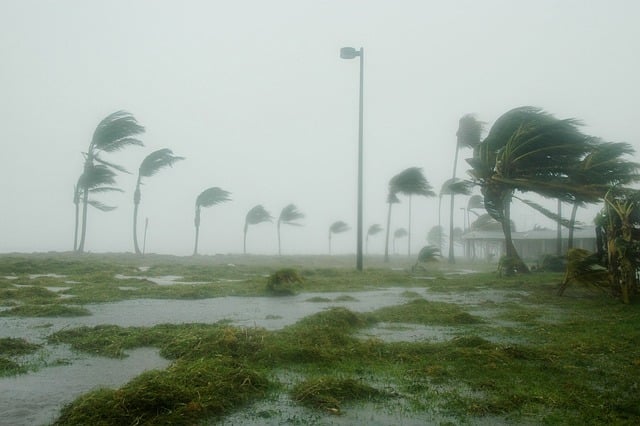
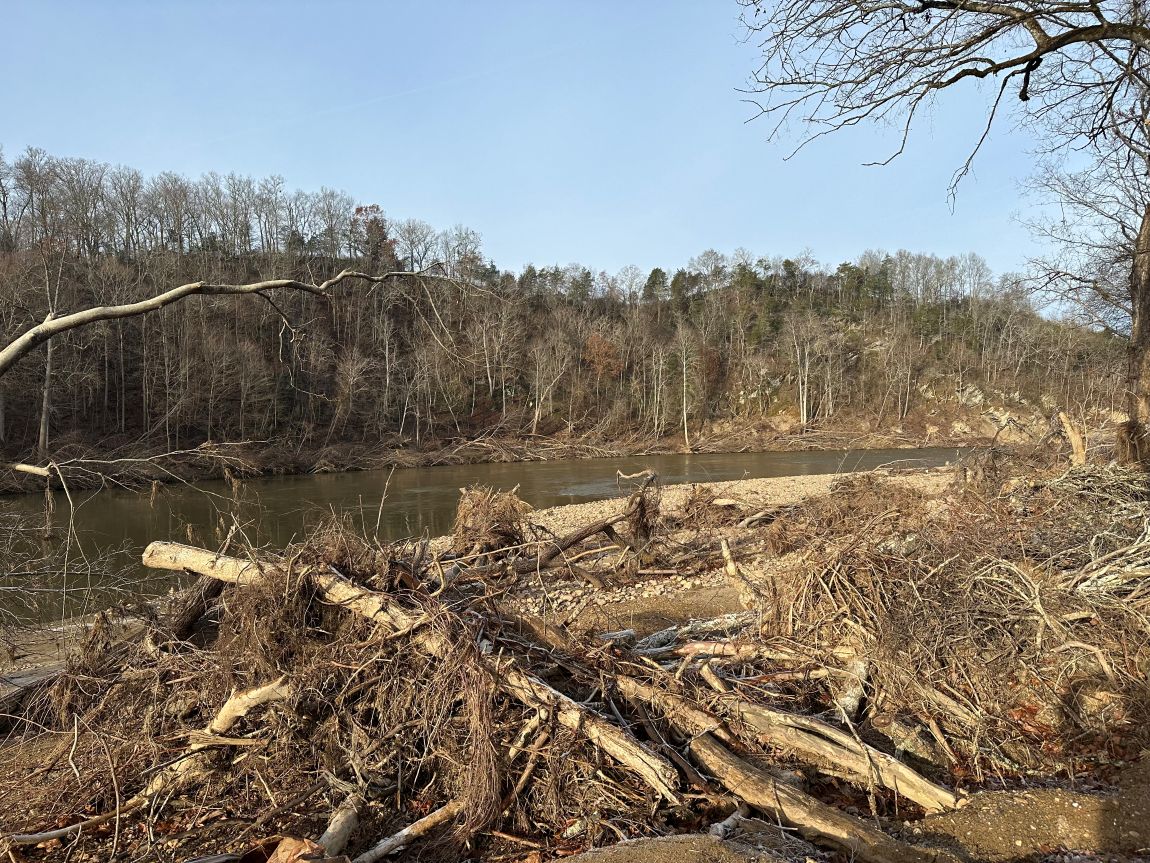
When Hurricane Helene ripped through Upper East Tennessee, it didn’t just knock down trees and flatten fences — it changed the land. Entire pastures were buried. Fields became ghost versions of themselves, their topsoil hidden beneath six feet of sand and silt. The river had rewritten the rules and growers were left holding a blank page.
“No one had a playbook,” University of Tennessee (UT) Extension environmental soil specialist Forbes Walker says. “There’s no guidance in the literature. We knew how to clean up the debris. We didn’t know what was in the sediments or how to grow anything on top of them.”
But that’s changing. Thanks to a cross-disciplinary team of researchers, farmers, engineers, extension specialists, and students a playbook is emerging — one trial, one greenhouse test and one failed planting at a time.
The Seed Bank is Gone
This flood recovery initiative is supported in part by a USDA grant aimed at building a regional disaster recovery framework for agriculture. The Tennessee Department of Agriculture and The UT Institute of Agriculture are also funding the efforts. One of the team’s primary goals is to produce a resource that other states can use when floodwaters bring more than just destruction; they bring uncertainty, sediment and questions with no easy answers.
“Some farms had six feet of sand. Others had four feet of silt,” Walker says. “You can’t plant into that. Your seed bank is gone. The topsoil is six feet down. It was just gone.”

At first, farmers weren’t thinking about recovery. “They weren’t asking agronomy questions,” UT forage specialist and director of the UT Beef & Forage Center Bruno Pedreira says. “They were asking would they have pay taxes on land that doesn’t exist anymore?”
Fields were split in two. The river had changed course. “A farmer told us, ‘This was a 50-acre field. Now it’s 25. The other half belongs to my neighbor across the river,’” Pedreira recalls. “And nobody knew what to do.”
That was the beginning. A team formed across specialties — soil scientists, forage experts, vegetable production specialists, ecological engineers, economists, crisis management specialists, and GIS analysts. They started small, testing the sediment in the greenhouse during the winter. The goal was simple: figure out what could still grow.
“We could get some things to germinate,” Walker says. “But once the root systems started developing, we saw problems. Micronutrient issues, like manganese deficiency. And then there were plants that looked like they had herbicide injury, but when we tested, the labs told us there was nothing there.” Annette Wszelaki a UT vegetable production specialist said, “Early vegetable germination seed trials in the greenhouses showed herbicide damage on young plants. Later trials showed that the vegetables could possibly grow out of the damage.”
We’re Learning as We Go
“We’re getting reports back that say, ‘You’re good,’” Pedreira says. “But when we plant and the fields turn yellow. We think the herbicide residues are below the thresholds that labs can detect but still enough to affect the plants.”
And then, there’s the crust.
“When it rains on that new sediment, it forms this hard layer,” he says. “Seeds germinate underneath and never break through. We found seedlings trying to push up and curling under the crust, never seeing daylight.”
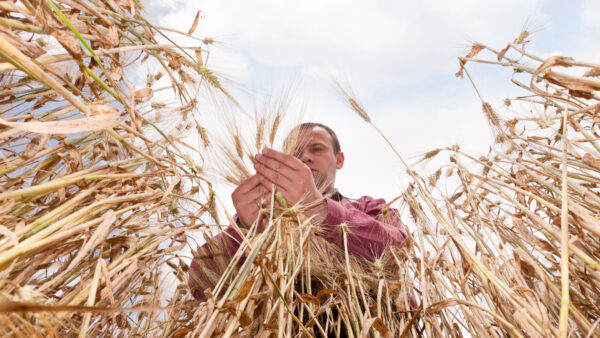
That discovery is now shaping their recovery strategy. The team plans to use seed mixtures—larger seeds like oats or wheat to punch through the crust, making a path for smaller seeds like fescue or clover.
“Monocultures won’t work here anymore,” Pedreira says. “These aren’t uniform fields. Nothing’s homogeneous. What worked last year might not work now.”
Finding a New Way Forward
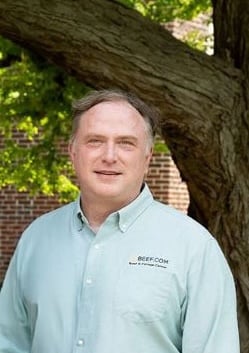
David McIntosh intimately knows the land. He’s a researcher and the coordinator of the UT Beef & Forage Center whose family has lived near the Nolichucky river for eight generations. He’s watched tractors sink into sand and ryegrass fail to grow. He’s felt the pressure of not having answers.
“I’ve stood on a farm this fall, looked a farmer in the eye and said, ‘I don’t know what to tell you.’ That hurts.”
“This isn’t about going back to what you did 100 years ago,” McIntosh says. “It’s about finding a new way forward.”
They’re urging farmers not to replant the same way, not to treat the land like it’s untouched. And they’re hoping the seed industry is listening.
The Need for Seed
“The farm stores still only carry a few cultivars of seed where producers mainly talk about Kentucky 31 or WAX Marshall ryegrass,” Pedreira says. “But we’ve tested several varieties that sometimes work better here. The problem is availability.”
He’s calling on seed companies to partner—provide mixes that work in sediment-heavy soils and sandy soils, participate in field trials, get their varieties in front of the farm store buyers.
“We’re not asking for miracles. We’re asking for presence,” he says. “If seed companies could even drop-ship to the farm stores or make varieties available online, it would help. And we want them in the field with us.”
The team just secured additional funding from the Tennessee Governor’s Response and Recovery Fund to work with four pilot farms. They’ll be testing seed mixes, monitoring progress and—most importantly—building a recovery model that can be replicated across the region and beyond
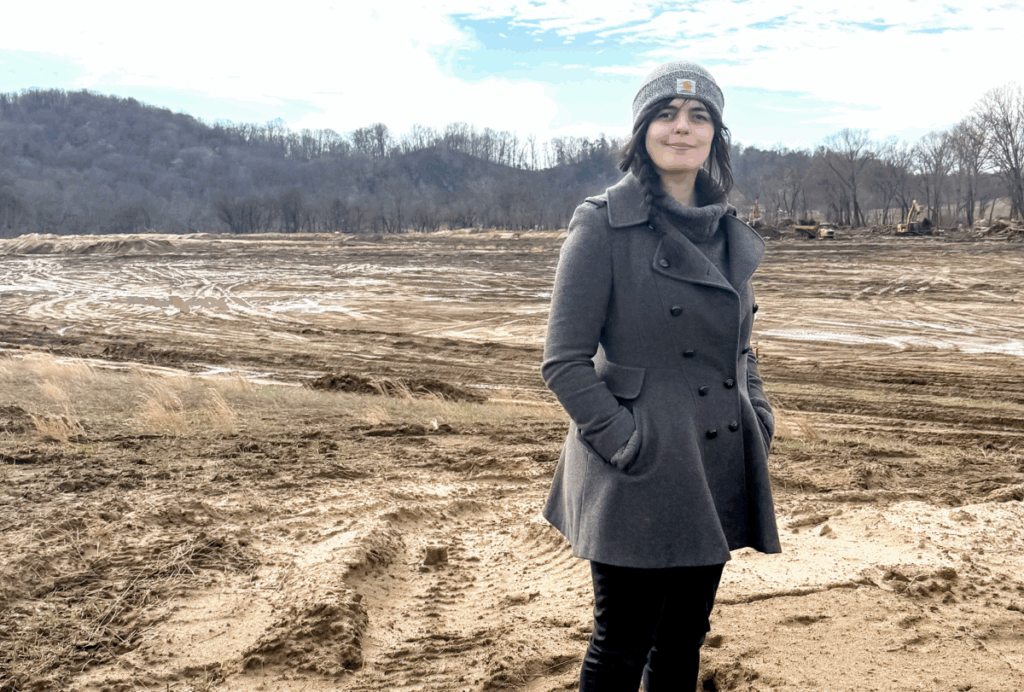
“This isn’t just about Helene,” says Eminé Fidan, an ecological systems engineer on the team. “Kentucky, North Carolina, Virginia — everyone could benefit from what we’re learning, and it will help us prepare for future weather events.”
Fidan, who specializes in analytics and satellite imagery, has helped map the damaged areas. She says they’re already seeing sediment shifts with every rain. “It’s dynamic,” she says. “Every storm reshapes the land again.”
The Playbook Begins
Walker is already thinking about the next disaster, “This kind of flood will happen again.” He says, “It might be in Middle Tennessee. It might be in Kentucky. But next time, we won’t be guessing.”
They’re documenting everything. What worked. What failed. What seemed promising but fell apart after 45 days. And they’re writing it down.
“If I can walk away from this with a guide that says, ‘Don’t do this. Try this instead,’ I’ll feel like we’ve made a difference,” Pedreira says.
It’s not flashy. It’s not quick. But it’s how resilience gets built.
“We’re not giving up on these fields and pastures,” Walker says. “The river will rage again. But next time, we’ll be ready.”
The UT Institute of Agriculture is hosting a flood recovery initiative field day on August 20, 2025 in Limestone, Tennessee. It’s more than a presentation — it’s a debut for a new way of thinking on a farm that has been partially rebuilt by recovering pastures, hayfields, and river riparian zones since Hurricane Helene devastated the operation.
If you’re interested in attending the “on-farm” field day visit https://calendar.utk.edu/event/flood-recovery-initiative-field-day