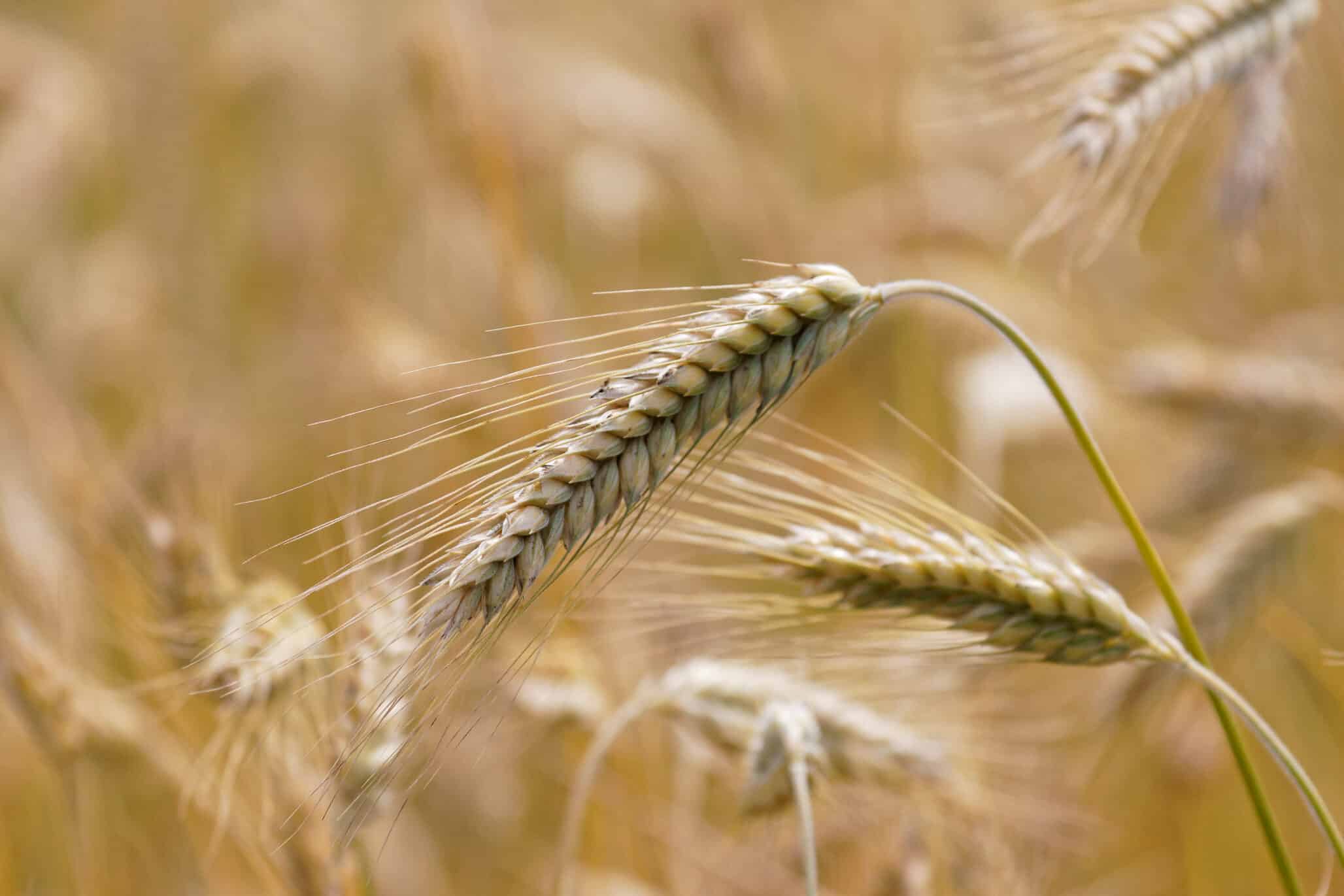
Triticale, a species obtained through the interspecific crossing of wheat and rye, is widely used for forage, both in direct grazing and silage, as well as for service crops. Specialists at INTA Bordenave have developed two new varieties — Justo INTA and Dardo INTA — which offer improved biomass production.
“The objective of this crop was to unite the productivity of wheat and the rusticity of rye. In Argentina its use grows year after year, although it is not so well known among many producers,” explained Fernando Giménez, coordinator of the Cereals and Oilseeds Program of INTA, breeder of the variety and researcher at INTA Bordenave.
“Its main use is the production of biomass, both for forage in direct grazing and in silages and, in recent times, it is used a lot as a service crop,” Giménez added. This species is characterized by its good behavior in cold, drought and producing biomass in a more controlled way according to the production cycle.
Justo INTA is an intermediate-cycle cultivar developed for service crops and intensive grazing. It is distinguished by its rusticity, good health, and high biomass production potential, as well as by its broad adaptability and multipurpose use, according to a press release.
“It has an excellent health behavior, especially the yellow rot of wheat, a disease that limits production and has broken the resistance of several cultivars that are on the market,” described German González, breeder of the variety and researcher at INTA Bordenave.
It also has genetic resistance to the main pest affecting winter cereals—the green cereal aphid — eliminating the need for insecticide applications. “These characteristics improve production costs and are environmentally friendly,” González said.
Dardo INTA, meanwhile, is a new long-cycle cultivar with a partial vernalization requirement. It is well suited to early sowing, shows slow initial growth, and reaches peak production toward the end of winter. This cultivar replaces the traditional Ona INTA of the same growth cycle, offering substantially improved forage yield and plant health.
“We currently develop cultivars of different production cycles, which generate fodder at different speeds depending on the sowing time and the time of year,” said Agustín González, breeder of the variety and researcher at INTA Bordenave.
In service crops associated with vetch, cereals are often highly competitive and, in many production systems, tend to displace or reduce the benefits of the association.
In this context, when the goal is to promote a better balance within the mixture, intermediate- and long-cycle triticale cultivars generate less competition and allow greater development of the vetch. This, in turn, enhances the benefits of the association, particularly increased nitrogen fixation.
González pointed out that “in terms of their use as winter greens for the production of forage for direct grazing, they are ideal to complement oats and ragrasses, improving and balancing the forage supply, chaining the production batches of each crop. In whole-plant silages they must be cut when they finish eating or before to obtain good digestibility of the siling.”
The Justo INTA cultivar is marketed under an agreement with the company Barenbrug, while Dardo INTA is marketed by the INTA Bordenave Cooperative Association and the network of multipliers (SeedEx, Peman, Vitagro).