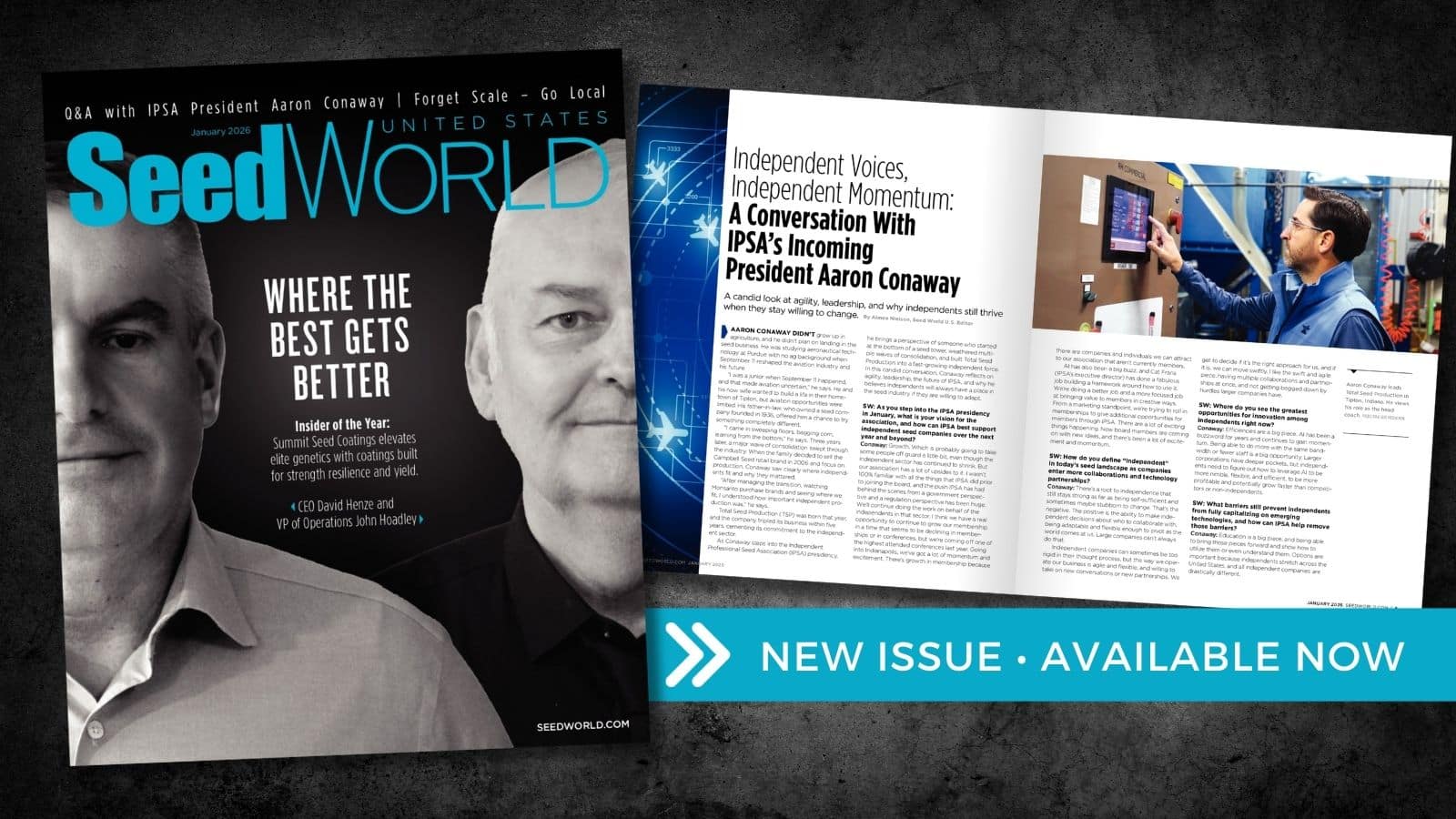
Editor’s Note: This is the editorial from the front of the January Seed World U.S. print issue. Read the entire issue online now!
January has a way of sharpening things.
It’s the month when ambition meets reality, when planning collides with weather, markets and policy that rarely cooperate. For the seed industry, January arrives with a familiar mix of uncertainty and resolve. We don’t get to wait for clarity. We build anyway.
The January issue of Seed World U.S. is about what it looks like to lead in that space between confidence and constraint.
At the center is our 2025 Insider of the Year. Summit Seed Coatings earned this recognition by showing up with a point of view, investing in professionalism without losing its seedsman soul and treating thought leadership not as marketing but as responsibility. Their story is a reminder that trust is built over time, and credibility still matters in an industry grounded in relationships.
That theme carries through our conversation with incoming IPSA president Aaron Conaway. His outlook on independence is refreshingly clear-eyed. Independence today isn’t about isolation. It’s about agility. It’s about knowing what you do best and having the freedom to move quickly, form partnerships and adapt when conditions shift.
That same mindset shows up in our look at small and specialty seed companies. As mass-market options multiply, some of the most resilient innovation is happening at the regional level. Companies rooted in place, purpose and bioregional adaptation are proving that niche isn’t a weakness. It’s a strategy.
The tension between global forces and local decisions comes into sharp focus in our conversation with John Latham. Farming doesn’t happen in abstractions. It happens field by field, season by season, under pressure that doesn’t pause for market cycles or policy delays. His perspective grounds this issue in the lived reality where strategy ultimately meets soil.
We also travel beyond U.S. borders, then back again. A forgotten maize line from Kenya, preserved in a seed bank, is now inspiring new hybrids in the Midwest. It’s a reminder that genetic diversity is cultural, practical and essential to long-term resilience.
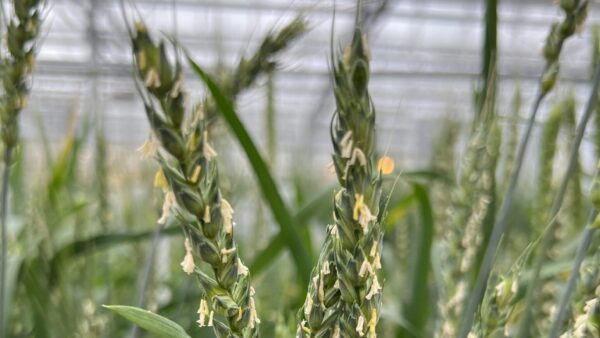
On the technology front, UC Davis researchers are asking seed to solve a different problem by reducing the most reactive gluten proteins while preserving wheat performance. It’s innovation that connects public research, breeding and human health.
The economic and policy backdrop for all of this is anything but calm. Economist Dan Basse doesn’t sugarcoat the reality: global supplies are heavy, demand is flattening and American farmers are becoming the high-cost producer. And hovering over it all is a Farm Bill that refuses to land. As ASTA’s Brandon Pachman explains, extensions keep the lights on, but they don’t fix the structure.
Taken together, these stories point to a simple truth. The future of seed won’t be shaped by a single breakthrough or policy win. It will be shaped by people willing to lead through complexity and keep moving forward when certainty is in short supply.
That’s the work. And that’s the opportunity.