A review led by researchers from the Joint Research Unit on Genomics for Climate Change (UMiP GenClima/GCCRC) provides a comprehensive look at emerging technologies for precisely inserting genes into plant genomes, with a particular focus on corn. Produced in collaboration with the Center for Molecular Biology and Genetic Engineering (CBMEG) and Embrapa Digital Agriculture, the paper explains how next-generation genetic engineering methods can make gene insertion faster, more accurate, and more reliable. The study was published in Frontiers in Plant Science.
Based at Unicamp and supported by the São Paulo Research Foundation (Fapesp) and Embrapa, GCCRC is an applied research center developing genetic and biotechnological solutions to help crops withstand environmental stress. By integrating gene discovery, genomics, microbiology, plant breeding, and bioinformatics, the center aims to deliver more efficient and sustainable agricultural tools in the context of a changing climate.
One of GCCRC’s priorities is producing transgenic or gene-edited corn with improved drought tolerance. But inserting target genes into plants still often relies on unpredictable methods, in which genes may integrate randomly into regions of the genome that are unsafe or unstable. This randomness is a major reason traditional GMO development can be slow, costly, and imprecise, according to a press release.
It also creates a regulatory hurdle: biosafety requirements typically call for a commercially viable line to contain a single, intact copy of the inserted gene in a stable, “safe” genomic location — an outcome that is difficult to guarantee when integration occurs at random.
“The strategy of random transgene integration has over 90% of transgenic events have insertion in undesirable positions and unstable activity, whifurther aggravated by the insertion of multiple copies or truncated copies,” explains Marcos Basso, a biotechnologist at GCCRC and author of the study. Depending on the location, the gene may be overexpressed or underexpressed, compromising its function. In certain cases, the plant’s own molecular mechanism can silence the transgene.
“Genomic Safe Harbors”
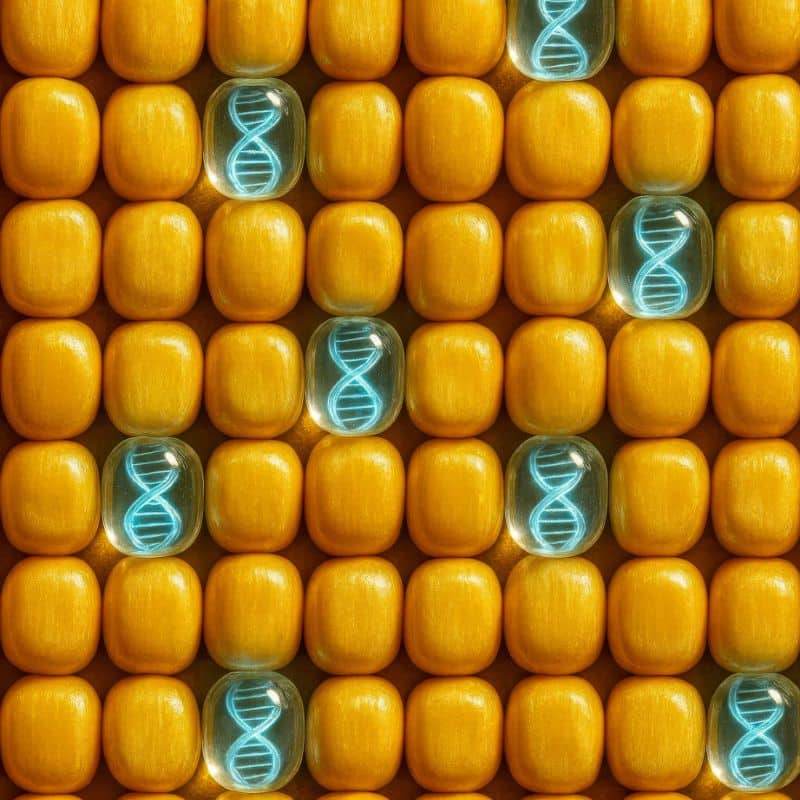
To address these limitations, the study examines methods for site-specific transgene insertion and highlights a central concept: “genomic safe harbors.” These are stable regions of the genome where inserted genes can achieve consistent, predictable expression and be reliably passed on to future generations.
“By placing the transgene in those safe intergenic regions, the transgene will be expressed and transmitted to future generations,” says researcher Juliana Yassitepe, from Embrapa Digital Agriculture and one of the authors of the study.
The approach allows researchers to produce fewer plants to identify an elite line, shortening selection cycles, lowering costs, and improving predictability.
In a separate GCCRC study, developing a commercial genetically modified corn variety was estimated to take 11 to 13 years, with investments ranging from US$50 million to US$136 million. “Using site-specific transgene insertion to generate an elite line is expected to reduce development time, costs, and effort by up to 10%,” Basso says.
The review also points to pioneering work by Corteva Agriscience, which has already identified four genomic “safe harbors” in corn. Building on that progress, the GCCRC team adapted software originally developed for yeast to work with the corn genome. Using bioinformatic analyses, the group has identified additional safe-harbor candidates and is now moving into the experimental phase.
At GCCRC, one of the first planned applications, according to Yassitepe, is inserting genes linked to drought tolerance — one of the most significant threats to agricultural production under climate change.
“By better understanding where and how to insert transgenes accurately, we take an important step toward developing more adapted and efficient elite lines,” the authors conclude.
The study Recent Advances in Site-Specific Transgene Insertion into the Corn Genome Using Recombinases and Genome Editing Endonucleases can be read at https://www.frontiersin.org/journals/plant-science/articles/10.3389/fpls.2025.1712585/full.