When Agriculture and Agri Food Canada (AAFC) announced its plans in January to close seven research stations and eliminate 665 staff positions, the news sent shockwaves through the agriculture community, and for good reason. It added urgency to a long-standing conversation: how do we sustainably support agriculture research, plant breeding and innovation in Canada?
Plant Breeders’ Rights (PBR) applications in the cereal sector have declined in recent years. Fewer applications mean fewer products entering the market and reduced R&D investment compared to some of our global competitors. For farmers, that means fewer options and less competitive varieties on the market.
The current system has brought us a long way, but investment in developing new varieties hasn’t kept pace. There’s an opportunity to evolve, and the sooner we act, the better positioned farmers will be.
When we look specifically at Canada Western Red Spring (CWRS) wheat, the market is largely dominated by products from publicly funded AAFC breeding programs. These programs have been vital to Canadian agriculture, but when 90 per cent of the market relies on one breeding program, we are vulnerable. Competition drives innovation, ultimately giving farmers access to the superior varieties they need to thrive on a global scale.
Today, breeding organizations primarily generate revenue through sales of certified seed, which averages around 29% across Western Canada. That’s not enough to sustain the millions of dollars in upfront investment and the average 13 years it takes to bring a new variety to market.
In a highly functional market, breeding organizations rely on a predictable, sustainable return on investment (ROI) to continue developing new varieties. What we need is a comprehensive royalty collection system like the Variety Use Agreement (VUA).
Without it, it becomes difficult to attract the investment, innovation and expertise needed to advance our breeding programs. We need a funding model that rewards the impact varieties have on farms while sustaining the investment behind them. VUA makes that connection.
Ultimately, farmers make crop decisions based on what’s good for their operation. Many older varieties still perform well, and since AAFC has not established a VUA, farmers see it as an added cost. That’s a fair concern. The cost is now, but the benefit is later, and farmers want to see clear value before they commit.
But when you run the numbers, the value becomes clear. If the VUA fee on farm-saved seed is two dollars per acre, a farmer needs just a 0.3 bushel per acre yield increase to break even.
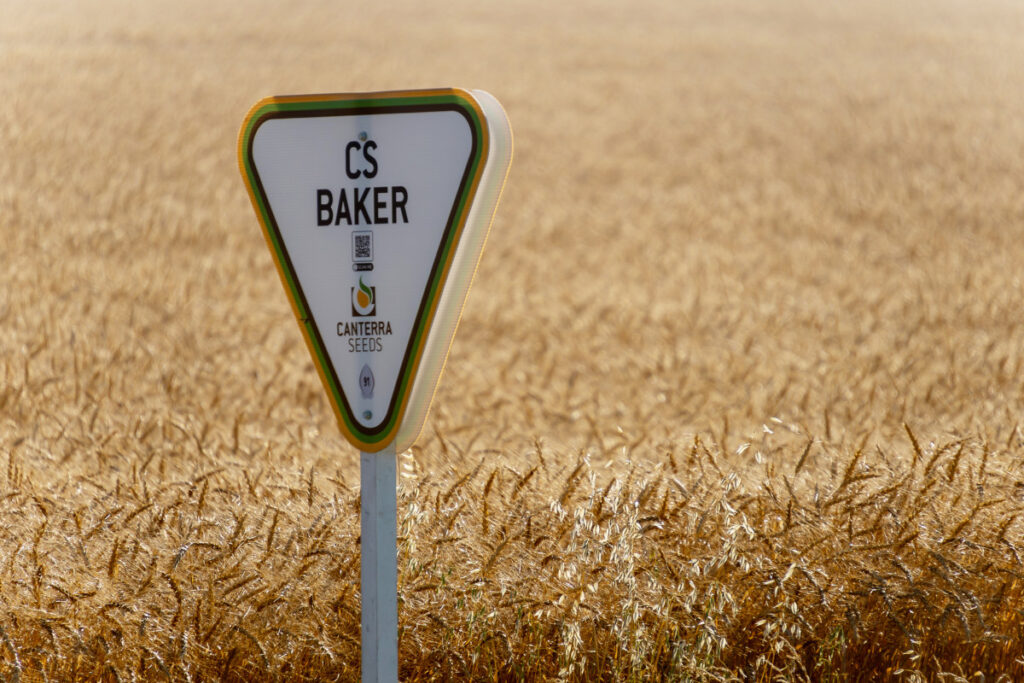
Two recently released CANTERRA SEEDS varieties bred by Limagrain Cereals Research Canada, CS Baker and CS Breadwinner, have shown increases of more than seven per cent against some leading varieties. Less than a one per cent yield increase is all it takes to come out ahead.
The farmer wins, and so does the breeder who is directly compensated for developing a superior variety.