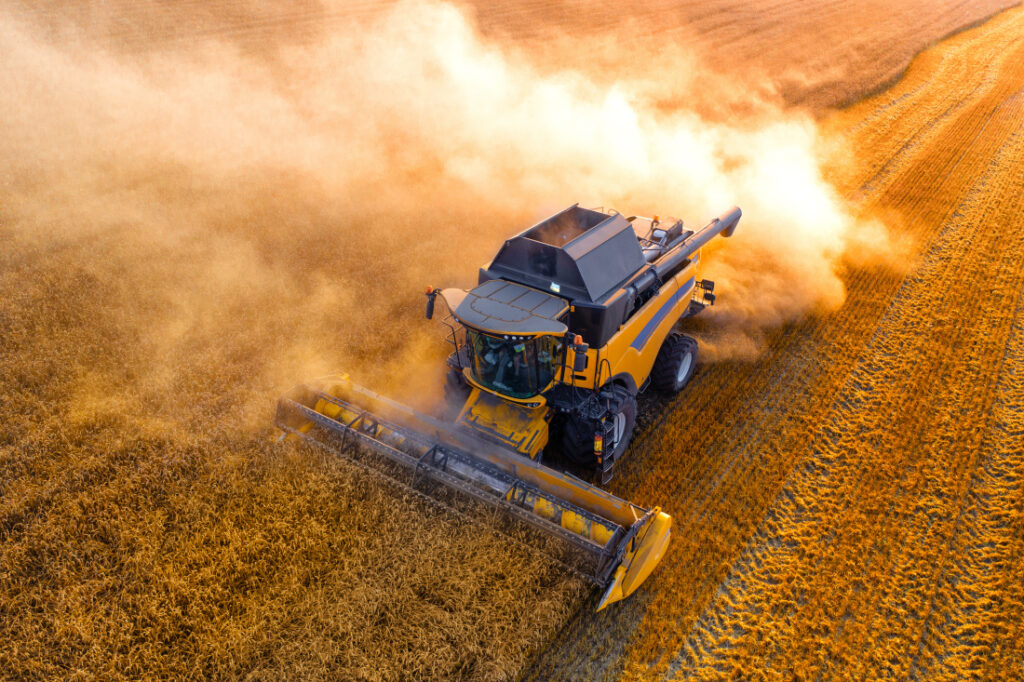

While often behind the scenes, seed processors are essential to delivering the consistency and quality growers rely on every season.
Working in agriculture gives you a clear view of just how many moving parts have to come together to produce a successful crop. One part of that system that doesn’t always get the spotlight is seed processing.
Spend time around seed processors, and it quickly becomes clear how critical their role is in the agricultural value chain.
Seed processors occupy a unique space. They sit between one crop year and the next, and their work directly impacts what ultimately goes into the ground.
It’s detailed, technical work — but more than that, it’s foundational.
Seed processors aren’t simply handling product. They’re protecting potential. Every load moving through a plant is an opportunity to improve quality, consistency and, ultimately, field performance.
That responsibility shapes how these operations are run.
One thing that stands out is the level of precision required. There’s very little room for error. When things get busy, everything has to run — and run right. Downtime doesn’t just slow down a piece of equipment; it can affect the productivity of an entire operation.
That creates an environment where reliability matters at every level. Equipment, processes and people all need to perform consistently.
Accountability is just as important. Seed processors understand that the work being done today can show up later in germination, emergence and ultimately yield. There’s a clear connection between what happens inside a processing facility and what happens in the field.
Another interesting part of this industry is the way seed processors balance long-term thinking with evolving technology.
This is a sector that values durability. It’s not uncommon to see equipment running reliably for decades, which says a lot about the importance of making investments that deliver value over the long term.
At the same time, there’s an openness to innovation when it solves a real problem. Technologies such as advanced colour sorting, automation and AI-driven systems are creating opportunities to improve efficiency, consistency and accuracy in ways that weren’t possible even a few years ago.
What’s notable is how practical that adoption tends to be. The question isn’t whether a technology is new or exciting. It’s whether it works and whether it creates meaningful value for the operation.
Even with all that technology, seed processing remains a relationship-driven part of agriculture.
Processors work closely with growers, and those relationships are built on trust. Growers rely on processors to help deliver clean, consistent, high-quality seed. Processors, in turn, rely on equipment and service partners who understand their operations and can provide dependable support when it matters.
It’s a tight-knit part of the industry, and reputation matters.
Seed processing may not always receive the attention other parts of agriculture do, but spend time around these operations and its importance becomes obvious.
It’s where quality is refined. Where consistency is built. And where the foundation is laid for the next crop.
From the outside, seed processing might look like just another step in the value chain. From the inside, it’s clear that it’s a cornerstone of the entire system.