For generations, agronomic knowledge was built on research stations such as AU Flakkebjerg, where carefully designed fields made agriculture measurable, comparable and reproducible.
Now, that model is expanding. Experiments are moving beyond the research station and into ordinary farm fields, turning real-world farms into living laboratories and farmers into active partners in agricultural research.
“For a long time, agronomic experiments lived on research stations,” says Takashi Tanaka, tenure-track assistant professor in the Department of Agroecology at Aarhus University. “But farmers have always experimented. They just didn’t call it research.”
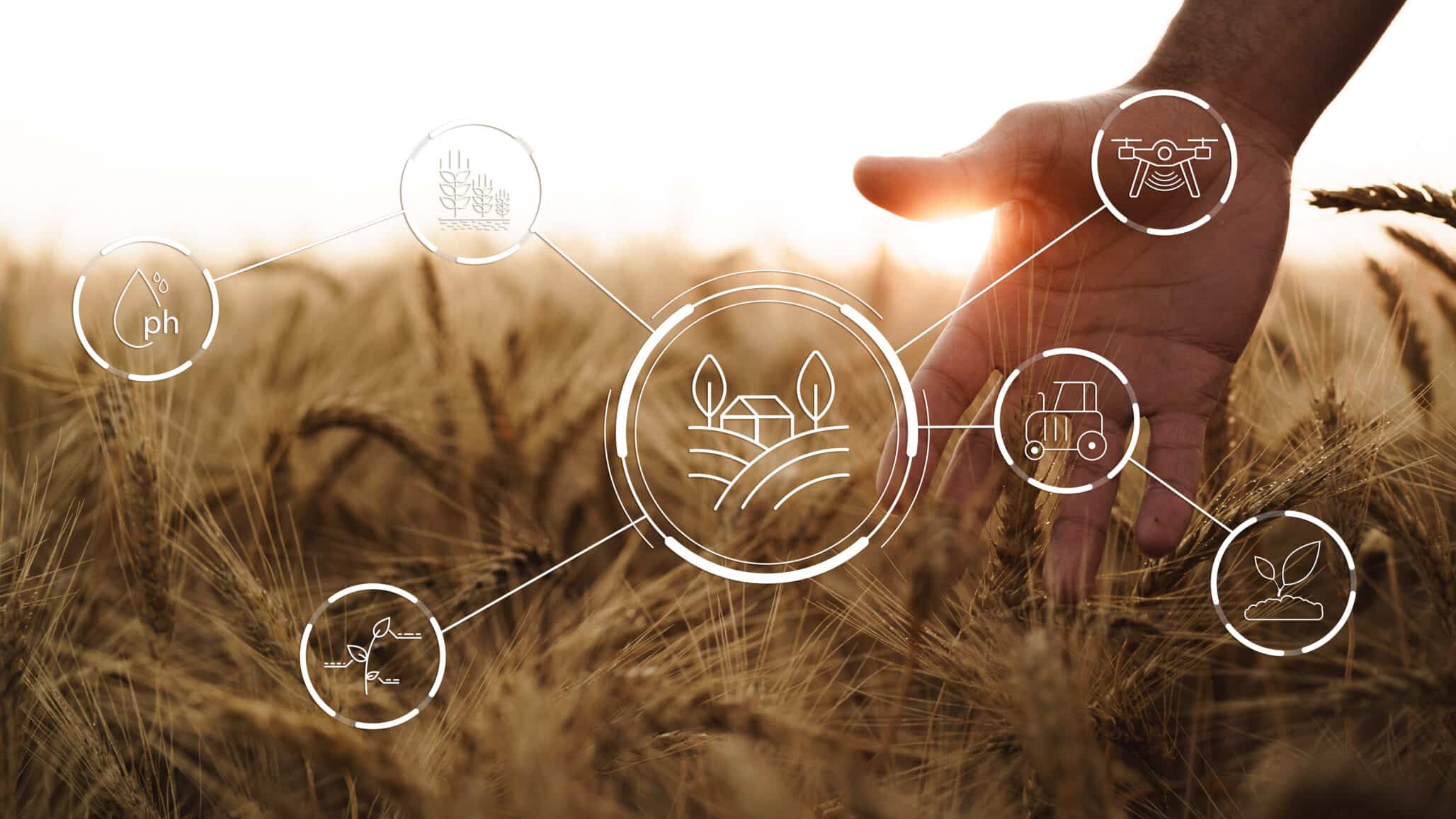
Today, everyday decisions on farms — adjusting fertilizer rates, seed density or management strategies across a field — are generating more data than ever before. Yield monitors, GPS-guided machinery, variable-rate technology and smartphones can now capture what happens on real farms, under real conditions.
According to Tanaka, the challenge is no longer how to collect data. It is how to interpret it.
That question is at the heart of Tanaka’s latest invited review, “Advanced Data Analytics for On-Farm Experimentation,” published in Plant Production Science. The paper synthesizes more than 100 scientific studies on how modern statistics, machine learning and simulation can help unlock the potential of on-farm experimentation, or OFE.
At stake is a fundamental shift in agronomy: how future knowledge is produced, who it serves and how quickly it can be put to work in the field.
From Controlled Plots to Real Farms
Classical agronomy has long relied on small, carefully designed plot trials. For nearly a century, the principles introduced by Ronald Fisher — randomization, replication and blocking — have shaped agricultural research. Conducted under controlled conditions, these trials remain powerful tools for identifying cause and effect, according to a press release.
But they also have limits.
“Small-plot experiments are excellent for understanding mechanisms,” Tanaka explains. “But they struggle with external validity. Farmers don’t farm on research stations.”
Real fields are far less orderly. Soil changes gradually across a landscape. Weather shifts from season to season. Machinery follows tramlines. Treatments are often applied in long strips, not tidy research plots.
That means data from on-farm experiments do not always fit the assumptions of classical statistics.
If one fertilizer treatment overlaps with better soil, did the treatment increase yield — or was the soil responsible?
That question has long made researchers cautious about using on-farm data. But as precision agriculture has advanced, on-farm experimentation has become more common. Farmers can now test practices directly in their own fields, generating data at scales and levels of detail that were impossible only a few decades ago.
“What has changed,” Tanaka says, “is that we now have tools that can handle this complexity, if we use them carefully.”
New Statistics for Real Fields
A central message of Tanaka’s review is that the analytical method matters. The wrong approach can produce results that look precise but lead to the wrong conclusions.
Linear mixed models have become an important tool for working with spatially variable field data. By accounting for patterns across the field, they can help separate the effect of a treatment from the natural variability in soil, yield and growing conditions.
“Mixed models are not magic,” Tanaka cautions. “They don’t fix a bad experiment. But combined with sensible design, like replicated strip trials, they can greatly reduce bias.”
Bayesian approaches add another layer by measuring uncertainty directly. Rather than simply asking whether one treatment is significantly better than another, these models estimate the probability of a real-world outcome: What is the chance that a practice will increase yield or improve profit under these conditions?
Tanaka argues that this way of framing results is often more useful for farmers and advisers than relying on classical p-values.
“In farming, uncertainty is unavoidable,” he says. “Weather, prices, pests—everything changes. Bayesian methods allow us to incorporate that uncertainty instead of pretending it doesn’t exist.”
The promise and peril of machine learning
Machine learning is also moving quickly into agronomic research. Random forest models, neural networks and other algorithms can detect nonlinear patterns in large, complex data sets. In on-farm experimentation, that creates new possibilities for fine-tuning inputs such as nitrogen fertilizer at very small spatial scales.
But Tanaka urges caution.
“Most machine learning models are very good at prediction,” he explains. “But agronomic decisions are about causation.”
A model may predict yield accurately without correctly identifying what caused the yield difference. If fertilizer rate is closely linked with soil quality across farms, for example, a machine learning model may attribute higher yield to fertilizer when soil conditions are the real driver.
That distinction matters when farmers use models to decide how much fertilizer to apply. Overestimating crop response can waste inputs, reduce profit and increase environmental risk.
Tanaka’s review points to causal machine learning as one way to improve estimates of treatment effects. But these methods are still developing, and no single algorithm works best in every situation.
“The message is not ‘don’t use machine learning,'” Tanaka says. “It’s ‘don’t use it blindly.'”