New AI-supported study finds that higher CO₂, heat and drought may increase bean production while reducing key nutritional components.
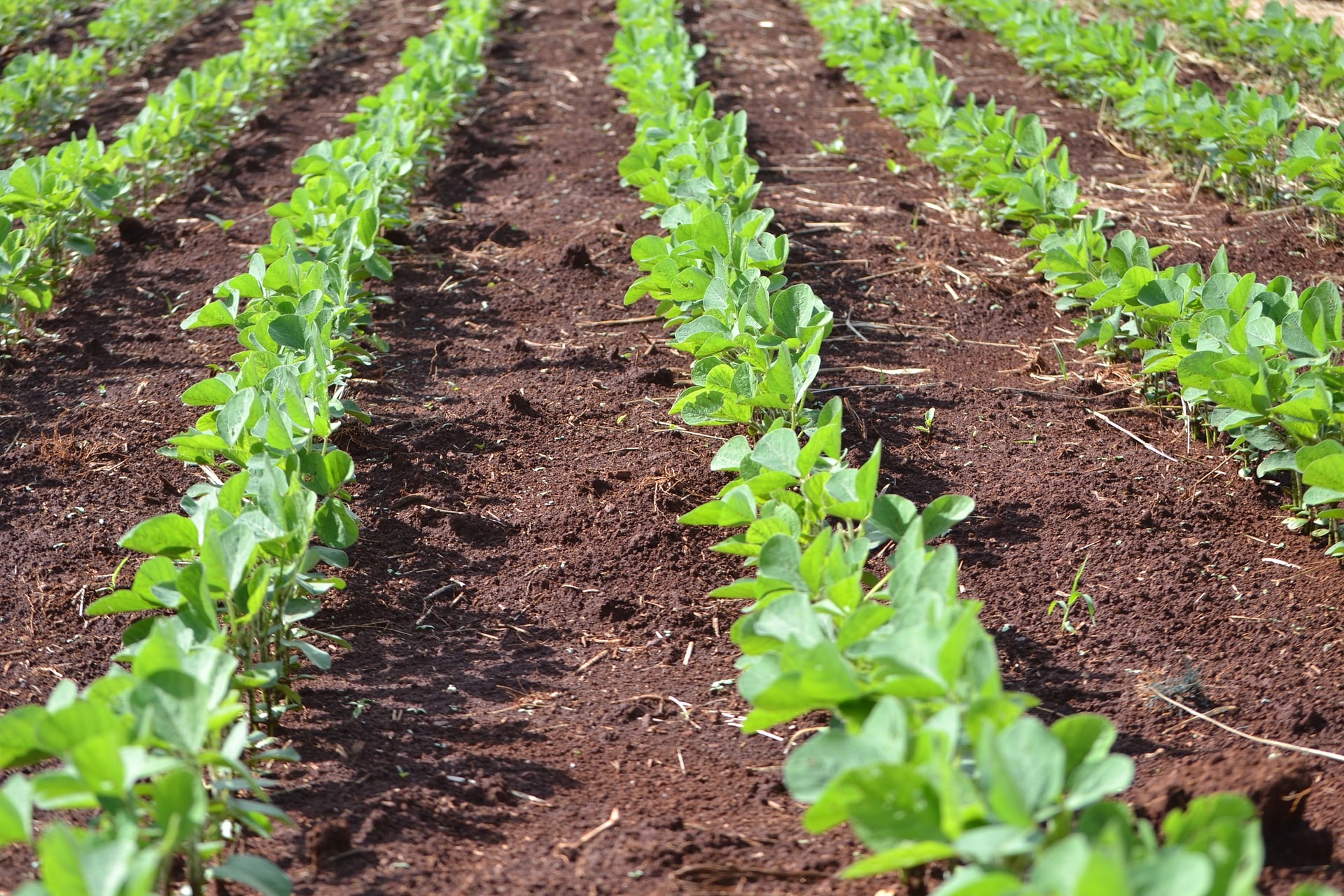
A new study published in Food Research International has examined how three major climate pressures — higher carbon dioxide, rising temperatures and drought — could affect soybean quality.
Using artificial intelligence-supported predictive modeling based on experimentally verified data, researchers found that soybeans exposed to these combined pressures could produce more beans, but with lower nutritional quality. The study estimated a 50% increase in bean production, alongside reductions in starch and protein content.
Looking at Climate Pressures Together
The study was led by scientists from the Laboratory of Ecological Plant Physiology (LAFIECO) in the Department of Botany at the University of São Paulo’s Institute of Biosciences in Brazil.
Researchers examined the combined effects of elevated carbon dioxide, high temperatures and drought. This is important because crops in the field are rarely exposed to just one stress at a time. Instead, plants often face several climate-related pressures at once.
The team found that soybeans exposed to the combined impact showed a 20% reduction in starch content and a 6% reduction in protein content. They also observed a significant increase in amino acid content.
“That increase in amino acids was unexpected. We don’t even know the effect of it on animals. We need to understand the effects of the triple impact on protein metabolism, which is very important for soybeans used in animal feed. We’ve seen that protein decreases in drastic climate change scenarios. Additionally, the bean loses starch, meaning less energy,” summarizes Marcos Buckeridge, coordinator of LAFIECO.
Why Soybean Quality Matters
Soybeans are widely used in food, feed and industrial products, so changes in seed composition matter for both agriculture and nutrition.
A reduction in protein can affect the value of soybeans used in animal feed. Lower starch content also means the seed may contain less stored energy. At the same time, the sharp increase in amino acids raises new questions about how climate stress changes soybean metabolism and how those changes may affect animals that consume soybean-based feed.
According to Buckeridge, the data can help improve predictive models used to understand how global agriculture may be affected by climate change.
More Beans, but Different Beans
Higher carbon dioxide can sometimes act like a fertilizer for plants. It can help them grow faster and produce more seeds, according to a press release.
Buckeridge explains that elevated CO₂ can also help plants cope with drought because leaf stomata close slightly. Stomata are tiny openings mainly found in leaves that allow gas exchange and water loss. When they close somewhat, the plant can still take in carbon dioxide but loses less water.
“It causes the plant to grow faster, enabling the production of more seeds. And what about when drought is also present? We discovered that CO₂ protects the plant against the effects of drought. Even a moderate drought causes the plant to produce fewer seeds. But with high carbon dioxide levels, the leaf stomata close slightly [stomata are crucial microstructures for gas exchange and transpiration found mainly in leaves that open during the day in the presence of light]. In other words, the plant captures the carbon dioxide it needs for its processes but loses less water. That’s the protective effect CO₂ has against drought.”
In some cases, elevated CO₂ can also help offset the damage caused by higher temperatures. However, the study suggests that when all three pressures are combined, the result is not simply positive or negative. Instead, the plant changes the way it uses and stores carbon.
A Shift in Seed Composition
The researchers found that soybeans exposed to the combined climate pressures produced more beans, but the beans had a different nutritional profile.
According to Buckeridge, lower starch content suggests that the plant may be directing captured carbon toward building cell walls instead of storing it as starch in the seed. That means the beans may contain more fiber and less stored energy.
“In other words, high carbon dioxide causes a deviation from the normal metabolism of the bean. Drought causes a second deviation and temperature a third. When we combine the three, we get deviation number four. That means the process isn’t linear, which is one of the most important findings from our latest published work. The pathways of the stress factors are different. Temperature and drought act through distinct stress pathways, metabolically speaking. We already understand that and have published it. That’s why it’s important to understand their effect in combination with high CO₂.”
The finding is important because it shows that combined climate stresses can produce results that cannot be predicted by looking at each stress factor separately.
How the Study Was Conducted
When the researchers analyzed each climate factor individually, elevated carbon dioxide increased bean production by up to 142%. High temperatures reduced yield by 91%, while drought reduced yield by 60%.
To study the combined triple effect of elevated CO₂, high temperature and drought, the team used predictive modeling based on experimentally validated dual-stress data. Those experiments looked at elevated CO₂ with high temperature, and elevated CO₂ with drought.
“Conducting the experiment with all treatments and controls simultaneously would be a massive undertaking. We’d need to consider control groups for the combinations of high CO₂ with temperature and drought, high CO₂ with temperature but no drought, high CO₂ with drought only without temperature, and I don’t have space in the system. I have chambers that raise the temperature, and I can create drought artificially by removing water from the plants. These experiments have already been tested and have yielded excellent results, allowing us to understand how different stresses affect plants separately and in combination,” explains Buckeridge.
The researchers used open-top chambers that allow carbon dioxide levels and temperature to be controlled. In some treatments, plants were exposed to carbon dioxide levels twice as high as ambient air, while temperatures were raised by up to 5 °C. Drought was simulated by reducing irrigation.
The team used a soybean cultivar from the Brazilian Agricultural Research Corporation, EMBRAPA, called MG/BR-46 Conquista.
Using AI to Predict Combined Impacts
To estimate the combined impact of all three pressures, the scientists used AI tools trained on results from previous experiments.
Generalized linear models were used to estimate the effects of the climate factors individually and in combination. Machine learning approaches, including XGBoost and CatBoost, were also used to predict the triple effect.
“AI modeling was able to predict the results of two stress factors on the bean, as verified in the experiment. That leads us to believe that we can also rely on the results obtained from the modeling for the triple impact.”
This approach allowed researchers to explore a complex climate scenario that would be difficult to test fully in a single experiment.
What Comes Next
The group’s next step is to identify the genes involved in soybean responses to different climate stresses and better understand how these pressures change plant metabolism.
“With that knowledge, we’ll be able to redesign the plant to produce the same amount of protein while losing less starch, for example. Ultimately, it’ll be possible to prepare the seed for better adaptation to climate change.”
The researchers also want to understand how these findings could improve models used to predict climate change impacts on crops.
“It’s likely that other species will behave similarly. We’ve already conducted the dual-effect experiment on sugarcane. Now, we need to test temperature and run the simulation using AI,” Buckeridge explains.
Why It Matters for Agriculture
The study suggests that future climate conditions may not only affect how much soybean is produced, but also what those soybeans contain.
For farmers, breeders and feed users, that distinction is important. A crop may produce more seeds under some climate scenarios, but if those seeds contain less protein or energy, the overall value of the harvest could change.
The findings point to the need for crop varieties that can maintain both yield and nutritional quality under rising CO₂, heat and drought. They also show how AI-supported modeling can help researchers better understand complex climate risks before they fully emerge in the field.