Embrapa researchers are urging farmers in southern Brazil to prepare crops and production systems for heavier rainfall, increased disease pressure and other potential impacts as El Niño is expected to persist into early 2027.
Seven Embrapa research units have prepared a technical note outlining steps farmers can take to reduce agricultural risks linked to El Niño across southern Brazil.
The guidance covers preventive measures for heavy rainfall, crop diseases, soil erosion and other expected impacts across grain, fruit, forage, forestry and livestock production systems.
Strong El Niño Conditions Possible
The U.S. National Oceanic and Atmospheric Administration estimates a 97% to 99% probability that El Niño will remain in place until early 2027, with a 63% chance it could reach very strong intensity between November 2026 and January 2027.
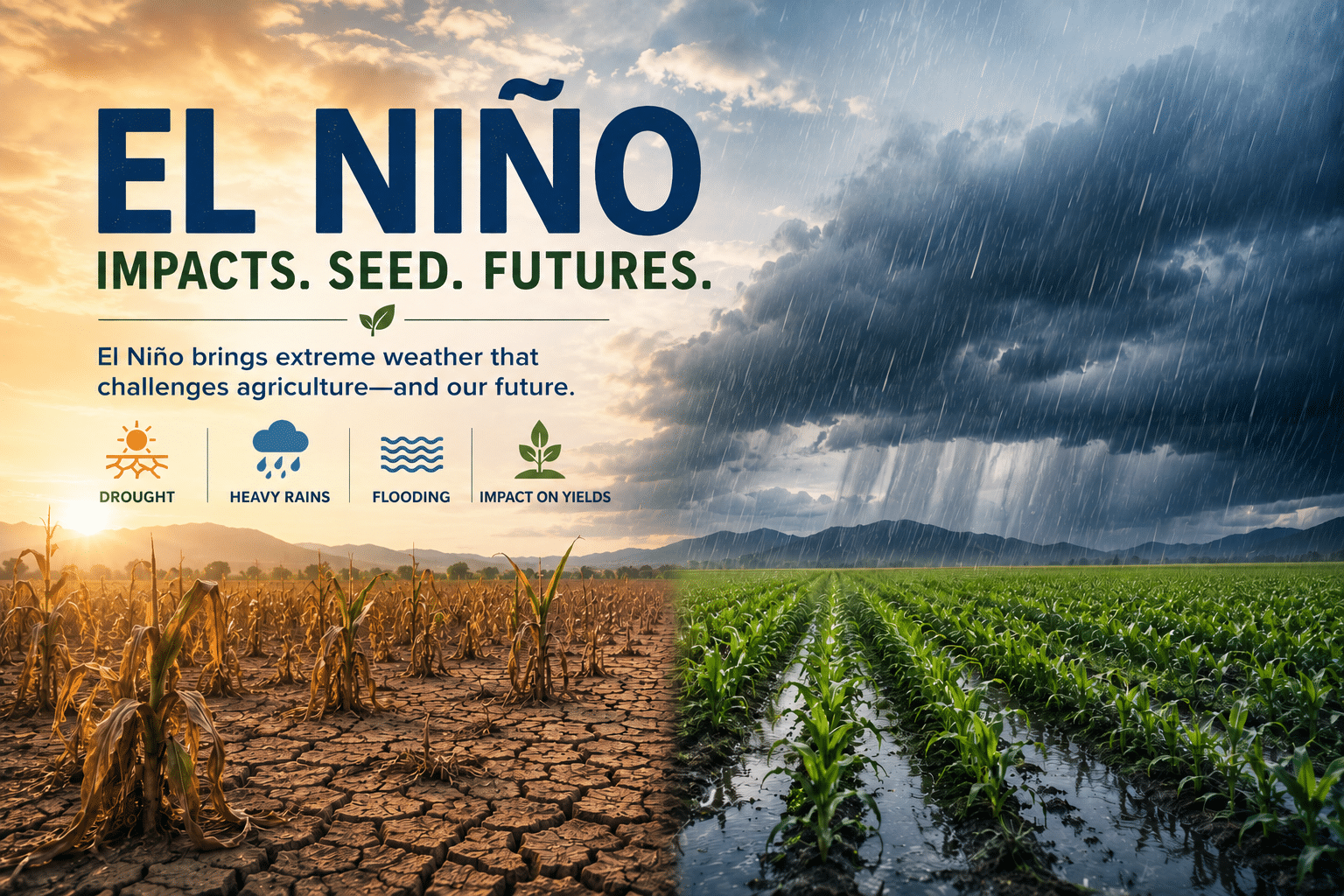
In southern Brazil, the phenomenon is expected to bring increased rainfall, greater cloud cover and above-average winter temperatures, potentially affecting several crops and production systems.
The technical note was prepared by Embrapa Temperate Agriculture, Embrapa Forestry, Embrapa South Livestock, Embrapa Soybean, Embrapa Swine and Poultry, Embrapa Wheat, and Embrapa Grape and Wine.
Research Supports Earlier Decisions
The research centres form part of Embrapa’s Collaborative Platform for Mitigating the Adverse Effects of Climate on Agriculture in southern Brazil.
The document is intended to support early field planning, reduce losses and avoid alarmist interpretations of El Niño’s potential effects, according to a press release.
According to researcher Gilberto Cunha, agrometeorologist at Embrapa Trigo, the knowledge accumulated over the past decades allows producers, technicians and institutions to act preventively.
“Today we know much more about El Niño than we knew in the 1980s. The challenge is not to predict the phenomenon, but to transform this knowledge into decisions in the field,” he adds.
He also highlights that the impacts of El Niño are not inevitable. “The accumulated knowledge about previous events allows us to reduce risks and, in some cases, even take advantage of favorable environmental conditions for certain crops,” he says.
Crop Planning Is Central to Risk Management
Embrapa’s strategy combines prevention, mitigation and risk-transfer measures, including good management practices, rural insurance and decisions based on official climate forecasts.
General recommendations include following Brazil’s Agricultural Zoning of Climate Risk, monitoring official forecasts, carefully planning investments and participating in rural insurance programs.
Farmers are also encouraged to adjust investment levels and yield expectations to conditions typically associated with El Niño rather than planning around exceptional productivity scenarios.
Grain Crops Face Disease and Rainfall Risks
For winter cereals such as wheat, barley and oats, the recommendations focus on disease prevention, fertilizer management and harvest planning.
For soybeans, corn and irrigated rice, the guidance includes improving field drainage, protecting soil from erosion and increasing crop health monitoring to reduce losses caused by excessive rainfall.
Fruit Crops Require Additional Protection
The technical note also provides recommendations for grapes, apples, peaches, olives and pecans, including orchard drainage, soil conservation, crop protection and careful planning of field operations.
According to researcher Alex Mayer, from Embrapa Clima Temperado, fruit growing is among the agricultural activities most vulnerable to El Niño-related impacts.
“Fruit production is very sensitive. In addition to soil soaking, which can compromise the root system and lead to the death of plants, losses caused by intense winds, hail and erosion can also occur, harming orchards, cultivation structures and productivity itself,” he explains.
The document also includes guidance for forestry, horticulture, pastures and cover crops, with recommendations tailored to each production system.
More Resilient Systems Encouraged
Beyond individual farms, Embrapa recommends broader environmental planning at the watershed level, stronger soil conservation practices and greater use of natural infrastructure.
The guidance also supports more resilient systems, including agroforestry and integrated crop-livestock-forestry production.
Communication and Technical Support Remain Key
The platform plans to continue training technical assistance professionals and developing digital content, applications and accessible materials for producers.
For José Reinaldo Moraes, researcher at Embrapa Clima Temperado, “the main message of the publication is that, although El Niño requires attention, it is a predictable event and is not synonymous with a guaranteed problem, but a change in risk pattern. Its impacts can be reduced with early planning, adoption of good agricultural practices and access to qualified technical information. These measures are fundamental to increase the resilience of production systems in the face of expected weather events,” he highlights.
Cunha endorses: “We can no longer passively accept the inability to deal with adverse impacts”.
He said lessons from previous climate events should help producers prepare for potential challenges and remain alert throughout the period of highest El Niño risk.