I have stood in fields on different continents and heard the same concern in many languages: agriculture is becoming harder to predict. Changing growing conditions, volatile weather and market forces are pushing farmers to make high-stakes decisions with less certainty.
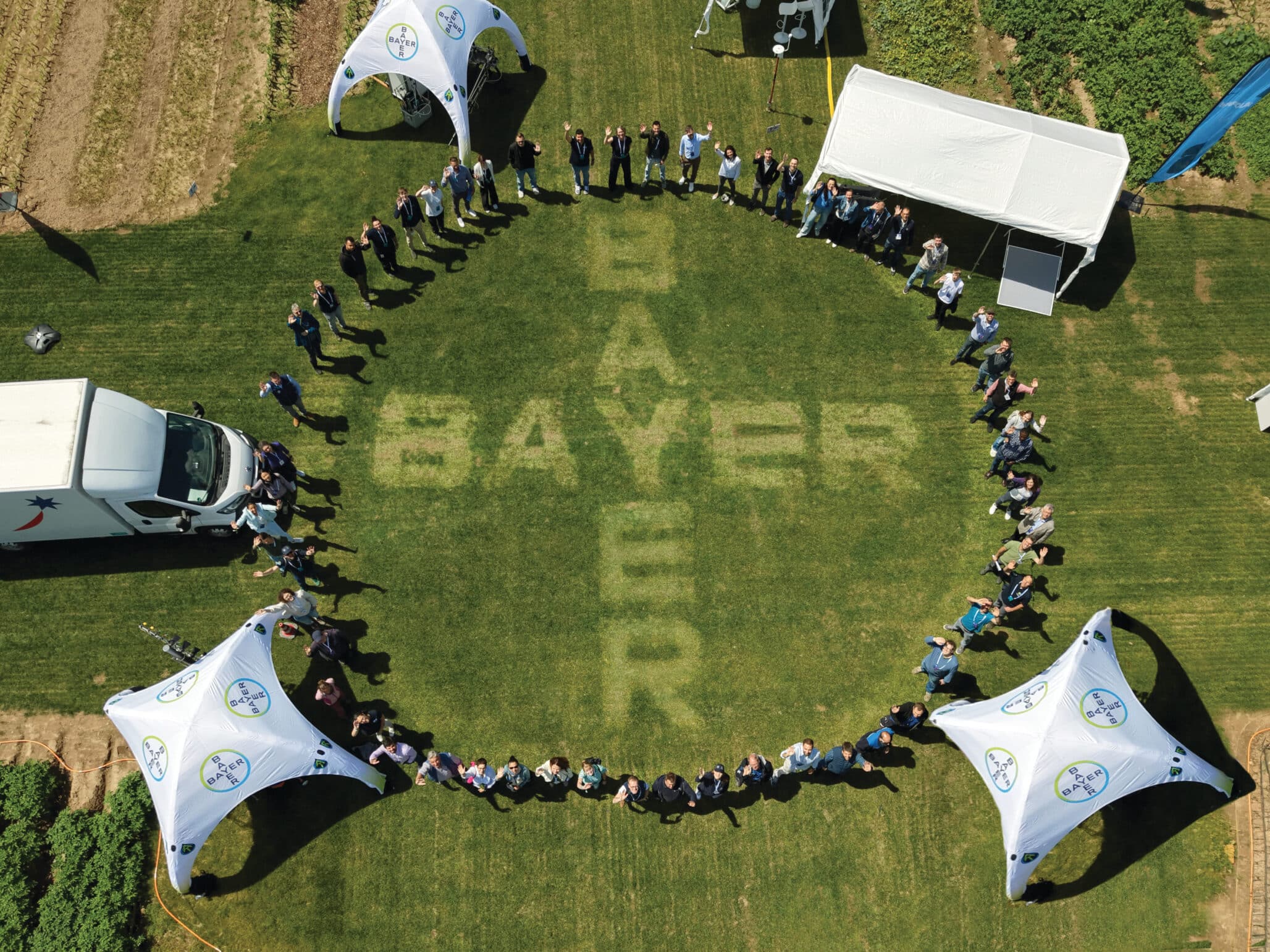
That was the lens I brought when I toured Bayer’s Crop Science headquarters in Monheim, Germany.
Big R&D centres are impressive places, housing sophisticated labs, equipment and technologies most farmers will never see, as well as people who spend their careers working on enormously complex problems.
But agriculture has a way of humbling even very good science. A farmer makes the best decisions possible, puts a crop in the ground and then spends the season dealing with whatever weather, disease, insects and weeds happen to arrive.
What impressed me at Monheim was the combination of sophistication and pragmatism. Across Bayer’s seeds and traits innovation, crop protection and digital solutions, I kept seeing different versions of the same R&D problem: agriculture is inherently variable, but the tools farmers rely on have to perform as predictably as possible within that variability.
Breeders are trying to anticipate environments years before a variety reaches the field. Scientists are studying how molecules behave across plants and conditions to better protect them. Biological researchers are trying to turn biological activity into products that perform consistently. They are different approaches to one of agriculture’s hardest questions: how do you build greater reliability into a biological system that will never be completely predictable?
Seed Starts With a Prediction
Plant breeding is an exercise in looking forward. A breeder makes decisions today about genetics that will eventually be planted into environments that don’t yet exist.
“The biggest challenge that we have in plant breeding is really to predict the environment, and it’s the same challenge a farmer has, whether that’s a small holder farmer in India or a large commercial farmer in Mato Grosso, Brazil,” Johannes Daniël Rossouw, Senior VP and R&D Plant Breeding Lead, said.
He had a personal example. On his family farm in South Africa, they had experienced a 50-year drought five years earlier. Then, just days before our conversation, they had a 100-year flood.
That stuck with me. The uncertainty breeders are trying to account for is the same uncertainty farmers eventually have to manage.
Breeders now have enormous amounts of data, sophisticated predictive tools and technologies such as gene editing to make breeding faster and more targeted. But the conversation wasn’t really about gene editing on its own. It was about making better breeding decisions, sooner.
“The adding of gene editing, it’s a tool that accelerates the normal plant breeding process, and it helps us address the needs of farmers much, much quicker so our products are climate resilient and can face different types of diseases, insect weather conditions, and potential yield to make sure that it’s really going to deliver on the promise we’ve made with selling that bag of seeds to a farmer,” Rossouw added.
“The promise we’ve made” was the part that stayed with me.
A bag of seed contains years of decisions made before anyone knows what a particular growing season will bring. The technology may be changing rapidly, but the measure of success remains practical: does the seed deliver when it reaches the field?
Crop Protection is Becoming More Precise
If plant breeding tries to anticipate what a crop will encounter, crop protection has to respond to what actually shows up.
From outside agriculture, that can look deceptively straightforward: there is a weed, disease or pest problem, a farmer applies a product and the crop is protected. Seeing the research behind that process makes it much harder to think of crop protection as simply chemistry in a jug.
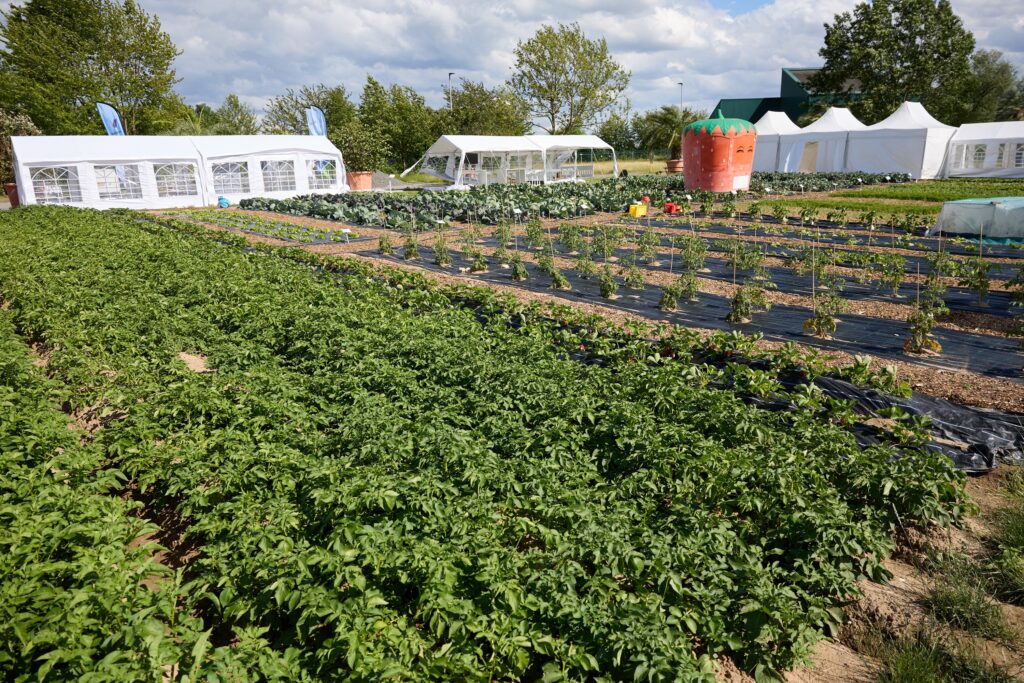
One scientist we met at Monheim was standing inside a chamber built to simulate everything from light precipitation to tropical rain. Knowing that a molecule works isn’t enough. Researchers also need to understand how it interacts with plants and performs in the real world.
“I’m fascinated by chemistry because I’m a chemist by training, but I acknowledge the importance of the interaction with the plants,” said Silvia Cerezo-Galvez, one of the many multi-disciplinary scientists I met during my visit. “We need to know how the products are going to perform under a variety of conditions.”
The challenge is understanding the molecule, plant and environment well enough to make control reliable. That gives precision a broader meaning. It can mean designing molecules for specific targets, but also knowing more precisely when, where and how an intervention is needed. We heard about research that could eventually allow an application to target only an infected plant rather than treating every square metre in the same way.
As one researcher put it, “80% of what the scientists do in the labs was not possible five years ago.”
That pace is key. Pests evolve, resistance develops and growing conditions change. The question is increasingly not simply whether we can control a problem, but how selectively and reliably we can do it.
Making Nature Reliable is Hard
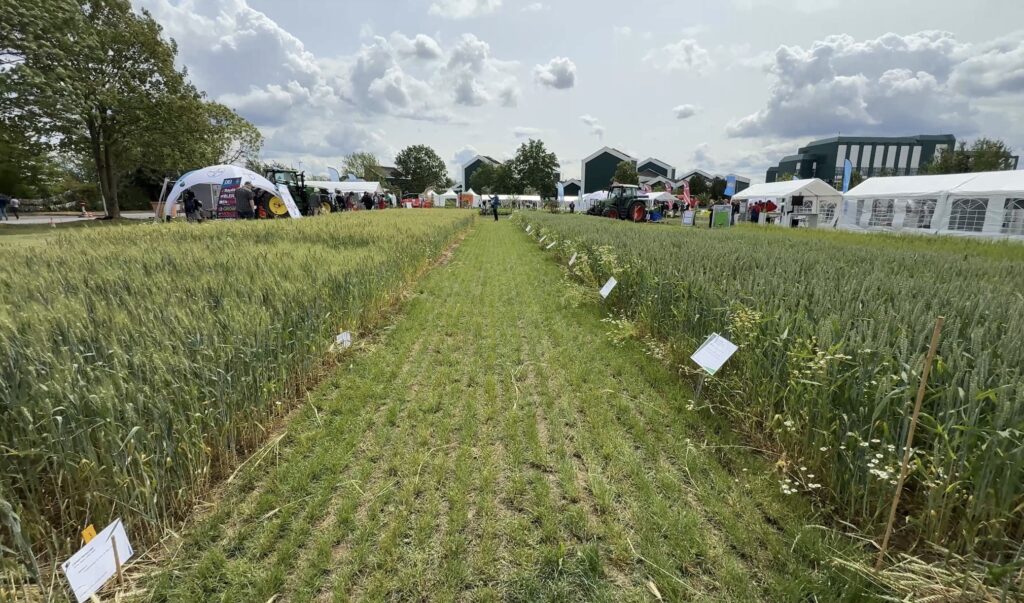
The word “natural” sounds deceptively simple. Spend time with scientists trying to turn a beneficial organism or plant-derived compound into a dependable biological product and that simplicity disappears quickly.
“[Biologicals] are more influenced than synthetic products when it comes to their soil or the climate or their environment,” Frank Terhorst, VP Strategy & Sustainability, said.
Then come the practical hurdles.
“They need to go through steps of fermentation,” explained Florian Jupe, EMEA & Asia Plant Health Hub Lead. “Quite often, shelf life may not be exactly what we currently have with a chemistry standard.”
Finding an organism or compound that produces a useful response is different from turning that response into something a farmer can depend on. Consistency, formulation, manufacturing, storage and application turn promising biology into a practical agricultural tool.
Perhaps the most interesting comment I heard was also one of the most measured.
“This is a journey. I think a scientific journey in the first place. So I would define us at the beginning of a journey,” Terhorst said.
I appreciated that perspective because biologicals are sometimes discussed as though agriculture is choosing between biological
or synthetic. What I saw at Bayer was much more pragmatic.
“Biological products will play a very important role, but I also do believe that synthetic crop protection products still have a role.
The combination of both, we believe, is a very powerful tool,” Terhorst added.
That makes sense to me. Farmers need effective tools, evidence about where they work and enough knowledge to choose the right one for the problem, crop and conditions in front of them.
The Value of Showing the Work
By the end of the tour, what connected these areas for me wasn’t any individual technology; it was the work required to make agricultural innovation dependable.
A genetic combination has to perform across environments. A crop protection molecule has to work under field conditions. A biological response has to survive formulation, manufacturing, storage and the variability of the farm.
Bayer has the scale to tackle these enormously difficult questions through genetics, chemistry, biology, data and increasingly the connections between them. Just as important was its willingness to open the doors and show the complexity, the questions researchers are still wrestling with and the distance between a promising idea and something a farmer can depend on. For those of us working in the seed sector, there’s a lesson in that openness.
Showing agricultural science only when the answer is finished misses part of what makes the work credible. Innovation means testing predictions, finding where technologies fall short, improving them and testing again. People outside agriculture rarely see that process. They encounter the final seed, product or farming decision without seeing the science, uncertainty and trade-offs behind it.
All of us who work in this sector have a role in opening that door wider: showing the science, introducing the people behind it and being candid about both the progress and the complexity that remains.
What I saw in Monheim wasn’t science eliminating uncertainty from agriculture. I’m not sure that is possible. It was science getting better at understanding that uncertainty, and building tools farmers can rely on despite the uncertainty. That may be a more useful way to think about what agricultural innovation actually looks like.