How efficiently a crop accesses and uses nitrogen has consequences for both crop performance and input utilization. Arevo CEO Niklas Åström explains what researchers are learning about how plants take up different forms of nitrogen, and what Arginex, a seed treatment designed to deliver nitrogen from germination, reveals about yield, nitrogen efficiency and early root development.
What can putting arginine directly on the seed change?
Åström: Every plant needs nitrogen. The question is how much work the plant has to do to get it. Nitrate can move away with water, and the plant has to spend energy converting it into a form it can use. Arginine behaves differently. It binds to soil particles, stays in the root zone and can be taken up directly by the plant. Put that on the seed and you change the starting point. Nitrogen is available from germination, in a form the plant can use, and the energy it saves can go into building longer root hairs and more root surface.
The poorer the soil, the more the plant has to gain. Sandy soils, weathered soils, ground where nitrate does not stay near where you put it: that is where holding nitrogen in the root zone, in a form the plant absorbs directly, pays most.
What have trials demonstrated about arginine in corn and wheat crops?
Åström: For corn, we have data from independent contract research organisations across France, Germany, Italy, Spain, Poland and Brazil, across a range of soil pH levels and textures, 2024 to 2025. At 30% less standard nitrogen, the seed treatment on its own matched yields of a full-rate check, and in one 2025 European trial it beat the check by 4.3%. When applied alongside a full fertiliser programme, Arginex boosted yield an average of 3.4% and as high as 3.8%. In South America, three sites matched the full programme’s yield on 40% less nitrogen and phosphorus. Silage corn gained up to 4.7% whole-plant biomass at 25% less nitrogen, with no penalty on germination.
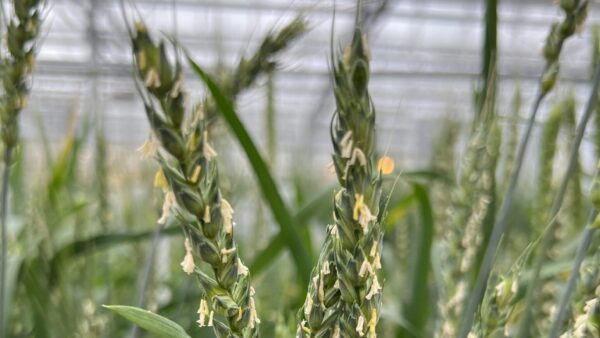
Wheat is tracking the same curve across six sites in Italy, France and Germany. Treated wheat yielded an extra 4.5% on average. When we cut mineral nitrogen by 20%, the treated crop still yielded essentially even with the full-rate control.
What does putting this technology on the seed allow a seed company to offer its customers?
Åström: We are adding value to the seed itself, and it travels with the bag to the grower as resilience and insurance written into the seed. Arginex is one defined molecule rather than something living, so it is stable on seed and works alongside the treatments already in the recipe. Even after rain, the arginine stays in the root zone, giving the crop a chance to build its root system early. What a plant builds in those first weeks is what it meets the season with. And because it is on the seed, it requires no added pass. That is why we call it Root Change: changing the system from the ground up.
Arginex is built on decades of research. What should seed companies know about the science and company behind it?
Åström: We built our agriculture the hard way up here in Sweden: short seasons, tight rules, no tolerance for waste. That pressure shapes how we work: start with the science and let the product follow. Arevo is a spinout of the Swedish University of Agricultural Sciences in Umeå. Rooted in science and validated in the fields is the order we work in: decades of research, more than 70 patents, field trials, then a product. In July 2026 Corteva added Arginex Soy to its European soybean seed treatment portfolio, and that partnership now runs across EMEA.
For a seed company interested in exploring nitrogen efficiency through seed treatment, what is the next step?
Åström: The seed is the earliest point at which you can influence a crop, and decisions made there carry through the season. We’ll have our complete trial set — corn, wheat and soy, site by site and treatment by treatment — at the Euroseeds Congress in October. Stop by, dig into the data and see what the results could mean for the crops and conditions that matter to you. Arginex seed treatment is commercially available for corn today, with wheat coming next.